
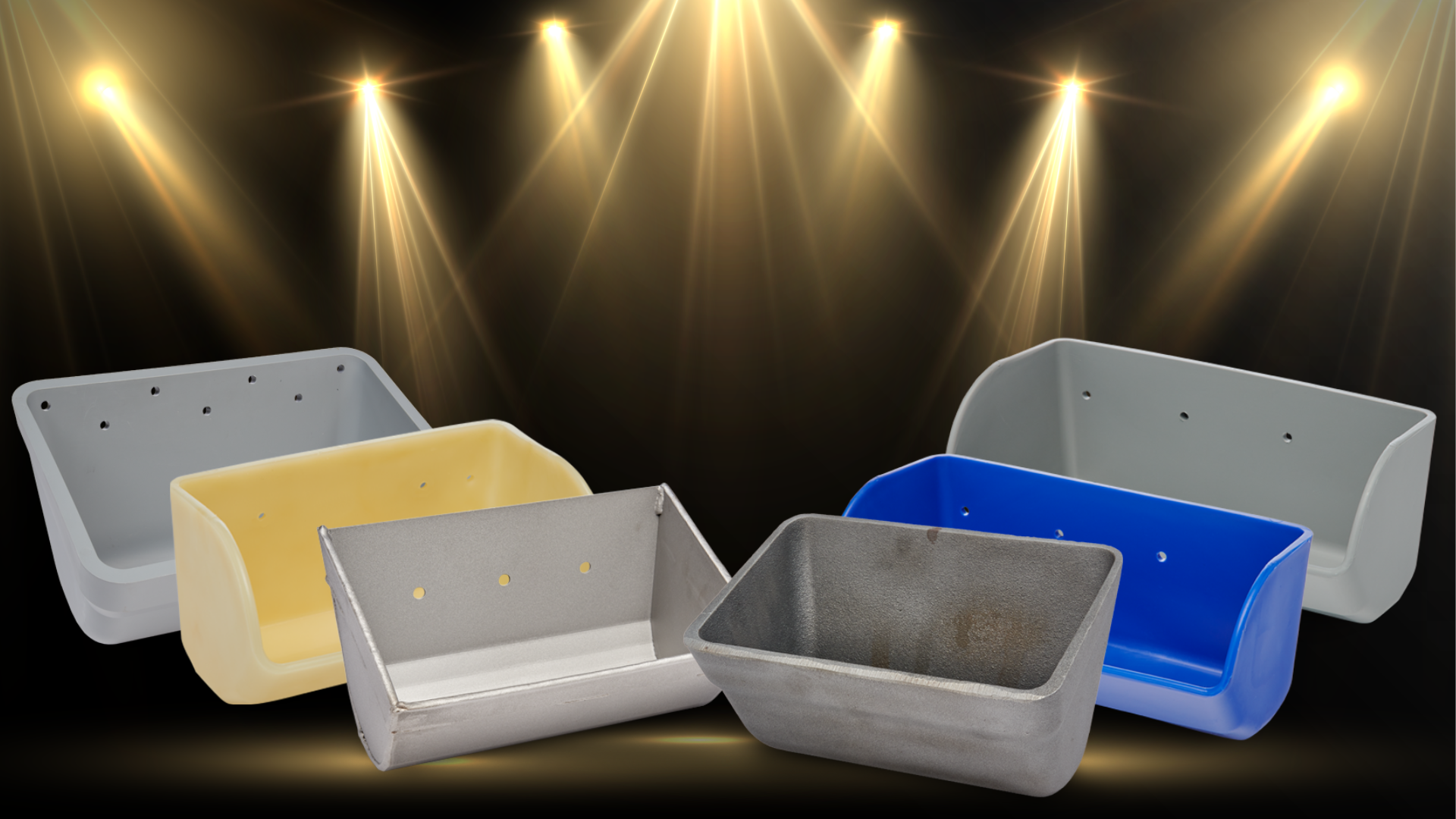
Elevator Buckets
DURABLE BUCKETS FOR DEMANDING AGRICULTURAL AND INDUSTRIAL APPLICATIONS
Jealco delivers high-performance bucket elevator components designed for agriculture, grain, feed, fertilizer, and industrial applications. Our product range includes durable buckets and fasteners from trusted brands like Tapco and Maxi-Lift, ensuring maximum efficiency and reliability for your material handling systems.
Which Elevator Bucket Is Right for You?
Choosing the right elevator bucket comes down to three things: your material, the operating temperature, and how abrasive or heavy the load is. Polyethylene is the economical, general-purpose choice for most agricultural and grain-handling applications, with FDA food-grade options available. Move up to urethane when the material is highly abrasive and wear is your main concern, or to nylon when you need greater strength, impact resistance, and higher heat tolerance for grain, seed, and feed. For the most demanding jobs — high temperatures, heavy or sharp materials, and severe-duty industrial legs — steel or ductile iron buckets deliver durability that plastics can't match.
How to Size an Elevator Bucket
Sizing an elevator bucket comes down to four decisions: the material, the capacity you need per bucket, the spacing between buckets, and the hardware that fits your pulley.
Start with the material — match it to your operating temperature and how abrasive the load is (see the quick-reference table below). Then size for capacity: for polyethylene, urethane and nylon buckets, use water level (WL) plus 10% as your usable capacity for engineering purposes; for steel and ductile iron buckets, figure on about 75% of total capacity. Set minimum bucket spacing at the nominal projection plus 2 inches. Finally, match your hardware to the pulley: pulleys 6 inches in diameter and over take fanged elevator bolts with nylon insert lock nuts, while pulleys under 6 inches take No. 3 Eclipse slotted-head elevator bolts — always with a large flat steel fender washer inside the bucket under the nut.
New buckets can be intermixed with existing steel or nonmetallic buckets, but projection varies by manufacturer and material, so check your elevator's clearances and balance first. When in doubt, send us your leg specs and we'll size it with you.
| Material | Temperature range | Best for | Usable capacity | Avoid for |
|---|---|---|---|---|
| Polyethylene | −60°F to +200°F | Grain, feed, fertilizer, seed, food-grade (FDA) | WL + 10% | Material over 200°F; sharp material (glass, oyster shell); large dense material over 3/8"; some severe soybean & rice |
| Urethane | −60°F to +212°F | Abrasive, high-throughput: fertilizer, sand, aggregate, severe soybean/rice/barley | WL + 10% | Material over 212°F; large dense material over 3/8"; sharp sluggish material (large glass cullet) |
| Nylon | −40°F to +275°F | High strength & heat: grain, soybeans, feed, fertilizer; rough / severe service | WL + 10% | Material over 275°F; large dense material over 3/8"; sharp sluggish material (glass cullet, oyster shell) |
| Steel / Ductile Iron | Severe / high-temp industrial | Cement, aggregate, mineral processing, mining, quarrying | ~75% of total | Heaviest-duty option — few material limits |
WL = water level. For polyethylene, urethane and nylon, use WL + 10% as usable capacity for engineering purposes; for steel and ductile iron, figure ~75% of total capacity. Minimum bucket spacing = nominal projection + 2".
See full size & capacity charts: Tapco CC-HD · CC-HD Super Capacity · CC-LP HD Low-Profile
Still deciding? Use our interactive
Elevator Bucket Selection Tool, or contact us and we'll spec it with you.
Grain Elevator Buckets
Jealco supplies grain elevator buckets built for the realities of grain, seed and feed handling — high throughput, long run hours, and materials that range from free-flowing corn and soybeans to abrasive fertilizer and pelletized feed.
Polyethylene buckets are the economical, food-grade-capable workhorse for most grain elevators and country elevators. Step up to nylon when you need extra strength and heat tolerance for high-speed legs, or to urethane for severe soybean, rice and abrasive applications where wear is the enemy.
Choose from standard mounting holes and venting, or if needed, we can customize both. Whether you're outfitting a new bucket elevator or replacing worn buckets on an existing one, we'll help you spec the right material and size for your grain-handling operation.
Polyethylene
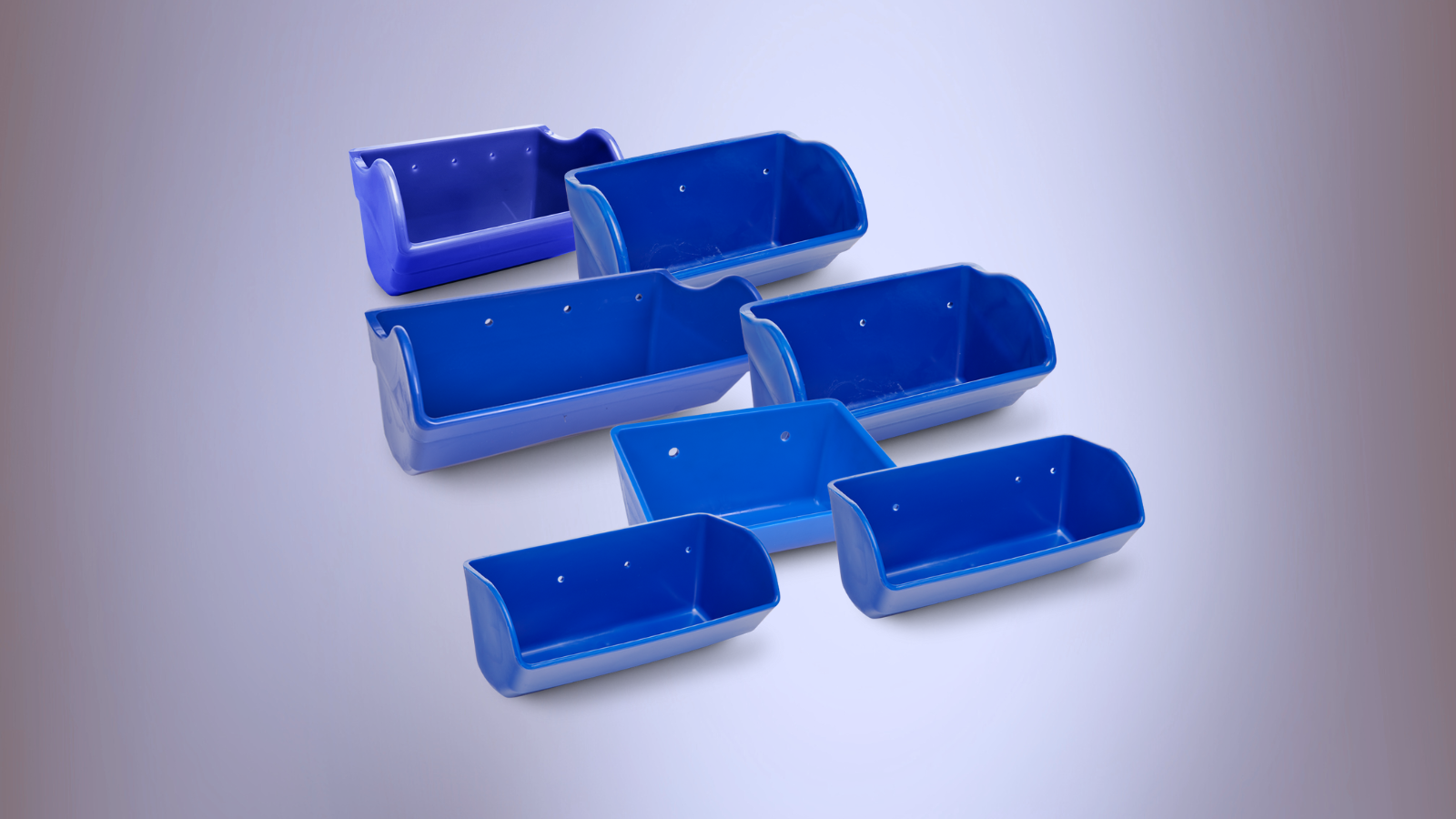
Jealco supplies polyethylene elevator buckets engineered for agricultural grain handling and feed processing. These buckets offer lightweight durability, excellent impact resistance, and superior corrosion protection compared to metal alternatives. Ideal for high-capacity bucket elevators, our polyethylene buckets reduce wear on belts and minimize downtime, making them a cost-effective solution for bulk material handling.
Product Facts:
- Material: Injection molded high density linear prime virgin polyethylene.
- Color: Blue (also available in white).
- Temperature Range: -60°F to + 200°F/-51°C to + 93°C.
- Flammability: The high density polyethylene used in Tapco buckets is termed “slow burning”. It has been tested under ASTM Test No. D635. It also meets the criteria for approval under the Motor Vehicle Safety Standard No. 302 and Underwriters’ Laboratory Bulletin No. 94. Combustion in an excess of air results in harmless by-products (fumes) which are nontoxic.
- Standard Drilling: No Charge.
- Special Drilling: Any pattern and hole diameter can be provided at minimal cost.
- Venting: Available in five standard patterns. See catalog for specifications. Venting page.
- Usable Capacity: Net or usable capacity could range from 10% to 20% above water level. For engineering purposes we recommend using WL (Water Level) + 10% for usable capacity.
- Spacing: Minimum bucket spacing has historically been nominal projection plus 2". Many style CC buckets, however, are being used at projection plus 1", and some even closer. For engineering purposes we recommend using nominal projection plus 2".
- Interchangeability: Can be intermixed with existing steel or nonmetallic buckets. Some consideration should be given to balance. Bucket projection varies by manufacturer and material. Check elevator for proper clearances. Contact us for recommendations.
- Installation: Fanged elevator bolts and nylon insert lock nuts are recommended for pulleys 6" in diameter and over. No. 3, Eclipse slotted head elevator bolts are recommended for pulleys under 6" in diameter. Large flat steel (fender) washers must be placed inside the bucket under the nuts. Check elevator for proper clearances.
- FDA Status: The polyethylene used meets the requirements of the Food Additives Law and Regulation No. 177.1520. Blue pigment meets Regulations No. 175.300 and 177.2600.
- UV Resistance: No UV (ultraviolet) stabilizers are added to Tapco buckets because most elevator buckets are enclosed in casings. Tapco buckets should not be exposed to direct sunlight for extended periods of time.
- Recommendations: Polyethylene buckets are ideal for use with grains, feeds, fertilizers, seeds, food products, chemicals, sand, salt and most free flowing agricultural products handled in bucket elevators.
- Limitations: Polyethylene buckets should not be used with the following: (1) Materials over 200°F/93°C. (2) Sharp edged materials such as crushed glass or oyster shells. (3) Large dense materials such as gravel and ores over 3/8" diameter. (4) A few extremely abrasive and sluggish materials such as dried whey, some pellets and extruded feeds. (5) Some severe soybean and rice applications.
- Caution: Welding and cutting on elevator legs without taking proper precautions is extremely dangerous and can cause a violent explosion. Urethane buckets can be ignited and will burn from improper welding and cutting.
- Important: When elevating materials that harden or set up with moisture, a Tapco steel digger bucket should replace every 10th urethane bucket. Contact Tapco for recommendations.
Urethane
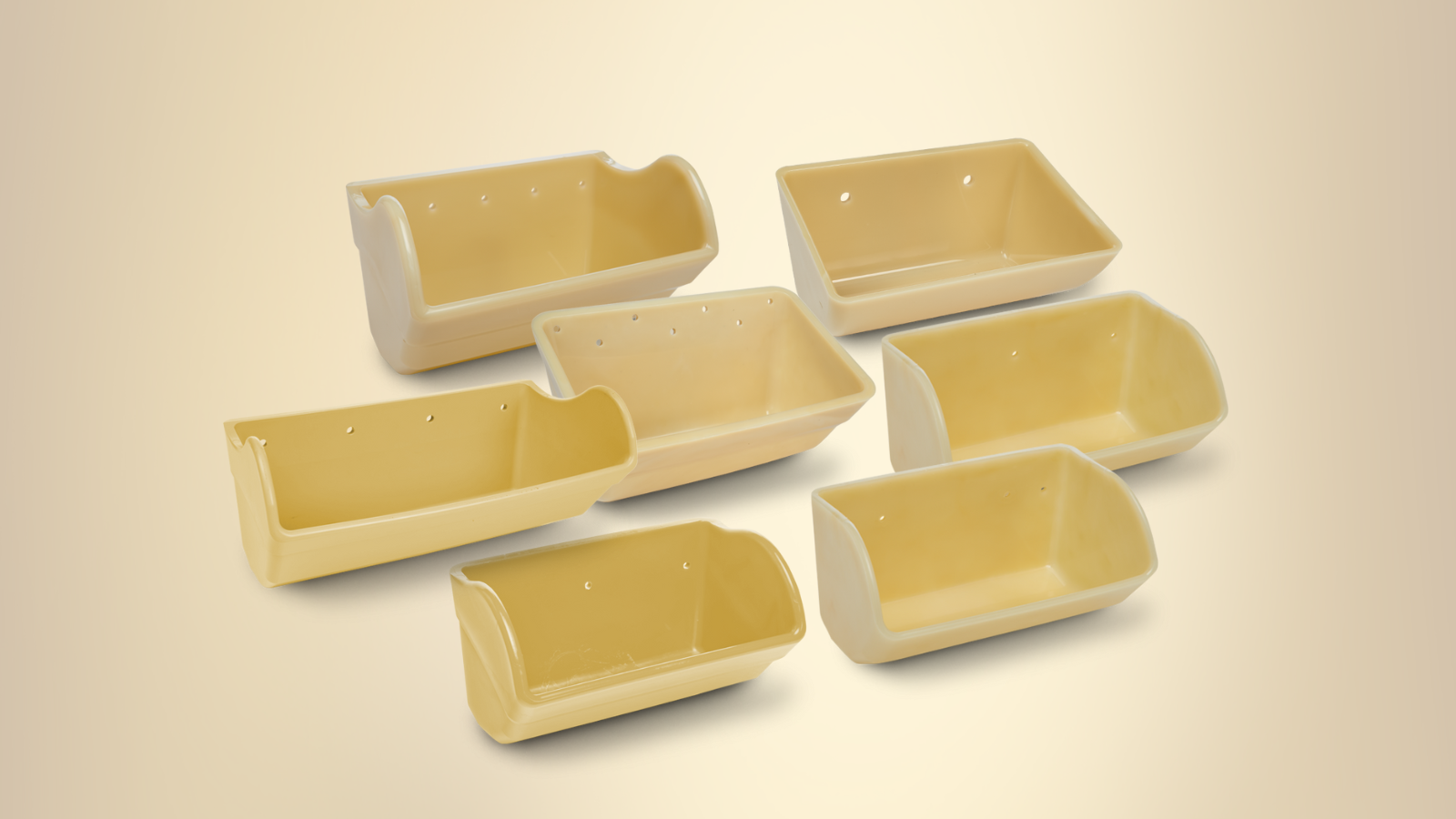
Our urethane elevator buckets deliver exceptional abrasion resistance and long service life in demanding environments. Perfect for fertilizer, sand, and aggregate applications, these buckets withstand high-impact loading and extreme temperatures. Jealco’s urethane buckets are designed for heavy-duty bucket elevators, ensuring maximum performance and efficiency in industrial operations.
Product Facts:
- Material: Injection molded prime virgin thermoplastic urethane.
- Color: Beige (Tan).
- Temperature Range: -60°F to + 212°F/-51° C to + 100°C.
- Durometer Range: Shore D 60-70.
- Flammability: Meets the criteria of the Underwriters’ Laboratory Bulletin No. 94 HB. It has been tested under ASTM Test No. D635 and has a burn rate of 0.76”/min. it also meets approval under motor vehicle safety standard No. 302, with a burn rate of 0.0”/min.
- Standard Drilling: No Charge.
- Special Drilling: Any pattern and hole diameter can be provided at minimal cost.
- Venting: Available in five standard patterns. See catalog for specifications. Venting page.
- Usable Capacity: Net or usable capacity could range from 10% to 20% above water level. For engineering purposes we recommend using WL (Water Level) + 10% for usable capacity.
- Spacing: Minimum bucket spacing has historically been nominal projection plus 2". Many style CC buckets, however, are being used at projection plus 1", and some even closer. For engineering purposes we recommend using nominal projection plus 2".
- Interchangeability: Can be intermixed with existing steel or nonmetallic buckets. Some consideration should be given to balance. Bucket projection varies by manufacturer and material. Check elevator for proper clearances. Contact us for recommendations.
- Installation: Fanged elevator bolts and nylon insert lock nuts are recommended for pulleys 6" in diameter and over. No. 3, Eclipse slotted head elevator bolts are recommended for pulleys under 6" in diameter. Large flat steel (fender) washers must be placed inside the bucket under the nuts. Check elevator for proper clearances.
- FDA Status: Our standard urethane does not meet the requirements for FDA approval. FDA approved urethane is available as a special order.
- UV Resistance: No UV (ultraviolet) stabilizers are added to Tapco buckets because most elevator buckets are enclosed in casings. Tapco buckets should not be exposed to direct sunlight for extended periods of time.
- Recommendations: Urethane buckets are ideal for use with pelletized high fat and molasses feeds, extruded feeds, severe soybean, rice and barley applications and other abrasive agricultural products. They are excellent for extremely high throughput elevators.
- Limitations: Urethane buckets should not be used on the following: (1) Materials over 212°F/100°C. (2) Large dense materials such as gravel and ores over 3/8" in diameter. (3) Some sharp sluggish materials such as large glass cullet.
- Caution: Welding and cutting on elevator legs without taking proper precautions is extremely dangerous and can cause a violent explosion. Urethane buckets can be ignited and will burn from improper welding and cutting.
- Important: When elevating materials that harden or set up with moisture, a Tapco steel digger bucket should replace every 10th urethane bucket. Contact Tapco for recommendations.
Nylon
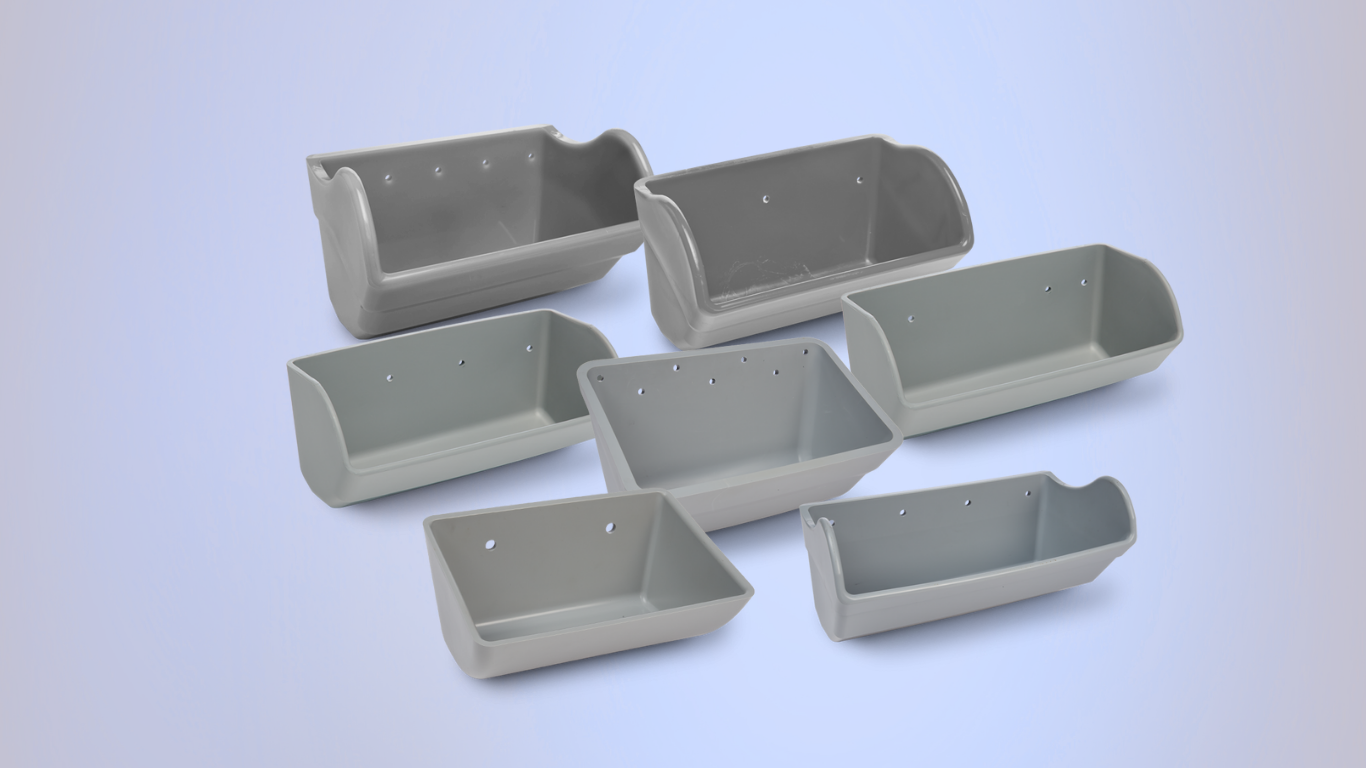
Jealco offers nylon elevator buckets for applications requiring high tensile strength and heat resistance. These buckets excel in grain milling, feed plants, and industrial material handling, providing superior durability and dimensional stability under heavy loads. Choose nylon buckets for high-speed elevators where strength and reliability are critical.
Product Facts:
- Material: Injection molded prime virgin impact modified nylon.
- Color: Gray.
- Temperature Range: -40°F to + 275°F/-40°C to + 135°C.
- Flammability: The impact modified nylon used in Tapco buckets is termed “slow burning”. It has been tested under Underwriters’ Laboratory Bulletin No. 94 HB. The primary toxic product of combustion is carbon monoxide.
- Standard Drilling: No Charge.
- Special Drilling: Any pattern and hole diameter can be provided at minimal cost.
- Venting: Available in five standard patterns. See catalog for specifications. Venting page.
- Usable Capacity: Net or usable capacity could range from 10% to 20% above water level. For engineering purposes we recommend using WL (Water Level) + 10% for usable capacity.
- Spacing: Minimum bucket spacing has historically been nominal projection plus 2". Many style CC buckets, however, are being used at projection plus 1", and some even closer. For engineering purposes we recommend using nominal projection plus 2".
- Interchangeability: Can be intermixed with existing steel or nonmetallic buckets. Some consideration should be given to balance. Bucket projection varies by manufacturer and material. Check elevator for proper clearances. Contact us for recommendations.
- Installation: Fanged elevator bolts and nylon insert lock nuts are recommended for pulleys 6" in diameter and over. No. 3, Eclipse slotted head elevator bolts are recommended for pulleys under 6" in diameter. Large flat steel (fender) washers must be placed inside the bucket under the nuts. Check elevator for proper clearances.
- FDA Status: Impact modified nylon does not meet requirements for FDA approval.
- UV Resistance: No UV (ultraviolet) stabilizers are added to Tapco buckets because most elevator buckets are enclosed in casings. Tapco buckets should not be exposed to direct sunlight for extended periods of time.
- Recommendations: Nylon buckets are extremely strong. They are unsurpassed in rough or severe service elevators. The outstanding abrasion resistant characteristics make this an excellent bucket for grain, soybeans, feeds, fertilizer, chemicals, sand and other free-flowing products.
- Limitations: Nylon buckets should not be used in the following: (1) Materials over 275°F/135°C. (2) Large dense material such as gravel and ore over 3/8" diameter. (3) Some sharp sluggish materials such as large glass cullet or oyster shells.
- Caution: Welding and cutting on elevator legs without taking proper precautions is extremely dangerous and can cause a violent explosion. Urethane buckets can be ignited and will burn from improper welding and cutting.
- Important: When elevating materials that harden or set up with moisture, a Tapco steel digger bucket should replace every 10th urethane bucket. Contact Tapco for recommendations.
Steel & Ductile Iron
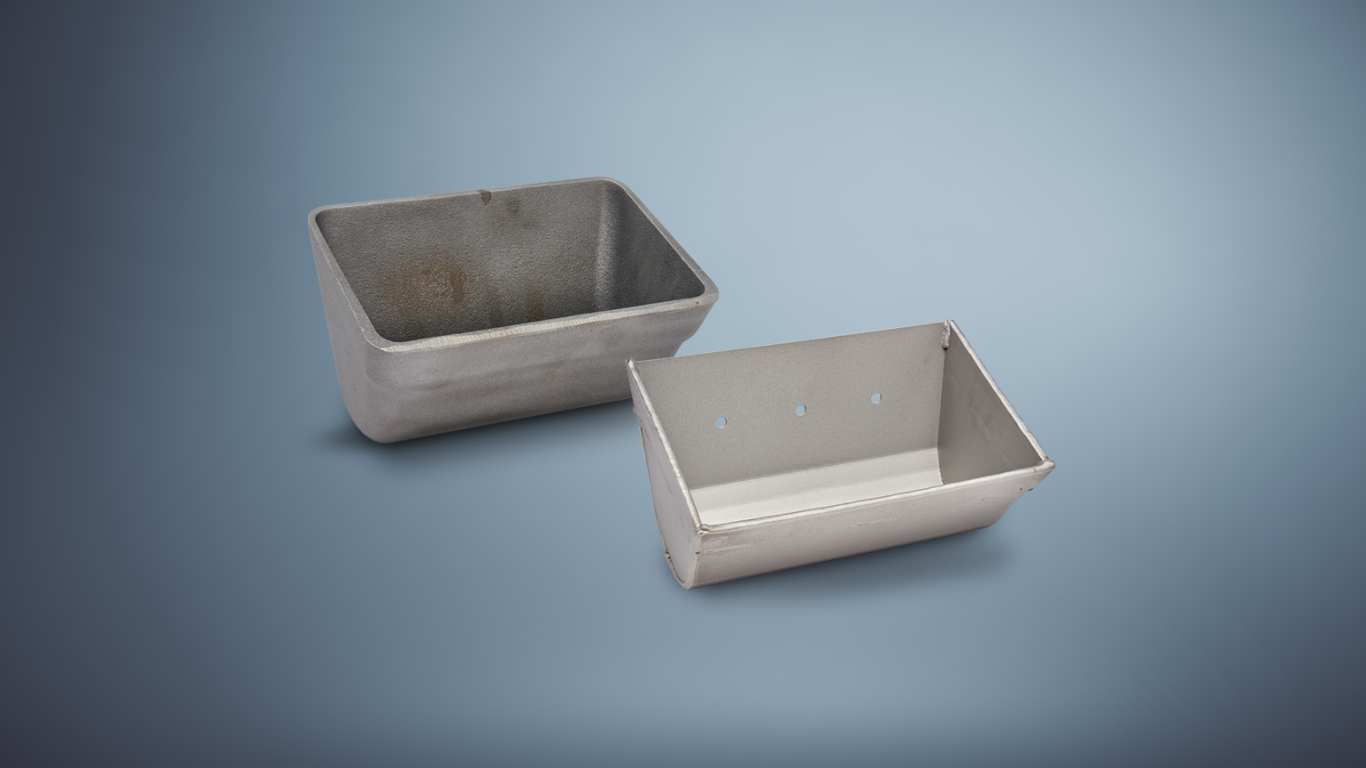
Jealco offers steel elevator buckets and ductile iron elevator buckets engineered for the most demanding bulk material handling environments. Built for industrial-grade performance, these buckets deliver exceptional impact strength, abrasion resistance, and structural integrity in abrasive, high-temperature, and heavy-duty applications. Commonly used in cement plants, aggregate facilities, mineral processing, mining, and quarrying, our buckets are available in multiple profiles for efficient material discharge, maximum capacity, and long-term reliability. Trust Jealco for durable elevator bucket solutions that withstand the toughest operating conditions.
Product Facts:
Material: Fabricated (Spot welded).Carbon Steel or Stainless Steel. The bucket utilizes a 1-piece pressed formed design consisting of two end plates and a body. Please note that there is no taper on the sides of the bucket. The bottom is spot welded to the ends.
Material Thickness: 18 ga., 16 ga., 14ga.
Flammability: The high density polyethylene used in Tapco buckets is termed “slow burning”. It has been tested under ASTM Test No. D635. It also meets the criteria for approval under the Motor Vehicle Safety Standard No. 302 and Underwriters’ Laboratory Bulletin No. 94. Combustion in an excess of air results in harmless by-products (fumes) which are nontoxic.
Standard Drilling: No Charge.
Special Drilling: Any pattern and hole diameter can be provided at minimal cost.
Venting: Contact us for more information.
Usable Capacity: We recommend using 75% of total capacity.
Spacing: Minimum bucket spacing has historically been nominal projection plus 2". Many style CC buckets, however, are being used at projection plus 1", and some even closer. For engineering purposes we recommend using nominal projection plus 2".
Interchangeability: Can be intermixed with existing steel or nonmetallic buckets. Some consideration should be given to balance. Bucket projection varies by manufacturer and material. Check elevator for proper clearances. Contact us for recommendations.
Installation: Fanged elevator bolts and nylon insert lock nuts are recommended for pulleys 6" in diameter and over. No. 3, Eclipse slotted head elevator bolts are recommended for pulleys under 6" in diameter. Large flat steel (fender) washers must be placed inside the bucket under the nuts. Check elevator for proper clearances.
Caution: Welding and cutting on elevator legs without taking proper precautions is extremely dangerous and can cause a violent explosion. Urethane buckets can be ignited and will burn from improper welding and cutting.
Fasteners
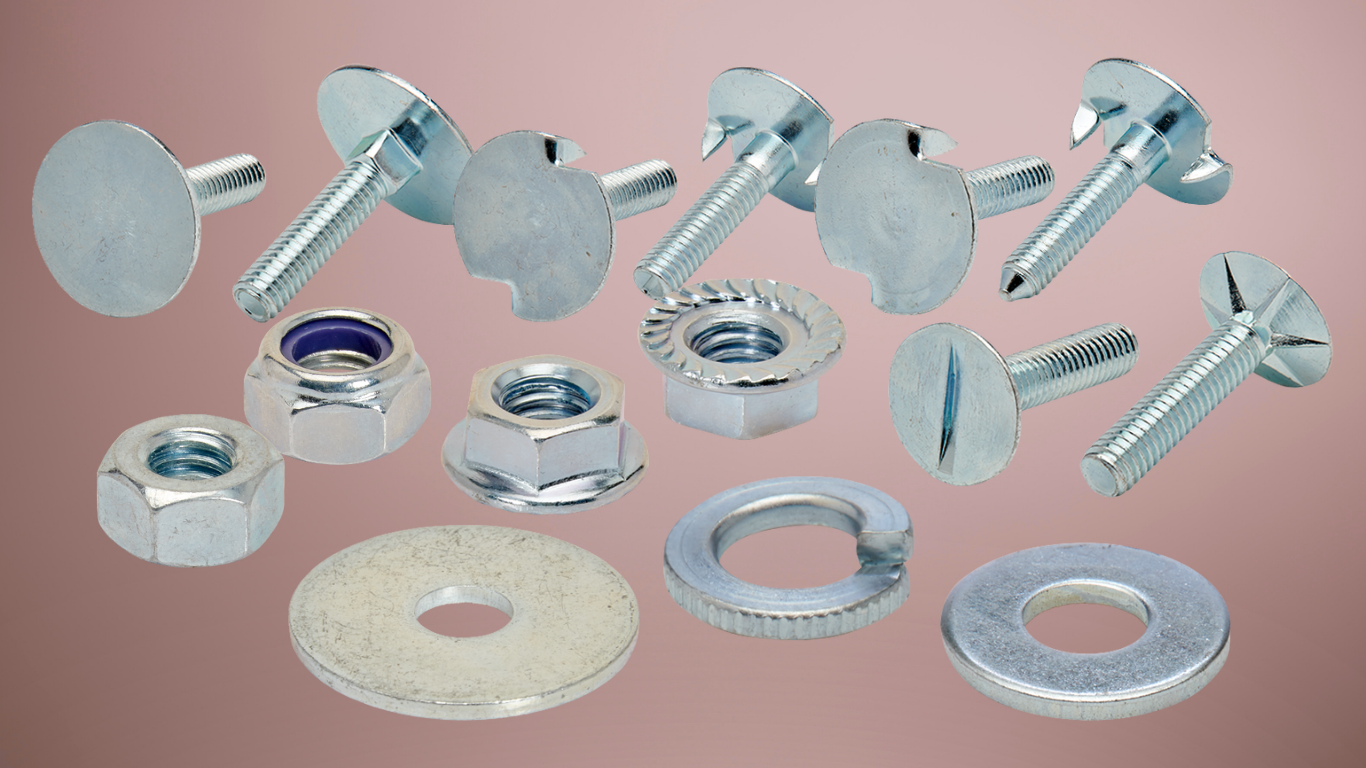
Jealco offers a wide range of elevator bolts, nuts, washers, and spacers designed for high-performance in agricultural and industrial material handling systems. Our product catalog includes fanged elevator bolts, nylon insert lock nuts, neoprene and polyethylene washers, and custom spacers, all engineered for durability and compatibility with plastic and steel elevator buckets. Jealco is a leading supplier of bulk material handling hardware, providing reliable fastening solutions for grain elevators, conveyors, and bucket elevators.
Elevator Bucket FAQ
What is the difference between polyethylene, urethane, and nylon elevator buckets?
Polyethylene buckets are lightweight and corrosion-resistant, rated -60°F to 200°F, and ideal for grain, feed, and fertilizer handling. Urethane buckets offer superior abrasion resistance, rated -60°F to 212°F, and suit fertilizer, sand, and aggregate applications. Nylon buckets provide the highest tensile strength and heat resistance, up to 275°F, for high-speed, severe-service elevators handling grain, soybeans, and abrasive materials.
Are Jealco elevator buckets FDA approved for food-grade use?
Polyethylene buckets meet FDA Food Additives Law requirements under Regulation No. 177.1520, and the blue pigment meets Regulations No. 175.300 and 177.2600, making them suitable for food-contact applications. Standard urethane and nylon buckets are not FDA approved, though FDA-approved urethane is available as a special order.
Can elevator buckets be mixed with existing steel or nonmetallic buckets on the same elevator?
Yes. Jealco's polyethylene, urethane, nylon, and steel buckets can be intermixed with existing buckets. Bucket projection varies by manufacturer and material, so check elevator clearances and balance, and contact Jealco for specific recommendations.
What hardware is needed to install elevator buckets?
For pulleys 6 inches in diameter and over, use fanged elevator bolts with nylon insert lock nuts. For pulleys under 6 inches, use No. 3 Eclipse slotted-head elevator bolts. Large flat steel fender washers should be placed inside the bucket under the nuts. Jealco supplies the full range of elevator bolts, nuts, washers, and spacers.
When should I choose steel or ductile iron buckets instead of plastic?
Steel and ductile iron buckets are built for the most demanding bulk material handling, including cement plants, aggregate facilities, mineral processing, mining, and quarrying, where high temperatures, heavy abrasion, and structural impact exceed what plastic buckets can withstand.
How do I size an elevator bucket for my leg?
Start by matching the material to your operating temperature and how abrasive the load is — polyethylene for general grain and feed, nylon for higher strength and heat, urethane for abrasive service, and steel or ductile iron for the most severe industrial duty. For capacity, use water level plus 10% as usable capacity for polyethylene, urethane and nylon buckets, or about 75% of total for steel and ductile iron.
Set bucket spacing at the nominal projection plus 2 inches, and match your hardware to the pulley — fanged elevator bolts with nylon insert lock nuts for pulleys 6 inches and over, No. 3 Eclipse slotted-head bolts for pulleys under 6 inches, always with a fender washer inside the bucket.
Because projection varies by manufacturer and material, confirm your elevator's clearances and balance, and contact Jealco with your leg specs for a recommendation.
What's the difference between centrifugal-discharge and continuous-discharge elevator buckets?
The difference is how the material leaves the bucket at the top of the elevator.
Centrifugal-discharge legs run at higher belt speeds and space the buckets apart, so material is thrown out of the bucket by centrifugal force as it rounds the head pulley — the common, higher-capacity setup for free-flowing materials like grain.
Continuous-discharge legs run slower with the buckets mounted close together, so each bucket's back face guides the material gently onto the discharge of the bucket ahead of it. Continuous discharge is the choice for fragile, aeratable or friable materials that would be damaged by high-speed throwing, and for high-lift applications where a controlled discharge matters.
Contact Jealco and we'll help you match bucket style and spacing to your discharge type.
We got it.
Thank you for contacting us.
We’ll get back to you as soon as possible.