
Industrial Casters for Every Load and Floor
Light, medium and heavy duty casters, and specialty casters for washdown, heat, static and rough floors. We source from Colson, Albion, Darcor, Hamilton Caster, Blickle, TrioPines and Tente, and match the caster to your load, mounting and environment.
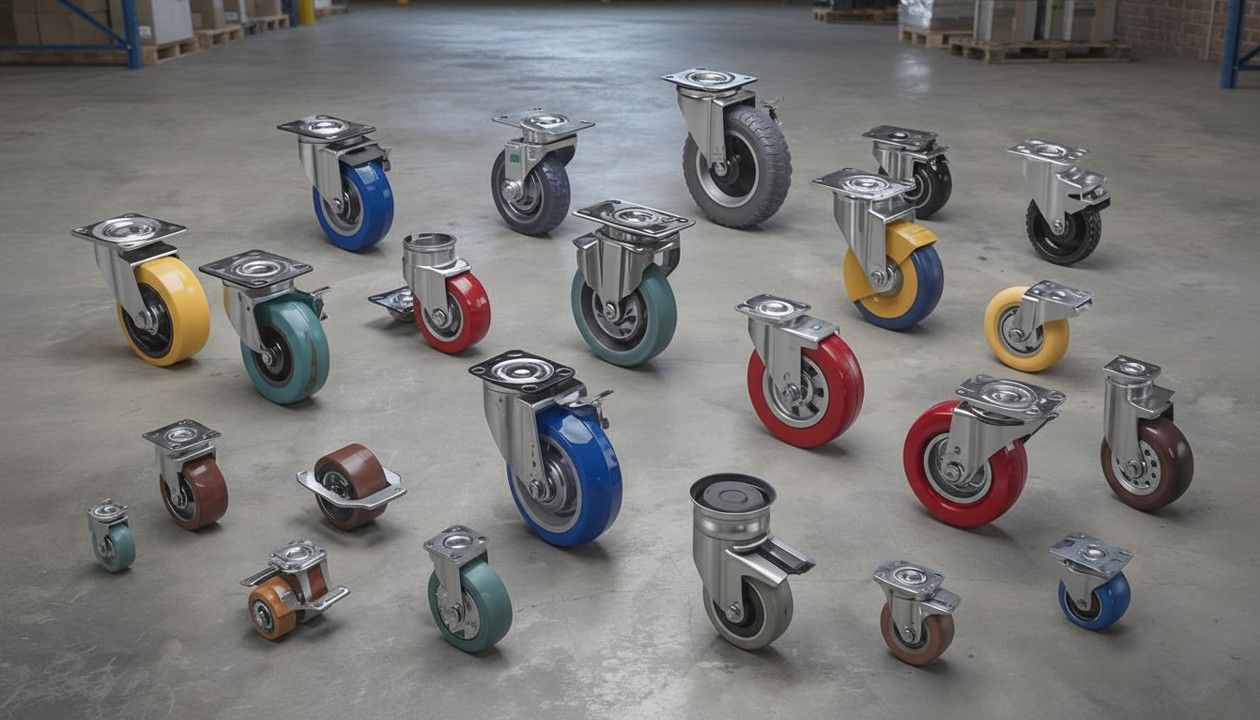
Seven makers
Colson, Albion, Darcor, Hamilton Caster, Blickle, TrioPines and Tente.
Every duty class
From 2" furniture casters to 10"+ heavy duty and kingpinless.
Specialty casters
Stainless, ESD, pneumatic, high-temperature and spring-loaded.
Wheels too
Replacement wheels alone, without the mounting. See wheels.
Start here: which caster do you need?
Choose by what you are moving and where.
| If you are moving… | Look at | Typical wheel |
|---|---|---|
| Furniture, displays, small carts | Light duty | Rubber, polyurethane, thermoplastic; 2" to 5" |
| Utility and stock carts, racks, mobile equipment | Medium duty | Polyurethane, rubber, nylon, phenolic; 3" to 8" |
| Heavy racks, platforms, industrial equipment | Heavy duty | Polyurethane, cast iron, forged steel, nylon, phenolic; 4" to 10"+ |
| Loads that take repeated impact | Heavy duty kingpinless | A swivel with no kingpin to break |
| In washdown or corrosive areas | Stainless specialty | Stainless rig with a matching wheel |
| Around electronics | ESD specialty | Conductive or static-dissipative wheel |
| Over rough ground, or with fragile loads | Pneumatic or spring-loaded | Absorbs shock and vibration |
| Near ovens or heat | High-temperature specialty | High-temperature wheel and grease |
Caster duty classes
Each class covers a range of load ratings; the exact rating depends on the maker, wheel and bearing.
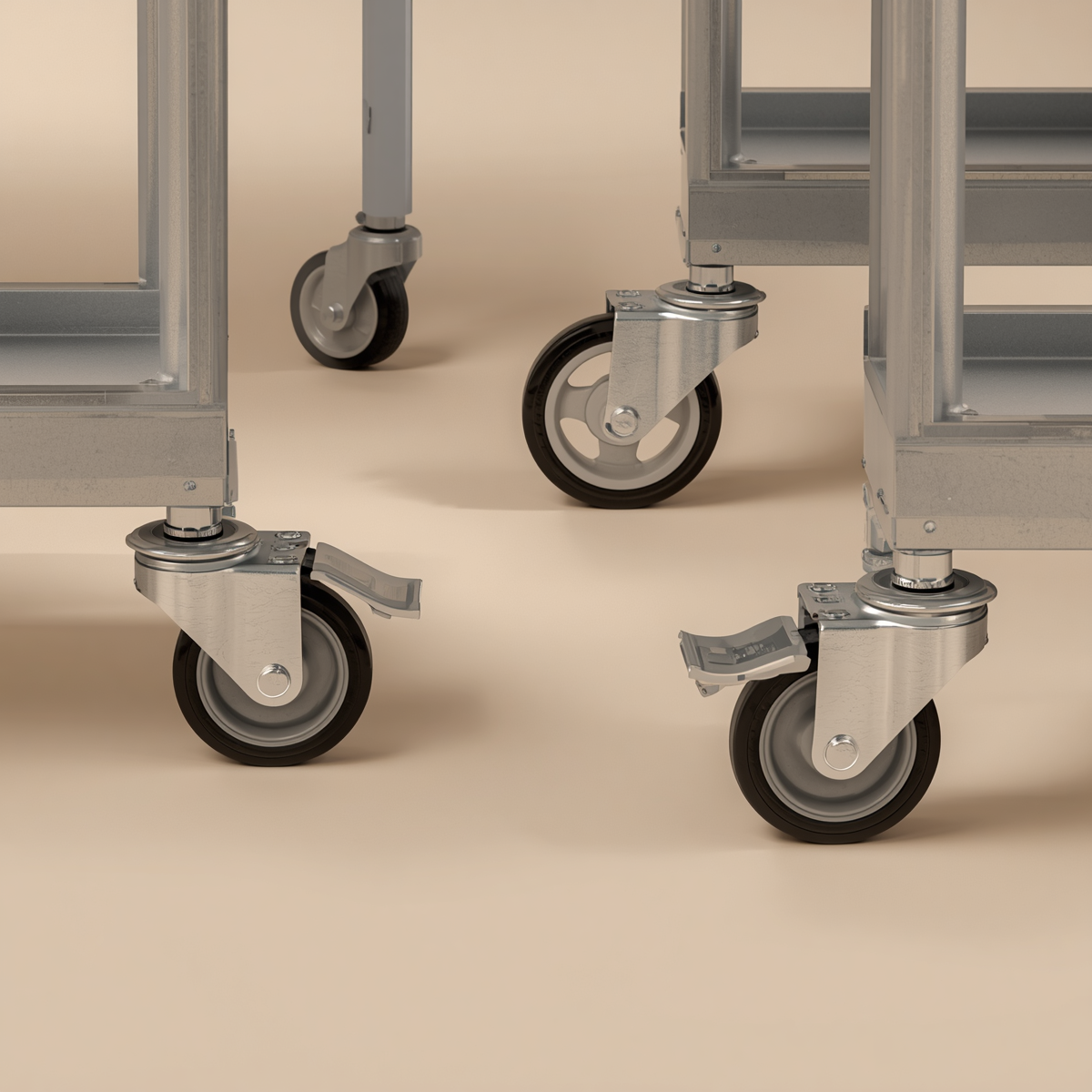
Light duty
- Sizes Generally 2" to 5"
- Wheels Rubber, thermoplastic, polyurethane, nylon, polyolefin
- Types Swivel, rigid, brake
Smooth, easy mobility for furniture, display units, small carts and light equipment, with non-marking and quiet-rolling options.
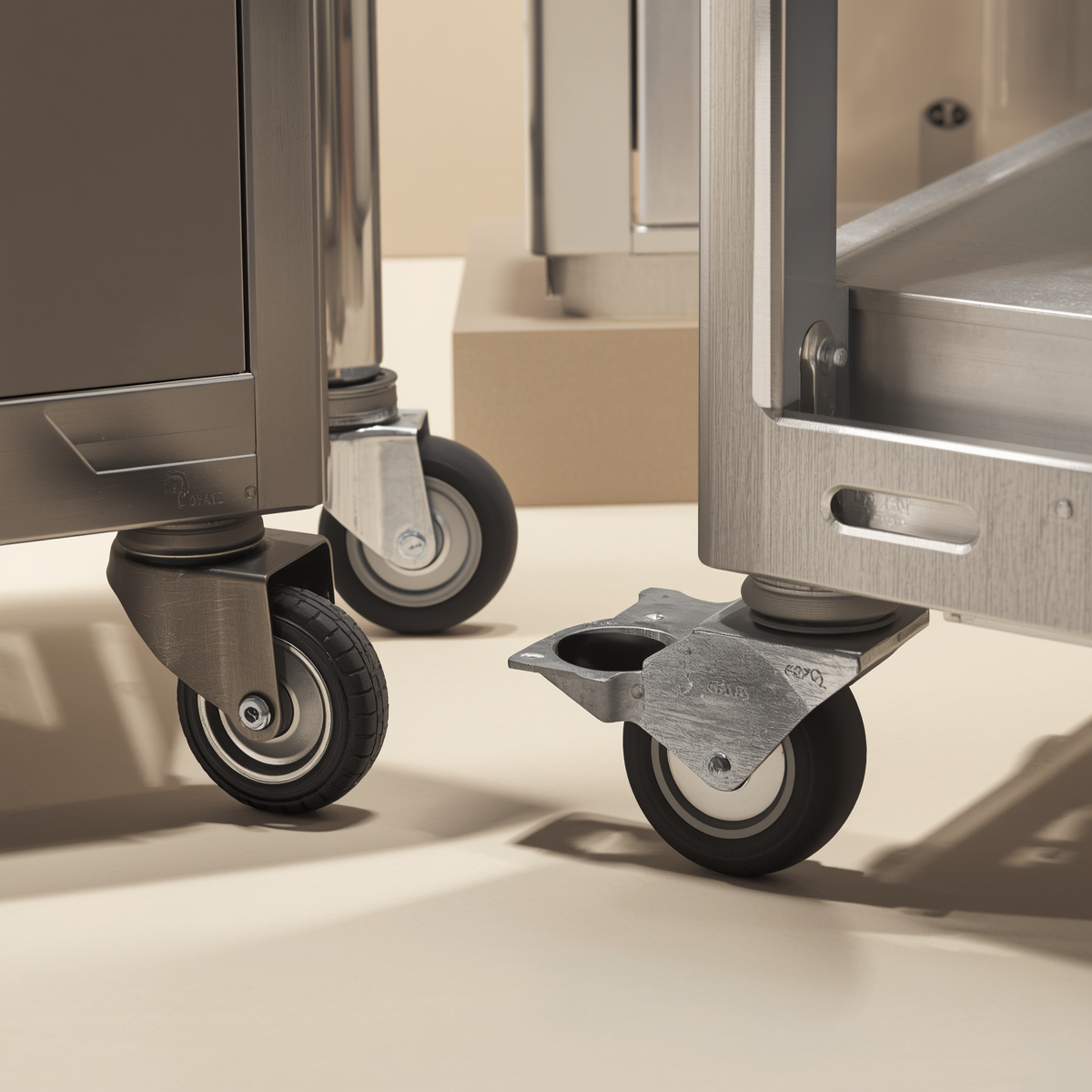
Medium duty
- Sizes Generally 3" to 8"
- Wheels Polyurethane, rubber, thermoplastic, nylon, phenolic
- Types Swivel, rigid, brake; swivel locks
Reliable mobility for carts, racks and equipment that do not need heavy duty capacity.
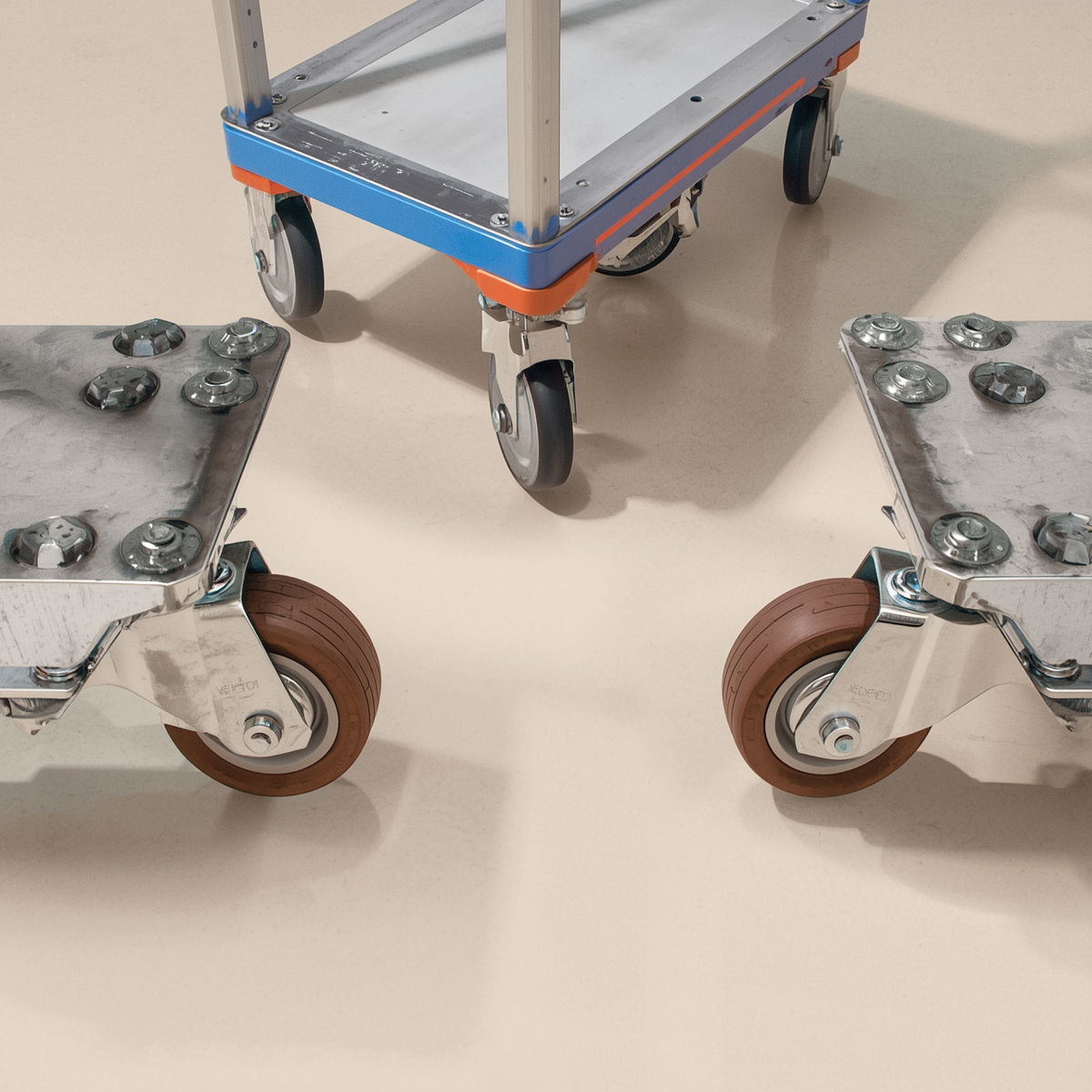
Heavy duty
- Sizes Generally 4" to 10"+
- Wheels Polyurethane, cast iron, forged steel, nylon, phenolic, rubber
- Types Swivel, rigid, brake, kingpinless
For heavy carts, racks and platforms, with shock-absorbing designs, swivel locks and thread guards available.

Specialty
- Sizes Generally 3" to 8"+
- Options Stainless, ESD, pneumatic, high-temperature, spring-loaded
For sanitation, static control, heat, rough floors, noise or vibration that standard casters are not built for.
How to size a caster
A common rule of thumb for the load each caster must carry:
(equipment weight + heaviest load) ÷ (number of casters − 1)
For a four-caster cart, divide by three. The spare caster allows for an uneven floor lifting one caster clear. Add margin for impact, ramps and rough floors.
Then check the rest
Floor and environment
Soft treads for finished floors, hard wheels for rough ones; stainless, ESD or high-temperature where needed.
Mounting
Top plate size and bolt pattern, or stem type and size, to match your equipment.
Height
The overall height from floor to mounting surface, so the equipment sits level.
Wheel and bearing
Wheel material, diameter and bearing type set how easily it rolls. See wheels.
Caster types
Swivel
Turns 360 degrees to steer.
Rigid
Rolls straight only, so the equipment tracks in a line.
Brake and total lock
A brake stops the wheel; a total lock stops the wheel and the swivel.
Kingpinless
A swivel design without a kingpin, for heavy loads and impact.
Swivel lock
Locks the swivel so a swivel caster can run as a rigid one.
Plate or stem mount
A bolted top plate, or a stem that fits into the leg or socket.
Caster brands we source
Colson, Albion, Darcor, Hamilton Caster, Blickle, TrioPines and Tente. As an independent distributor we are not tied to one maker's catalog, so we can match your application or your existing casters across brands. Need a brand not listed? Ask.
Wheels
Replacement wheels without the mounting.
Bearings and skate wheels
Conveyor skate wheels and bearings.
Pallet jacks
Manual and powered pallet trucks.
Caster FAQ
How do I choose between light, medium and heavy duty casters?
Work out the load each caster must carry (see the sizing rule on this page), then pick a caster rated comfortably above it for your floor and duty. Light duty suits furniture, displays and small carts; medium duty suits utility and stock carts and mobile equipment; heavy duty suits heavy racks, platforms and industrial equipment. If you are near the top of a class's rating, go up a class.
How much load should each caster be rated for?
A common rule of thumb is to add the weight of the equipment and its heaviest load, then divide by one fewer than the number of casters. For a four-caster cart, divide by three. That allows for an uneven floor lifting one caster off the ground. Add margin for impact, ramps or rough floors.
Swivel, rigid or brake casters: what is the difference?
A swivel caster turns 360 degrees for steering. A rigid caster only rolls straight, which helps a cart track in a line. A brake or total-lock caster stops the wheel, and a total lock also stops the swivel, for equipment that must stay put. A common cart layout is two swivel and two rigid casters.
When should I choose a specialty caster?
When the environment is the problem: stainless casters for washdown and corrosion, ESD casters where static must be controlled, pneumatic casters on rough ground, high-temperature casters near ovens and heat, and spring-loaded casters to cut shock and vibration to the load.
Which casters protect floors and run quietly?
Polyurethane and rubber treads roll more quietly and are kinder to floors than cast iron, steel, phenolic or hard nylon. Choose a non-marking tread for finished or light-colored floors.
Do you only sell complete casters?
No. We also supply replacement wheels, and conveyor skate wheels. See our wheels page and bearings and skate wheels page.
Can you source custom caster configurations?
Yes. As an independent distributor we can source non-standard sizes, mounting plates, stem types and materials from several manufacturers. Send the load, mounting and environment and we will match it.
Tell us the load, the floor and the mounting
Send the total weight, the number of casters, the mounting (plate size or stem) and the environment, or a photo of the caster you are replacing. We will come back with a recommendation, not just a price.