
Conveyor Belt Lacing, Splices and Adhesives
Mechanical belt fasteners from light package belts to heavy mining belts, clamp splices and bolts for bucket elevators, adhesives for glued joints, and the tools to install and maintain them. Flexco®, Tapco, Maxi-Lift and Habasit.
Fasteners, splices, adhesives and tools are quoted to your belt: tell us your application requirements and we will match the fastener to it. Elevator bolts, nuts and washers are in our online store.
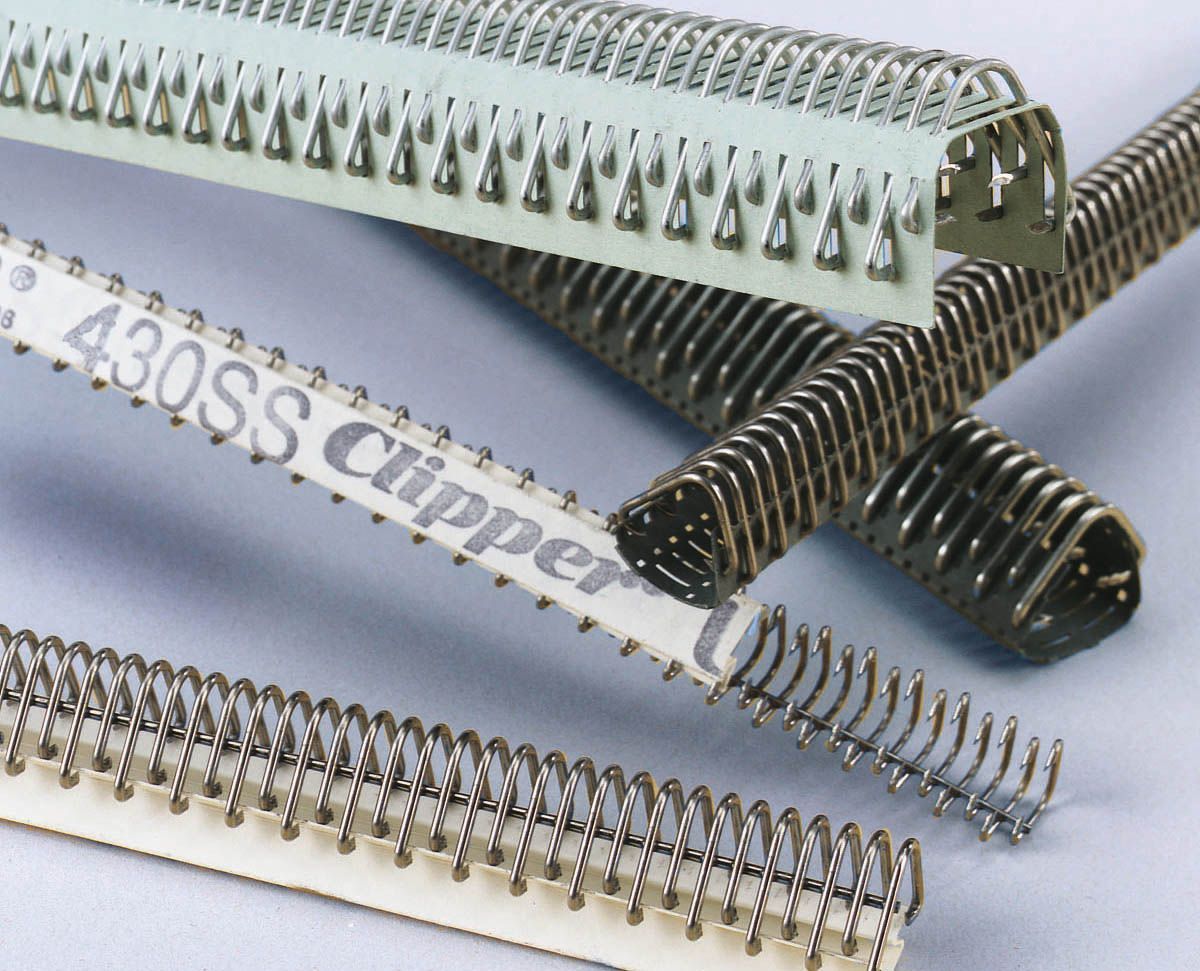
Light to heavy duty
Fasteners for belts up to 2" thick, rated from 25 up to 2,000 PIW.
Bucket elevators
Clamp splices to 800 PIW, including non-sparking bronze, plus elevator bolts, nuts and washers.
Glued joints
Habasit adhesives for flush, metal-free joints on fabric and rubber-covered belts.
Or we do it
Buy your belt from us and we can install the lacing or splice it endless before it ships.
Start here: which fastener do you need?
Choose by the belt and the job. Each row points to the section below.
| If your belt is… | Look at | Why |
|---|---|---|
| Thin (up to 25/64") on small pulleys: packages, laundry, filter belts | Clipper® wire hooks | Very low-profile hinged joint, pulleys down to 15/16" |
| Light duty or agricultural, up to 1/2", needs a quick field repair | Alligator® lacing | Hammered on by hand; hinged, with a removable pin |
| Light to medium duty, 1/16" to 1/4", many splices to make | Alligator® Staple | Staples come pre-inserted in one-piece strips for fast installation |
| A round hay baler belt | Alligator® Rivet | All-stainless hinged splice made for balers, rated 300 PIW |
| Heavy duty, carrying sand, gravel, stone or cement | Flexco® Bolt Solid Plate | Strong, sift-free joint on belts 3/16" to 2" thick |
| Heavy duty and needs to be opened: mining, wood, construction | Flexco® SR™ Rivet Hinged | Hinged joint rated up to 2,000 PIW on belts up to 1" thick |
| A bucket elevator belt | Tapco or Maxi-Lift splices | Clamp splices to 800 PIW, no lap and no extra belting |
| An elevator in a dusty or explosive atmosphere | Bronze non-sparking splices | Tapco-Splice NS and Maxi-Splice AB |
| Fastening buckets to the belt | Elevator bolts | Norway, fanged and 3-prong bolts, lock nuts and fender washers |
| A thin fabric belt that must run flush | Habasit adhesives | Glued joint with no metal at the splice |
How to choose a belt fastener
Three numbers decide it
Belt thickness: every fastener size covers a thickness range. Rated tension (PIW): the fastener's rating must be at least your belt's working tension; see What is PIW? Smallest pulley: the fastener has to bend around it, so your smallest pulley must be at least the fastener's minimum pulley diameter.
Hinged or solid plate
A hinged splice has a removable pin, so the belt can be opened to take it off the conveyor or to clean it. A solid-plate splice is one piece across the joint: stronger, and fine material cannot sift through it.
Metal
Plain or galvanized steel suits most dry jobs. Choose stainless for wet, corrosive or food lines, non-magnetic metals where a magnet pulls tramp iron off the belt, and bronze where sparks must be avoided.
Mechanical belt fasteners
Flexco® systems, light duty to heavy duty. Ratings and pulley sizes vary by fastener size; we confirm the exact size when we quote.
Clipper® Wire Hooks
- Belt thickness Up to 25/64" (10 mm)
- Rating 60 to 200 PIW
- Smallest pulley 15/16" to 7"
- Installed with Clipper® lacer
Wire hooks rolled into the belt end, joined by a hinge pin. A low-profile, quiet-running joint for package handling, manufacturing, food processing, laundry, agriculture and filter belts. Hooks in galvanized, stainless, Monel® and other metals; pins in steel, stainless and nylon-covered cable.
Request a QuoteAlligator® Lacing
- Belt thickness Up to 1/2" (13 mm)
- Rating 25 to 200 PIW
- Smallest pulley 1" to 14"
- Installed with Hammer, by hand
Toothed lacing that bites along the belt and is hammered on with simple hand tools. The removable pin lets the belt be opened for cleaning or removal. Common on agricultural and light-duty belts. Steel or 316 stainless.
Request a Quote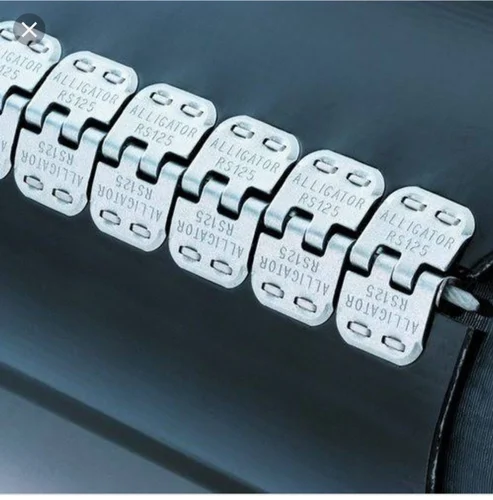
Alligator® Staple
- Belt thickness 1/16" to 1/4"
- Rating 100 to 200 PIW
- Smallest pulley 2" to 4"
- Installed with Alligator® Staple installation tool or power driver
Fasteners supplied in one-piece strips with the staples already in place, for fast, consistent splices. Steel, stainless, MegAlloy® and magnetic stainless.
Request a QuoteAlligator® Rivet
- Belt thickness 13/64" to 15/64"
- Rating 300 PIW
- Smallest pulley 3.5"
- Material All stainless
A hinged, rivet-attached splice made for round hay baler belts.
Request a QuoteFlexco® Bolt Solid Plate
- Belt thickness 3/16" to 2"
- Rating 150 to 620 PIW
- Smallest pulley 12" to 48"
- Installed with Hand or power tools
Solid plates bolted through the belt give a strong joint that fine material cannot sift through. A common splice for sand, gravel, crushed stone, cement and mining. Steel, galvanized, stainless, MegAlloy® and Everdur.
Request a QuoteFlexco® SR™ Rivet Hinged
- Belt thickness 1/8" to 1"
- Rating 330 to 2,000 PIW
- Smallest pulley 5" to 42"
- Installed with Rivet applicator tool
A heavy-duty hinged joint for belts that must be opened, in mining, wood processing and construction equipment. Galvanized, stainless, MegAlloy® and RustAlloy®.
Request a QuoteFlexco® Bolt Hinged
- Belt thickness 1/4" to 5/8"
- Rating 190 to 300 PIW
- Smallest pulley 6" to 9"
- Installed with Hand or power tools
Bolted plates with a hinge, where a bolted belt needs to come apart. Available in Everdur, a non-magnetic, spark-free alloy, as well as galvanized, stainless and MegAlloy®.
Request a QuoteBucket elevator belt splices
Clamp splices join an elevator belt between grooved plates, 2" of belt width per set. No lap, no double thickness and no extra belting, and the splice can be taken apart.
| Splice | Material | Rated to | Belt thickness | Notes |
|---|---|---|---|---|
| Tapco Dura-Splice Standard | Cast ductile iron, zinc plated | 800 PIW | Up to 1/2" | 4" Grade 5 bolt and lock nut per set; 1/2" holes |
| Tapco-Splice NS | Cast bronze, non-sparking | 800 PIW | Up to 1/2" | 4.5" Grade 5 bolt and lock nut per set; 1/2" holes |
| Maxi-Lift Maxi-Splice CI | Galvanized cast iron | 600 PIW | 1/4" to 5/8" | Head pulley 12" minimum; up to 600 °F |
| Maxi-Lift Maxi-Splice AB | Manganese bronze, non-sparking | 800 PIW | 1/4" to 5/8" | Head pulley 12" minimum; up to 500 °F |
Tapco splices are not recommended for wing pulleys. Holes are punched or drilled from the supplied template. Maxi-Splice bolts are re-torqued after 30 minutes of running. Follow the maker's installation instructions.
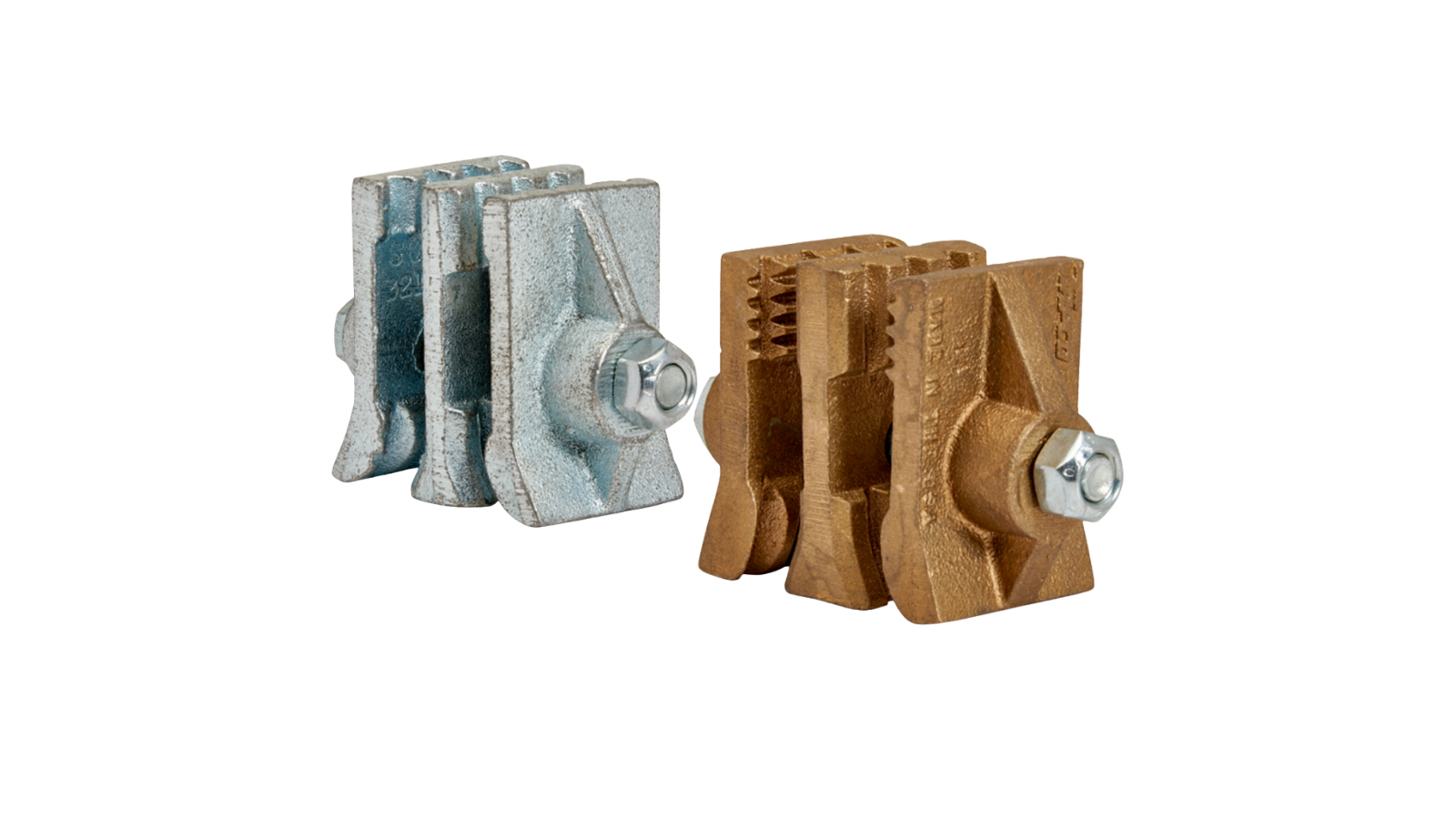
Tapco Dura-Splice and Tapco-Splice NS
- Per set 2" of belt width
- Hole 1/2" (Tapco punch or drill)
- Template Supplied with the splice
Standard ductile iron for most elevators, or cast bronze where sparks must be avoided. Tell us the belt width and thickness and we will quote the number of sets and the bolts.
Request a QuoteMaxi-Lift Maxi-Splice
- Per set 2" of belt width
- Belt thickness 1/4" to 5/8"
- Head pulley 12" minimum
For thicker elevator belts, up to 5/8". The CI model is rated 600 PIW; the bronze AB model is rated 800 PIW and is non-sparking.
Request a QuoteElevator bucket bolts, nuts and washers
Elevator bolts fasten the buckets to the belt, with a nylon lock nut and a fender washer to spread the load. Bolts, nuts and washers are in our online store.
| Bolt style | What it is | Use it when |
|---|---|---|
| No. 1 Norway | Flat countersunk head | The general-purpose elevator bolt |
| Fanged | Fangs under the head bite into the belt | You want the bolt to hold still while the nut is tightened |
| Western style (3-prong) | Flat head with three short prongs | Thinner belts, where fangs would go in too deep |
| Reference 70 | Large-diameter head, used with an oval washer | Heavy-duty steel buckets on pulleys over 20" |
Zinc plated suits most indoor grain handling; stainless suits wet, outdoor and food-adjacent sites. Match the bolt diameter and length to your bucket's holes and your belt's thickness; the bucket maker's data gives both.
Belt adhesives for glued joints
A glued joint runs flush and has no metal at the splice. It takes clean, controlled conditions, so it is usually done in a shop rather than on the conveyor.
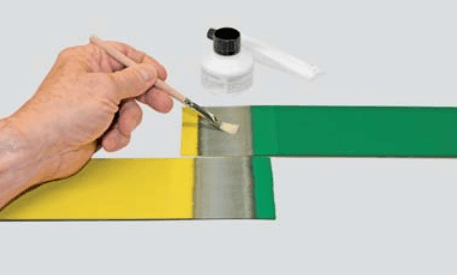
Habasit Polycol A + B
- Bonds Polyester fabric and EPDM layers
- Open time Dry 30 to 120 minutes before joining
- Pot life Mixed adhesive starts to harden after 5 hours
Brushed onto both faces of the joint. Used in Habasit glued joints on belts with polyester and EPDM layers. Polycol B is also sold on its own as a primer for EPDM.
Request a QuoteHabasit Vulcol
- Bonds Rubber layers on Habasit belts
- Pack 30 g tube
- Application One coat
For Habasit belts with a rubber layer. Brush on once and place the glued surfaces together correctly first time.
Request a QuoteThermofix hot-press joints
Thermofix is Habasit's glued joint made in a hot press. The temperature, pressure and time are set for each belt from Habasit's joining data, so tell us the belt type and we will quote the right adhesive and confirm the method. Prefer not to do it yourself? We can splice the belt endless, vulcanized or glued, before it ships.
Installation and maintenance tools
The right tool makes a square, lasting splice. We quote tools with the fasteners they install.
- Clipper® lacers Maintenance lacers such as the Roller Lacer® and Microlacer®, and production lacers for high volume.
- Alligator® tools Staple installation tools and power drivers, and rivet tools for baler belts.
- Heavy-duty installers Rivet applicators and bolt punches, boring bits and wrenches, by hand or power.
- Tapco punch 1/2" punch for elevator splice and bucket bolt holes.
- Belt cutters Flexco® cutters for belts up to 2" thick, and a 14" cutter for narrow belts.
- Skivers and prep FSK™ belt skiver, rough-top skiver, belt grinder and belt nippers.
- Squaring and handling Laser belt square, belt clamps and the Flex-Lifter™ belt lifter.
Belt cleaners and pulley lagging
Carryback and pulley slip wear out belts and splices. These are quoted to your conveyor: send the belt width, speed and material.
Primary cleaners
Mounted at the head pulley to remove most carryback, such as the Flexco® EZP1 precleaner for belts 12" to 72" wide.
Secondary cleaners
Tungsten-carbide-tipped blades behind the primary, such as the Flexco® MHS heavy-duty cleaner for belts 18" to 96".
Pulley lagging
Flex-Lag® rubber or ceramic lagging improves grip and cuts slip; the weld-on version fits without removing the pulley.
What to send for a quote
With these details we can size the fastener and quote it the same way the manufacturer would.
- The belt Its name, or its width, thickness and rating (PIW).
- The conveyor The smallest pulley diameter, and whether it is a bucket elevator.
- The material What the belt carries, and whether it is wet, hot, food or dusty.
- The joint Hinged or solid, and whether it must be non-sparking or non-magnetic.
- Quantity How many splices, and whether you need the installation tool.
Further reading
All conveyor belting
Heavy duty, light duty, PVC and incline belts, cut to size.
Elevator buckets
Buckets for grain legs and bulk-handling elevators.
What is PIW?
How belt and fastener ratings work.
Conveyor belt calculator
Belt speed, bulk capacity and package throughput.
Choosing a conveyor parts distributor
What to look for in a supplier.
Custom conveyor belting supplier
Finding the right match for a custom belt.
Belting accessories FAQ
Hinged or solid-plate: which kind of splice do I need?
A hinged splice has a removable pin, so the belt can be opened to take it off the conveyor or to clean it. Clipper®, Alligator® lacing, Flexco® SR™ Rivet Hinged and Flexco® Bolt Hinged are hinged. A solid-plate splice is one piece across the joint, so it is stronger and fine material cannot sift through it; Flexco® Bolt Solid Plate is the usual choice for aggregate, cement and mining belts. If you need to open the belt regularly, choose hinged. If you need the strongest, sift-free joint, choose solid plate.
How do I pick the right fastener size for my belt?
Three numbers decide it: the belt's thickness, its rated tension (PIW) and the smallest pulley it runs over. The fastener's thickness range must cover your belt, its rating must be at least the belt's working tension, and your smallest pulley must be at least the fastener's minimum pulley diameter. Send us the belt name or those three numbers and we will size it for you.
Clipper® or Alligator® lacing: what is the difference?
Both are hinged, light-duty lacing. Clipper® wire hooks suit thin belts, up to 25/64" (10 mm), and small pulleys, down to 15/16", and give a very low-profile joint; they are installed with a Clipper® lacer. Alligator® lacing takes belts up to 1/2" (13 mm), is rated 25 to 200 PIW, and is hammered on by hand, which makes it a common field fix on agricultural and light-duty belts.
Why use a clamp splice on a bucket elevator belt?
Elevator belt splices such as Tapco Dura-Splice and Maxi-Lift Maxi-Splice clamp the two belt ends between grooved plates, 2" of belt width per set. That avoids the double thickness and the extra belting a lap splice needs, and the splice can be taken apart. They are rated up to 800 PIW. Tapco's splices take belts up to 1/2" thick; Maxi-Splice takes 1/4" to 5/8" and needs a head pulley of at least 12".
When do I need a non-sparking splice?
Where combustible dust or flammable vapors are present, such as many grain and feed elevators. The bronze splices, Tapco-Splice NS and Maxi-Splice AB, are made for these sites; the standard ductile-iron and cast-iron versions are not non-sparking. Check the requirements that apply to your site before you order.
Glued joint or mechanical fastener?
A glued joint runs flush and has no metal, which suits thin fabric belts and food lines. It needs clean, controlled conditions, and for Habasit Thermofix joints a hot press set to that belt's joining data. A mechanical fastener goes on in minutes on site and can be taken apart. If you want a seamless loop without doing it yourself, we can splice the belt endless, vulcanized or glued, before it ships.
Can you install the lacing on a belt before it ships?
Yes. Every belt we sell is cut to your width and length, and we can install mechanical lacing, splice it endless, and add cleats, sidewalls or V-guides. All finishing is quoted to order; tell us your application requirements.
Do you have stainless or other fastener metals?
Yes, for most lines. Clipper® hooks, for example, come in galvanized, stainless, Monel® and other metals, and Flexco's heavier fasteners in galvanized, stainless, MegAlloy® and Everdur. Tell us the conditions (wet, corrosive, food, magnetic separation) and we will quote the right metal.
Which brands do you supply?
Flexco® mechanical fasteners, tools, belt cleaners and Flex-Lag® lagging; Tapco elevator belt splices, punches and elevator bolts; Maxi-Lift Maxi-Splice; and Habasit belt adhesives. Jealco is an authorized Tapco distributor and an independent distributor for the other lines. If you need a brand not listed here, ask: we source what the job needs.
Flexco®, Clipper®, Alligator®, Flex-Lag® and related names are trademarks of Flexible Steel Lacing Company. Tapco, Maxi-Lift, Maxi-Splice, Habasit, Polycol, Vulcol and Thermofix are trademarks of their owners. Specifications are from the manufacturers' published data and are confirmed when we quote.
Not sure which fastener fits your belt?
Send the belt name or its width, thickness and rating, plus your smallest pulley. We will come back with a recommendation, not just a price.