High Temperature Resistant Conveyor Belting Options: A Global Sourcing Guide
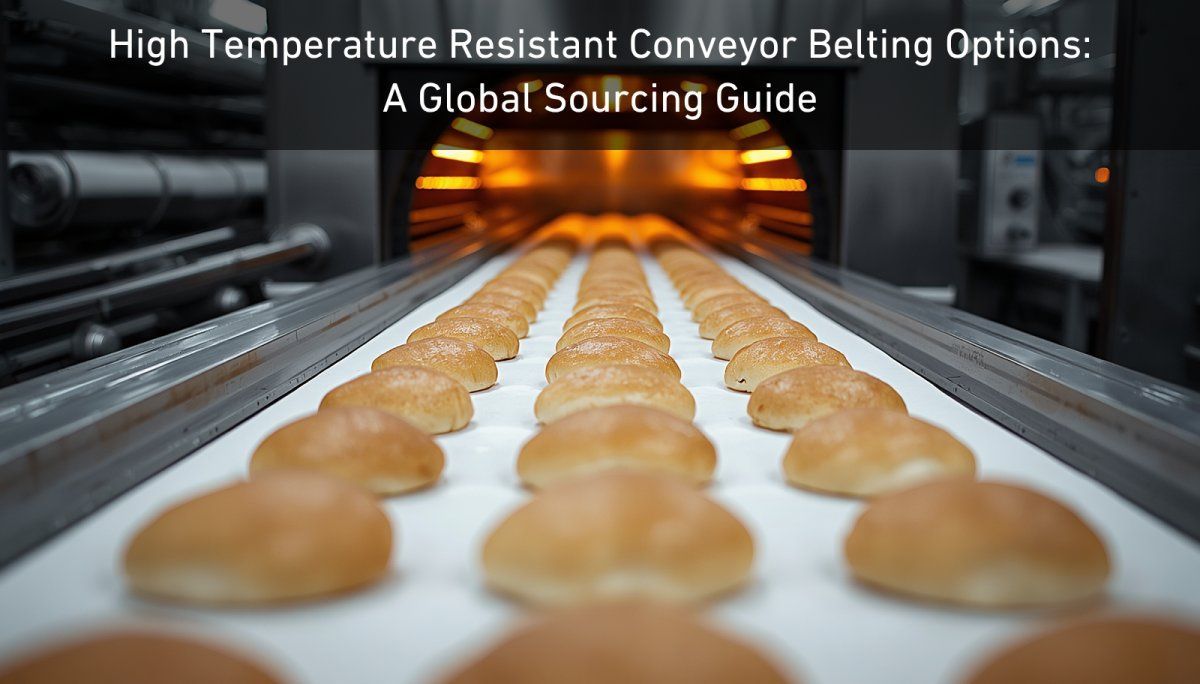
What if your oven's peak temperature rating is actually the primary cause of your unscheduled downtime? Most facility managers believe they're buying sufficient thermal protection when they match a belt's peak rating to their process, but they're often inadvertently scheduling their next system failure. Choosing the wrong high temperature resistant conveyor belting options doesn't just waste material; it halts production and erodes your bottom line. At Jealco International, Inc., we understand the frustration of watching a belt harden because the distinction between peak and continuous ratings was unclear during the procurement phase.
Eliminating heat-induced downtime requires specifying a belt based on the continuous material load temperature rather than the ambient air temperature. This guide provides the technical clarity you need to select materials that withstand constant exposure to 400°F / 204°C or higher without losing tensile strength. We'll examine the latest ISO 14890:2026 standards for textile belts and explain how our status as an independent distributor at Jealco International, Inc. allows us to source specialized EPDM or silicone solutions globally. You'll learn how to navigate international logistics while keeping your facility compliant with current safety regulations.
Key Takeaways
- Identify the "hardening cycle" that causes standard rubber belts to become brittle and fail prematurely under constant thermal stress.
- Evaluate various high temperature resistant conveyor belting options , including EPDM for heavy industrial loads and Silicone or PTFE for high-release applications.
- Distinguish between material temperature (the load) and ambient temperature (the environment) to accurately determine your continuous operating threshold.
- Discover how independent global sourcing can get you specialized belts across brands.
- Master the technical specifications required for an accurate international quote, including dual-measurement width (in / mm) and tensile ratings (PIW / kN/m).
The High Cost of Thermal Degradation: Why Standard Belts Fail
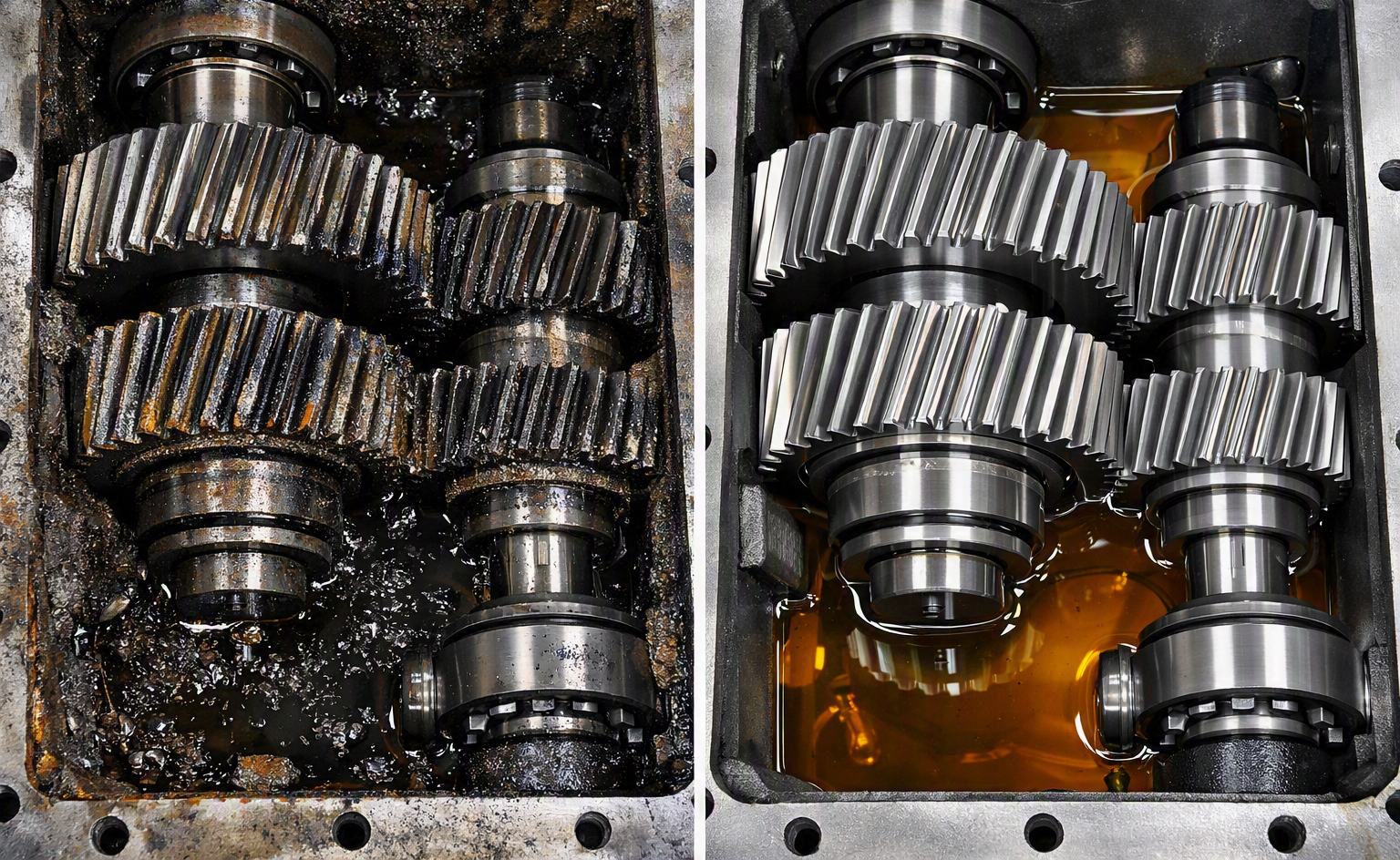
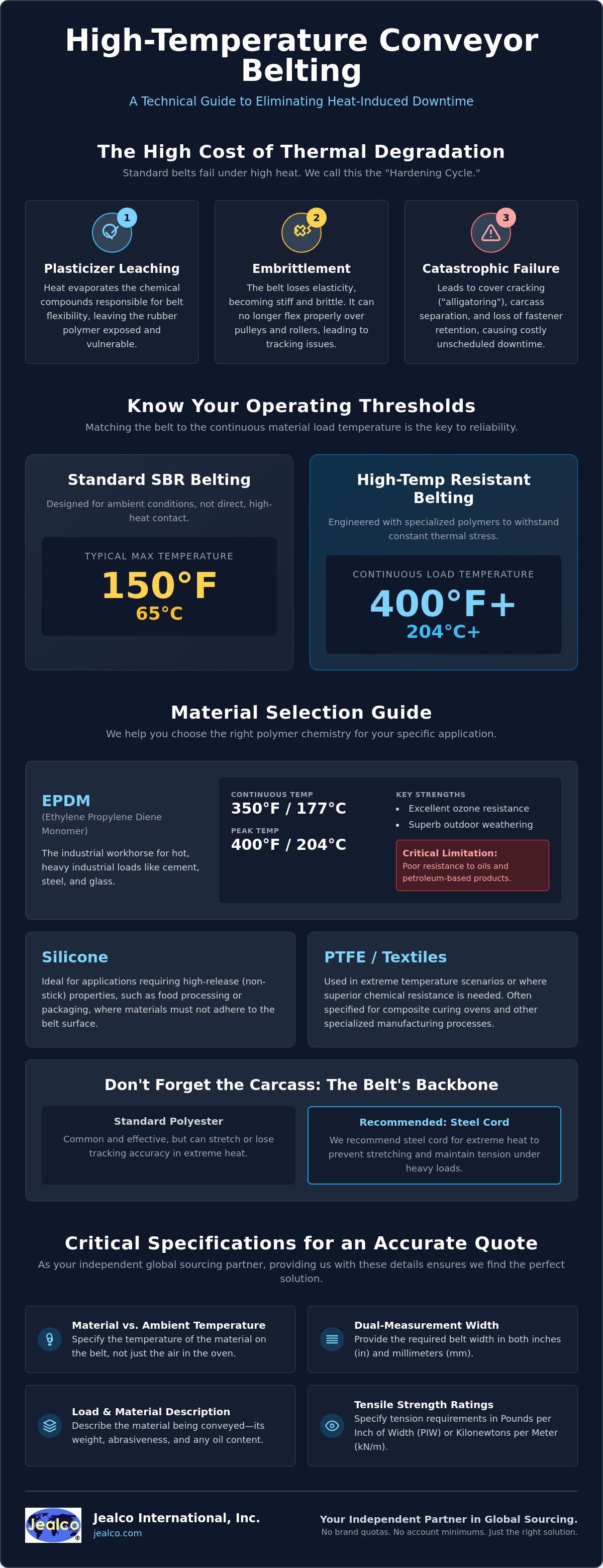
Standard belts aren't designed for extreme environments. We classify high-temperature resistant belting as a specialized category of material handling because the chemical composition must withstand more than just mechanical friction. When a standard belt enters a high-heat zone, it undergoes what we call the "Hardening Cycle." Heat leaches the plasticizers, which are the chemicals responsible for flexibility, out of the rubber compound. As these additives evaporate, the belt becomes brittle and loses its ability to flex over pulleys and rollers.
This brittleness leads to three primary failure modes. First, carcass separation occurs, where the internal fabric plies pull away from the rubber cover. Second, cover cracking occurs, often called "alligatoring." Finally, the belt loses its ability to retain mechanical fasteners. For 24/7 operations like steel mills or glass manufacturing, these failures result in unscheduled downtime that can cost thousands of dollars per hour. We recommend evaluating heavy-duty conveyor belting specifically engineered for these environments. As an independent distributor, we don't push one brand; we focus on the material science that keeps your facility running.
Thermal Thresholds for Standard vs. Specialized Belting
Standard SBR (Styrene-Butadiene Rubber) belts usually have limits capped at 150°F / 65°C. Beyond this point, you must transition to specialized high temperature resistant conveyor belting options like EPDM or Silicone, which handle loads up to 400°F / 204°C. Thermal degradation is the irreversible chemical breakdown of polymer chains. Understanding Conveyor belt technology requires recognizing that once this breakdown happens, the belt cannot be restored to its original state. Our role is to help you navigate these high temperature resistant conveyor belting options to find the exact match for your ambient and material temperatures.
Identifying Heat Damage Before Catastrophic Failure
You can often spot heat damage before a catastrophic snap. Look for surface crazing or surface "alligatoring" on the belt cover. You'll also notice the belt feels stiff and struggles with tracking accuracy as it loses its natural troughing ability. If you see premature wear on your pulleys or rollers, it's often because the hardened belt is acting like an abrasive surface rather than a flexible carrier. Ignoring these cues can lead to a total system shutdown during a peak production cycle. Monitoring these physical changes is the first step in a proactive maintenance strategy.
Comparing Material Options: EPDM, Silicone, and Kevlar Textiles
Selecting from the available high temperature resistant conveyor belting options requires a deep understanding of how specific polymers react to thermal stress. We don't just look at the top cover; we evaluate the entire belt construction, including the carcass. The carcass, typically made of polyester or steel cord, is the backbone that maintains belt tension. While polyester is common, steel cord is often the better choice for extreme heat to prevent the belt from stretching or losing its tracking accuracy under heavy loads. Our independence allows us to source the specific material chemistry that matches your facility's unique thermal profile.
EPDM Belting: The Standard for Cement and Steel
EPDM (Ethylene Propylene Diene Monomer) is the industrial workhorse for hot loads. It provides reliable service for continuous temperatures up to 350°F / 177°C and can handle brief peaks of 400°F / 204°C. This material is a staple in heavy-duty conveyor belting applications because it offers excellent resistance to ozone and outdoor weathering. However, EPDM has a critical limitation. It has poor resistance to oils and petroleum-based products, which will cause the rubber to swell and degrade rapidly.
Advanced Textiles: When Rubber Isn't Enough
For the "hot end" of glass manufacturing or aluminium extrusion, standard rubber compounds often fail. We utilize Kevlar and Aramid textiles for these extreme environments where temperatures can exceed 1,000°F / 538°C. These materials provide a non-marking surface, which is vital for maintaining the quality of sensitive products like architectural glass. We adhere to CEMA standards when specifying these belts to ensure the mechanical design supports the specialized textile properties. Keep in mind that while these textiles handle extreme heat, they typically offer lower mechanical abrasion durability than thick rubber covers.
Light-Duty Thermal Solutions
Packaging lines and drying tunnels often require light-duty conveyor belting with specialized coatings like Silicone or PTFE (Teflon). These materials are essential for high-release applications where products might otherwise stick to the belt surface. We ensure these solutions meet FDA and USDA requirements for food-grade environments. Whether you're running a shrink-wrap tunnel or a high-heat industrial dryer, these coatings provide the necessary thermal barrier. If you're struggling to identify the right material for your specific heat cycle, contact our technical team for a detailed application review.
Continuous vs. Intermittent Heat: Defining Your Operating Thresholds
Procurement teams often focus solely on the maximum temperature a belt can survive for five minutes. This is a mistake. To select the correct high temperature resistant conveyor belting options, you must distinguish between the Material Temperature and the Ambient Temperature. Material Temperature is the thermal load of the product itself, while Ambient Temperature refers to the air surrounding the system. Peak ratings are often misleading for 24/7 manufacturing cycles because they don't account for heat saturation. Belts often fail not at the peak temperature, but during the cooling phase where rapid contraction causes carcass fatigue.
We recommend calculating "dwell time" to determine the actual heat transfer from the load to the belt. Dwell time is the duration the material remains on the belt surface during a single pass. You can calculate this using the following framework:
- Conveyor Length (ft / m) divided by Belt Speed (fpm / m/s).
- Loading Ratio: The percentage of the belt surface covered by hot material.
- Cooling Zone Length: The distance the belt travels without a load.
The Role of Belt Speed in Heat Dissipation
Increasing belt speed (measured in fpm / m/s) can reduce surface heat absorption by limiting contact time with hot materials. However, this strategy only works if the return-run provides adequate cooling. Return-run cooling gives the belt time to "breathe" and release stored energy before the next load cycle. Thermal equilibrium in a conveyor system is the state where the heat absorbed from the load equals the heat dissipated during the return run. If your system doesn't reach this balance, the belt temperature will climb steadily until the polymer degrades. We help our clients analyze these cycles to ensure they aren't over-specifying or under-specifying their high temperature resistant conveyor belting options .
Ambient Heat and Ventilation Considerations
Enclosed conveyor galleries act like ovens, trapping heat and accelerating belt degradation. Belt conveyors operating near furnaces or kilns face intense radiant heat that standard covers cannot deflect. Managing this requires proper ventilation and potentially the installation of heat shields to protect the belt carcass. High-heat zones also demand specialized bearing lubricants that won't liquefy and leak at elevated temperatures. We source these specialized components as part of a total system solution to ensure your mechanical parts don't fail before your belt does.
Critical Specifications and International Sourcing Strategies
Securing the right high temperature resistant conveyor belting options requires moving beyond brand loyalty to focus on pure technical specifications. Procurement often stalls when relying on outdated manufacturer cross-references rather than current engineering requirements. To generate a precise quote, we need the belt width in dual units (e.g., 24 in / 610 mm), the total length, and the required tensile strength in PIW or kN/m. At Jealco International, Inc., we use these data points to match your specific heat profile with the most robust carcass and cover combination available on the global market.
Our independence from brand-specific quotas is a core differentiator for Jealco International, Inc. and our clients. We source based on your application's technical demands, not to satisfy a manufacturer's sales volume requirements. With export experience since 1950, we manage the logistics of delivering these critical components to six continents.
Navigating Global Supply Chain Constraints
Long lead times for specialized belting can halt production for weeks. We mitigate this risk through our independent online catalogs, which allow us to identify stock availability across multiple global hubs. Using dual measurements (Imperial and Metric) in our documentation prevents the installation errors that often occur during international procurement. Our logistics team handles all export documentation and customs clearance, ensuring that your heavy industrial components bypass the common administrative bottlenecks that delay larger, less agile distributors.
Custom Fabrication and Belt Splicing for Heat Resistance
The splice remains the most vulnerable point in any high-heat conveyor system. We generally recommend vulcanized splices for EPDM and silicone belts, as they create a chemical bond that resists the thermal expansion and contraction cycles mentioned earlier. However, these require specific high-temp splicing kits that match the cover's polymer chemistry. If your maintenance team prefers mechanical fasteners for speed, we provide the necessary belting accessories and tools to ensure a secure fit. For a detailed review of your splicing requirements, contact our technical department for assistance.
Optimizing Your Thermal Material Handling with Jealco International, Inc.
We help you transition from reactive maintenance to a strategic procurement model. Selecting high temperature resistant conveyor belting options shouldn't be a gamble based on a manufacturer's brochure. Instead, it requires a logical sequence of engineering decisions: identifying the correct polymer for chemical and thermal compatibility, establishing the continuous threshold of your system, and selecting a distribution partner with global reach. At Jealco International, Inc., our export experience since 1950 ensures that we focus on your operational uptime rather than meeting brand-specific sales quotas.
The Independent Advantage
Our independent business model at Jealco International, Inc. is a critical asset for your procurement strategy. Because we aren't tied to a single manufacturer, we can access a much wider range of elastomeric and textile compounds than traditional distributors. This ensures that the high temperature resistant conveyor belting options we propose are tailored exactly to your belt speed and cooling cycle. We prioritize the needs of mid-market operations, with technical expertise and personalized support.
Next Steps for Procurement and Engineering
To begin improving your belt life, we recommend auditing your current failure logs for the hardening patterns we discussed in the opening sections. Compare those observations against our technical data for EPDM and Silicone compounds to see if a material upgrade is warranted. Once you've identified the gaps in your system, contact our technical team for a consultation. We provide the technical review and global logistics support necessary to stabilize your thermal material handling processes.
Don't let heat-induced downtime compromise your production targets. Contact Jealco International, Inc. today to discuss your high-heat application and secure a more reliable sourcing strategy.
Secure Your Production Line Against Thermal Failure
Eliminating heat-induced downtime starts with a fundamental shift from reactive replacement to proactive material selection. We've shown that identifying the chemical triggers of the hardening cycle and calculating accurate dwell times allows you to select the most durable high temperature resistant conveyor belting options for your facility. Whether your operation requires EPDM for heavy-duty loads or specialized Silicone for high-release tunnels, such as those used in commercial conveyor pizza ovens, the technical specifications must align with your actual continuous operating thresholds.
We provide more than just industrial components; we offer a strategic partnership backed by export experience since 1950. As an independent distributor, Jealco International provides global logistics support across six continents. Our team is ready to help you navigate complex international procurement and ensure your specialized belts arrive on time and to specification. Contact Jealco International for a belting consultation and a review of your high-heat application. Reliable thermal material handling is within reach when you have the right sourcing strategy.
Frequently Asked Questions
What is the highest temperature a rubber conveyor belt can withstand?
Specialized rubber compounds like EPDM typically reach their limit at 400°F / 204°C for short-term peaks. For continuous exposure, most rubber belts are rated closer to 350°F / 177°C. If your application exceeds these thresholds, we recommend moving to silicone or aramid textiles. These non-rubber high temperature resistant conveyor belting options provide the necessary thermal stability without the hardening risks associated with standard elastomers.
Is Kevlar or EPDM better for handling hot glass?
Kevlar is the superior choice for handling hot glass because it offers non-marking properties and withstands temperatures exceeding 1,000°F / 538°C. EPDM will often leave carbon marks on architectural glass and degrades much faster at the "hot end" of the production line. We provide woven Kevlar and felt solutions that protect product quality while maintaining the necessary belt tension throughout the cooling process.
How do I measure my conveyor belt's operating temperature accurately?
You should measure the temperature of the belt surface itself using an infrared thermometer or a thermal imaging camera. Measuring only the ambient air or the material temperature often leads to under-specifying the belt. Checking the temperature at the loading point and again just before the return run provides the most accurate data for calculating thermal equilibrium and dwell time.
Can I use standard mechanical fasteners on a high-temperature belt?
We advise against using standard mechanical fasteners in high-temperature environments because the metal components can act as heat sinks, accelerating local belt degradation. Heat causes the belt carcass to soften, which often leads to fasteners pulling through the fabric. If a vulcanized splice isn't feasible, you must use specialized high-temp fasteners made from stainless steel or alloys designed to resist thermal expansion.
What is the difference between peak and continuous temperature ratings?
Continuous ratings indicate the temperature a belt can withstand 24/7 without losing its physical properties. Peak ratings refer to short-term exposure, usually limited to 15 to 30 minutes, before the material begins to break down. Relying on peak ratings for standard operations is a common cause of premature belt hardening and carcass delamination in industrial facilities.
How does heat affect the tensile strength (PIW) of a conveyor belt?
Excessive heat reduces the tensile strength of a belt by weakening the bond between the rubber covers and the internal carcass. As the polymer chains break down, the belt's rating in pounds per inch of width (PIW) or kilonewtons per meter (kN/m) effectively drops. This loss of strength leads to excessive stretching, tracking issues, and eventually a complete structural failure under heavy loads.
Do high-temperature belts require different pulleys or rollers?
High-temperature belts often require larger pulley diameters to reduce the mechanical stress on the hardened rubber covers. You must also ensure that your pulleys and rollers utilize high-temperature bearings and specialized lubricants. Standard grease can liquefy at temperatures as low as 200°F / 93°C, leading to bearing seizure and increased friction that further damages the belt surface.
Why is EPDM the preferred material for cement plant conveyors?
EPDM is the preferred material for cement plants because it balances heat resistance with the durability needed for abrasive clinker. It handles the constant 300°F / 149°C loads common in these facilities while resisting the ozone and UV exposure found in outdoor galleries. We often specify EPDM as one of the most cost-effective high temperature resistant conveyor belting options for bulk material handling in the cement and lime industries.
Need parts or a quote?
Jealco has supplied industrial equipment and parts since 1950, in the U.S. and for export worldwide. Send us your part number, size or application and we'll quote it.
Prefer to talk? Call +1 770-998-2124. Hablamos español.
Recent Posts