Guide to Non-Sparking Conveyor & Elevator Components

August 3, 2026
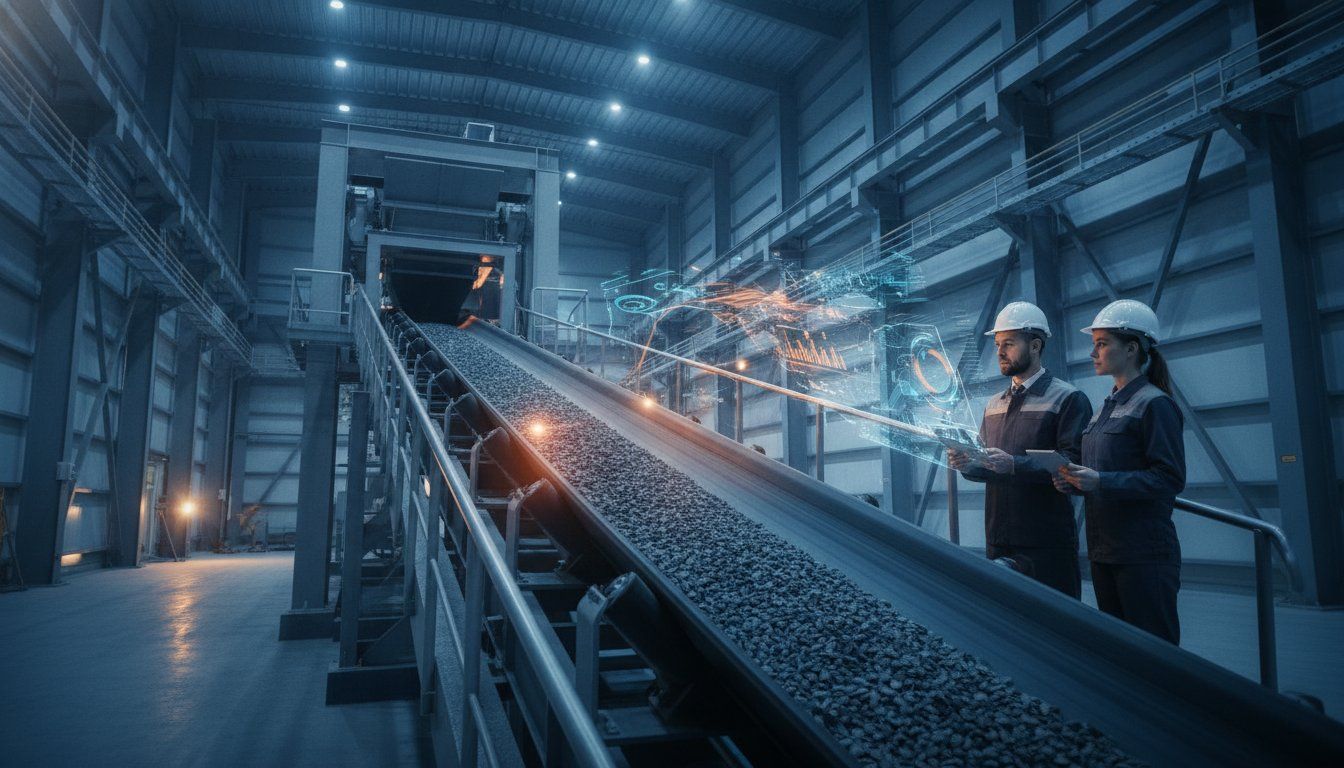
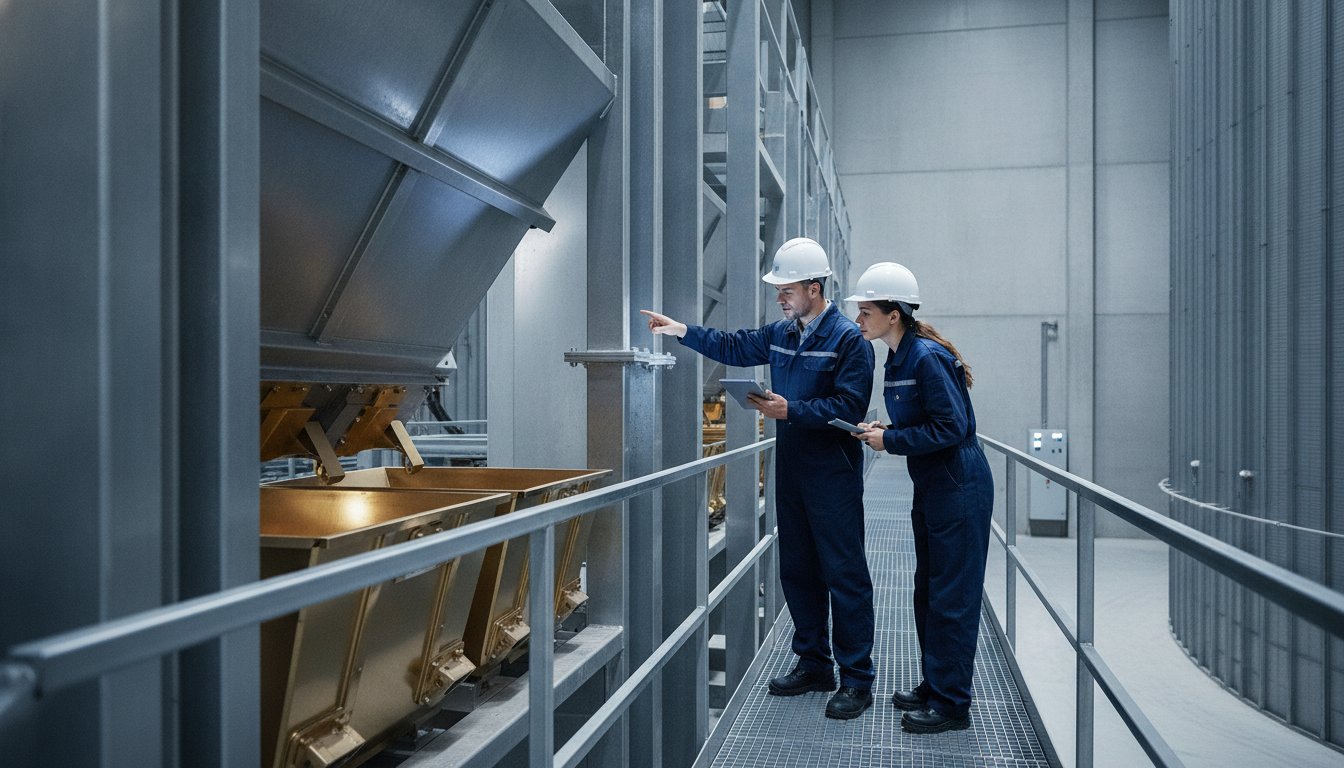
workers inspecting non-sparking parts of a grain storage facility

A single mechanical spark in a volatile atmosphere isn't just a safety violation; it's a potential catalyst for a catastrophic industrial explosion. You understand that protecting your facility requires more than just a generic safety plan. It demands a rigorous technical approach to every non-sparking component in your bucket elevator or conveyor system.

In our experience, procurement managers often struggle to distinguish between various specialized alloys, leading to either inadequate protection or unnecessary overspending. We've designed this guide to eliminate that confusion. You'll learn exactly how to match the material to your specific gas or dust hazard to maintain strict safety and regulatory compliance.

At Jealco International, Inc. , we leverage 75 years of export expertise to help you identify the correct alloys for your specific environment. We'll examine how to ensure compliance with global standards and source reliable MRO components for international sites, whether you're moving 50 lb / 22.7 kg of tools or bulk conveyor parts. Our team provides the technical oversight needed to keep your operations safe and compliant across six continents.

Key Takeaways

  • Learn to distinguish between Aluminum Bronze and Copper Beryllium to select the material that matches your specific atmospheric hazard.
  • Ensure your facility maintains compliance with OSHA 1910.242(b) and ATEX standards by integrating certified non-sparking components.
  • Identify critical ignition risks in conveyor pulleys and rollers while understanding the role of anti-static belting in ESD prevention.
  • Discover how our independent status allows us to source specialized safety tools and MRO parts globally without manufacturer constraints.

Understanding Non-Sparking Technology in Explosive Atmospheres

We define non-sparking materials as those engineered to prevent the generation of sparks with enough thermal energy to ignite flammable gases, liquids, or dusts. In our experience, many facilities rely on standard carbon steel components in high-risk zones. This is a dangerous liability. When steel strikes another surface, it shears off tiny particles that oxidize rapidly in the air. These hot sparks can reach temperatures exceeding 2,000°F / 1,093°C, which easily surpasses the ignition point of many industrial vapors.

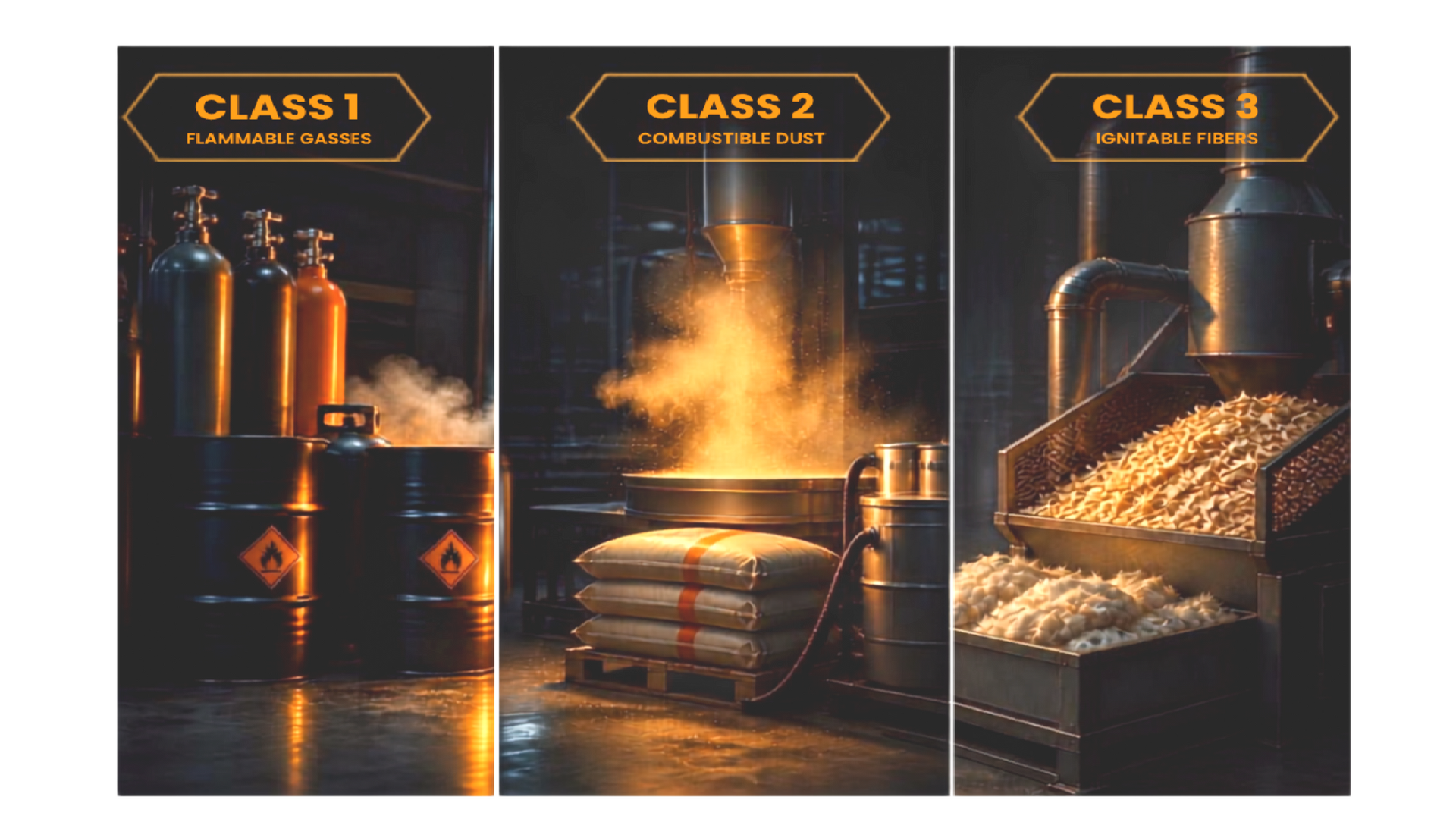
Safety protocols depend on accurate hazardous area classifications. Under the ATEX framework, Zone 0, 1, and 2 define the frequency and duration of explosive atmospheres. Similarly, the National Electrical Code (NEC) uses Class I (gases), Class II (dusts), and Class III (fibers) to categorize these risks. Choosing the right non-sparking solution depends entirely on which of these zones your equipment occupies. Jealco International, Inc. helps procurement managers identify the specific components needed to maintain compliance in these volatile environments.

The Mechanics of a Spark

During a mechanical impact, kinetic energy transforms into thermal energy. If the energy exceeds the Minimum Ignition Energy (MIE) of the surrounding medium, an explosion occurs. Standard steel creates high-temperature sparks through friction that continue to burn as they travel. Conversely, specialized alloys produce "cold sparks." These sparks have such low thermal energy that they don't ignite the atmosphere. This distinction is critical for high-speed components like conveyor pulleys where constant friction is a reality.

Primary Industries Requiring Non-Sparking Solutions

Safety is paramount in industries where volatile substances are part of the daily workflow. We support several sectors with specialized components like elevator buckets designed for hazardous zones. Key industries include:

  • Petrochemical and Refineries: Facilities handling crude oil or refined fuels must mitigate vapor hazards during production and transport.
  • Grain Elevators and Flour Mills: Fine organic dust is highly combustible. A single spark in a silo can lead to a dust explosion that destroys an entire facility.
  • Pharmaceutical and Chemical Processing: These sites often use flammable solvents like ethanol or acetone in large quantities, requiring spark-resistant tools for all maintenance tasks.

Our team understands that sourcing these specialized materials shouldn't be a hurdle. We leverage our 75 years of export experience to provide technical guidance and reliable logistics. We ensure that your MRO sourcing aligns with global safety mandates without the constraints of brand-specific agreements. Jealco International, Inc. acts as a strategic partner to ensure your facility remains robust and functional under pressure.

Comparing Non-Sparking Alloys: Aluminum Bronze vs. Copper Beryllium

Selecting the correct material for your facility requires a balance of safety requirements and mechanical performance. We primarily source non-sparking components manufactured from two distinct alloys: Aluminum Bronze (Al-Br) and Copper Beryllium (Cu-Be). Both materials prevent ignition, but their physical properties dictate their specific applications in industrial environments.

In our experience, the choice often comes down to the required hardness and the presence of magnetic hazards. While standard steel tools reach 50-60 HRC, these alloys are softer to prevent the friction that causes hot sparks. We help our clients navigate these technical trade-offs to ensure equipment longevity without compromising safety.

Aluminum Bronze (Al-Br) Specifications

Aluminum Bronze is the standard, cost-effective choice for many hazardous zones. It typically features a hardness of 23-35 HRC and a tensile strength of approximately 85,000-113,000 psi / 590-780 MPa. This alloy is best suited for ATEX Zone 1 and 2 environments where the risk of gas or dust is present but mechanical demands are moderate.

  • Pros: Lower initial cost and excellent corrosion resistance in marine environments.
  • Cons: Lower hardness means a shorter lifespan in high-torque or heavy-impact applications compared to Cu-Be.

Copper Beryllium (Cu-Be) Specifications

Copper Beryllium represents the high-performance tier of safety materials. It offers a hardness of 33-45 HRC and a superior tensile strength of 181,000-210,000 psi / 1250-1450 MPa. This strength allows the material to withstand more rigorous use in heavy-duty MRO applications.

This alloy is also non-magnetic. It's essential for environments with sensitive electronic equipment or magnetic resonance imaging (MRI) units where ferrous materials would be dangerous. However, safety managers must note a critical warning. Beryllium dust is toxic ; you must never grind or sharpen these components without specialized PPE and ventilation.

Choosing the wrong alloy can lead to premature wear or, worse, a safety failure in a critical moment. If you're currently evaluating your inventory for an international site, our sales team can provide the specific data sheets you need to make an informed decision.

Navigating Global Safety Standards: ATEX, OSHA, and NFPA

Compliance with international safety standards provides the legal and technical framework for using non-sparking equipment. We recognize that verifying these regulations is often the most complex part of procurement for international sites. Whether you're operating in North America or Europe; your components must meet specific directives to ensure worker safety and facility integrity. In our experience, confirming these standards at the point of purchase prevents costly delays and safety gaps during installation.

OSHA and NFPA Guidelines in North America

In the United States, OSHA 1910.242(b) mandates that all hand and portable powered tools be kept in a safe condition. This includes using spark-resistant tools in locations where flammable gases or combustible dusts are present. For grain handling facilities and chemical processing plants, NFPA 77 provides the "Recommended Practice on Static Electricity." This standard is particularly relevant when selecting elevator buckets or belting that might accumulate a static charge.

We recommend that a "Qualified Person", someone with the specific technical expertise to evaluate atmospheric risks, oversees the selection of all safety equipment. This individual ensures that the maintenance protocols for your gearing products and drive systems account for the unique risks of your specific hazardous zone. Implementing these protocols correctly reduces the risk of mechanical friction becoming a source of ignition.

ATEX and International Certification

For projects involving European markets or international exports, the ATEX Directive 2014/34/EU is the primary standard. It governs all equipment intended for use in potentially explosive atmospheres. You must look for the CE and Ex markings on every non-sparking tool or component to verify its certification for a specific zone. These markings provide the technical assurance that the equipment has undergone rigorous testing for thermal and mechanical safety.

In our experience, international compliance documents must be precise to avoid logistics hurdles. We always include dual measurements, such as a tool weight of 10 lb / 4.5 kg or dimensions in both imperial and metric units, to facilitate smooth customs clearance and technical audits. Jealco International, Inc. assists our clients in matching US-spec equipment to international safety standards. We ensure that a motor or conveyor component sourced in one region meets the regulatory requirements of another across six continents.

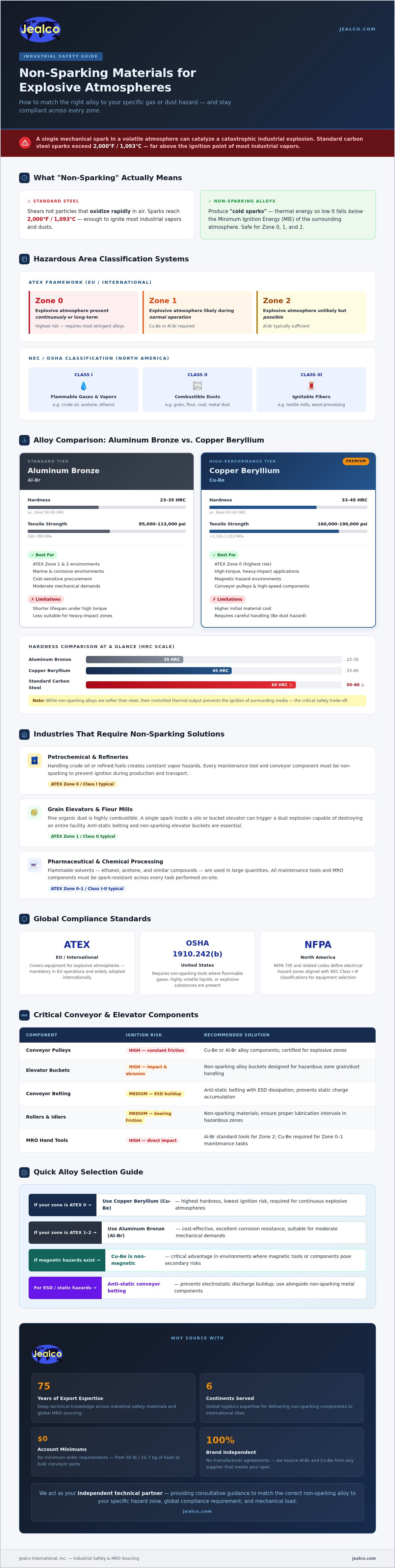
infographic showing industries that require non-sparking solutions as well as many other helpful pieces of information

Selecting Non-Sparking Components for Conveyor Systems and MRO

We've discussed the material science of alloys; now we must address the mechanical assembly of the conveyor itself. Identifying critical spark points is the first step in a comprehensive safety audit. Pulleys, rollers, and high-speed bearings are the most common sites where friction transforms into dangerous thermal energy. We ensure that every component in a hazardous zone meets the specific T-rating of the environment to prevent surface temperatures from reaching the auto-ignition point of surrounding vapors. For instance, a component must not exceed 300°F / 149°C if the surrounding gas has a lower ignition threshold.

Conveyor Belting and Static Dissipation

A truly safe system requires more than just non-sparking hardware; it necessitates proper electrostatic discharge (ESD) management. Friction between the belt and the pulley generates static electricity that can discharge as a high-energy spark if not properly grounded. We provide solid woven PVC conveyor belting specifically designed for underground mining and grain handling where safety is non-negotiable. These belts meet ISO 284 standards for surface resistivity, ensuring that static charges dissipate safely to the ground rather than accumulating on the belt surface.

Mechanical Power Transmission in Hazardous Zones

Power transmission components require careful selection to avoid becoming ignition sources. We source specialized shaft couplings for high-speed motors that utilize non-ferrous materials to eliminate mechanical sparking during operation. It's vital that your gearmotors and speed reducers carry the appropriate ratings for explosive environments, as internal friction can quickly exceed safe temperature limits. We look for components that maintain a low operating temperature, ensuring they stay well below the T-rating of your specific atmospheric hazard.

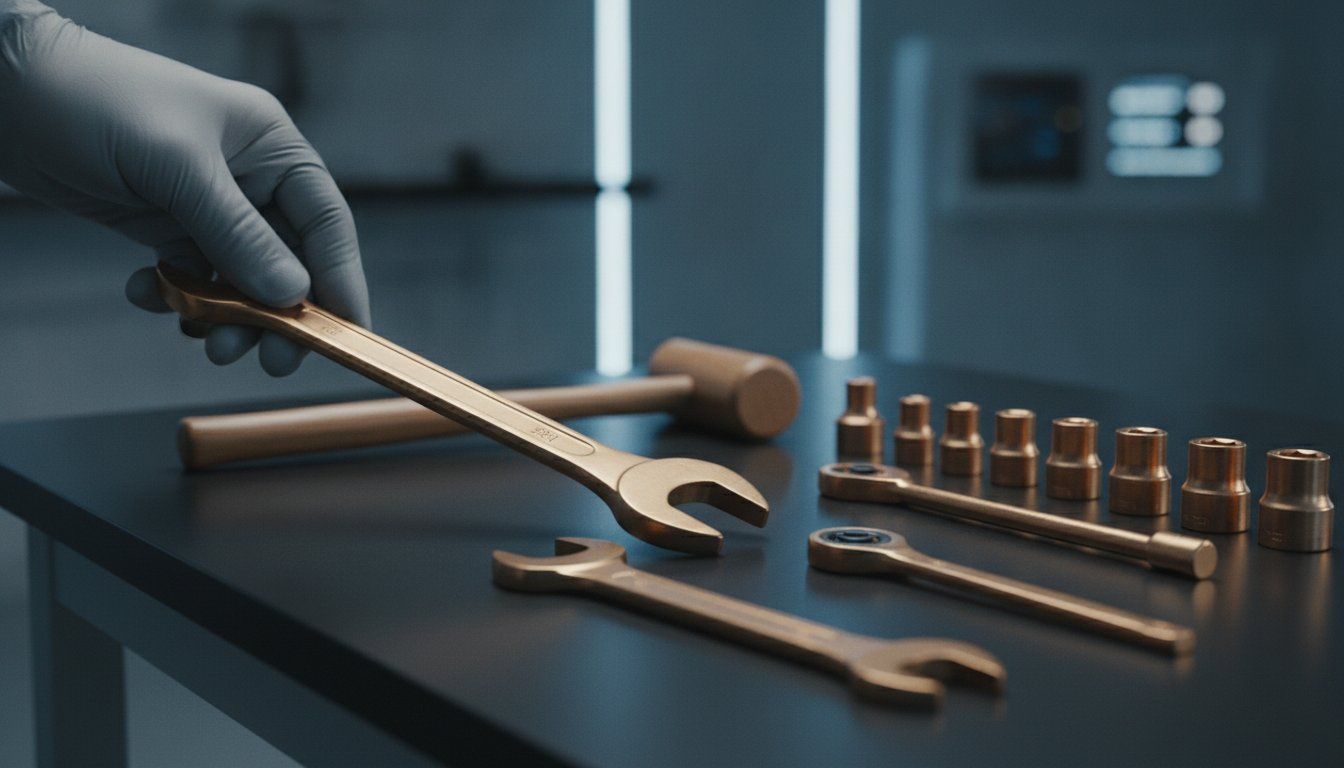
Maintenance teams must also be equipped with the right tools to service these systems without introducing new risks. Integrating Ampco Safety Tools into your MRO kit is a critical final step in your safety protocol. Whether you are replacing a bearing or adjusting a pulley, these tools provide the necessary mechanical force without the risk of impact sparks. Because we are an independent distributor, we source these specialized components from the world's leading manufacturers to meet your exact technical specifications across six continents. We don't let brand-specific agreements limit your access to the safest possible hardware.

If you need to verify the technical ratings of your current drive components or need help sourcing specialized MRO parts, contact our sales team for a consultative review of your requirements.

Sourcing Non-Sparking Solutions for International Operations

Procuring specialized non-sparking alloys for international job sites presents significant logistical and technical challenges. In our experience, procurement managers often face limited local availability and restrictive brand agreements that inflate costs. We operate as an independent distributor to solve these bottlenecks, leveraging our 75 years of export expertise to move high-value safety tools across six continents. Our team doesn't just ship boxes; we ensure every component matches the precise technical requirements of your specific hazardous environment.

Overcoming Supply Chain Constraints

Large distributors like Grainger or Motion Industries often impose rigid account minimums and supply chain constraints that hinder mid-market operations. We eliminate these barriers by offering a flexible sourcing model with low minimum order requirements. This approach is particularly beneficial when you need custom elevator buckets manufactured from spark-resistant materials with specific lead times. We also consolidate your MRO orders at our facilities to reduce international freight costs, whether you're shipping 100 lb / 45.4 kg of bearings or several tons of conveyor belting.

Expertise in Export Documentation and Compliance

Moving equipment into EMEA or APAC regions requires meticulous attention to regulatory documentation and technical data sheets. We verify that every non-sparking component includes the necessary certificates of origin and compliance markings for local customs authorities. Our engineers review technical specifications to ensure that US-sourced equipment aligns perfectly with local safety mandates. We provide all documentation with dual measurements, ensuring that a 5 lb / 2.27 kg tool is clearly defined for international auditors and site managers alike.

Jealco International manages the end-to-end export logistics for hazardous area equipment, drawing on 75 years of specialized experience to navigate the complexities of global trade for our industrial partners.

Securing Your Global Operations with Technical Precision

Implementing a robust safety strategy requires a deep understanding of material science and international regulations. We've shown that selecting the right non-sparking alloy and ensuring proper static dissipation in conveyor belting are critical steps to preventing industrial disasters. Every component must align with the specific T-rating of your facility to ensure long-term operational integrity and compliance.

We leverage our 75 years of export expertise to move specialized components across six continents without the burden of account minimums or manufacturer constraints. In our experience, consolidating MRO orders for hazardous zones reduces international freight costs and simplifies customs clearance for high-value alloys. Our independent status allows us to source the exact hardware your site requires, ensuring full compliance with ATEX and OSHA standards. Whether you're moving 50 lb / 22.7 kg of tools or bulk elevator buckets, we handle the technical verification for you.

 Contact our sales team for a consultative quote on non-sparking solutions to secure your global facility. We look forward to supporting your next procurement project with technical precision and reliable logistics.

Frequently Asked Questions

What is the difference between non-sparking and non-magnetic tools?

Non-sparking refers to a material's inability to produce high-temperature sparks during impact or friction, while non-magnetic refers to a lack of attraction to magnetic fields. Many non-sparking alloys, such as Copper Beryllium, possess both properties. This makes them essential for environments like MRI rooms or sensitive electronic labs where ferrous materials would be dangerous. We always verify the specific alloy properties to ensure they match your site's magnetic and ignition requirements.

Are non-sparking tools as strong as steel tools?

No, these alloys generally have lower tensile strength and hardness than standard high-carbon steel. While industrial steel tools often reach 50-60 HRC, Aluminum Bronze typically ranges from 23-35 HRC. Because they're softer, they wear down faster under heavy use. We recommend more frequent inspections for these components to ensure they remain safe and functional in high-torque MRO applications.

How do I maintain non-sparking tools to ensure they stay safe?

Maintenance focuses on preventing ferrous contamination and mechanical deformation. You must keep these tools clean and store them separately from standard steel equipment to prevent iron particles from embedding in the softer alloy. In our experience, regular dressing of the tool's edges is necessary to remove "mushrooming." Always wipe tools down after use to prevent corrosive buildup that could compromise their spark-resistant properties.

Can I sharpen Aluminum Bronze or Copper Beryllium tools?

Yes, you can sharpen them, but the process for Copper Beryllium requires extreme caution. Beryllium dust is toxic if inhaled, so you must use specialized PPE and high-efficiency particulate air (HEPA) ventilation. Aluminum Bronze is safer to sharpen but still requires manual filing or wet-grinding to avoid heat buildup. We suggest using a slow-speed manual process rather than high-speed dry grinding to maintain the material's integrity.

Do I need non-sparking tools for grain dust environments?

Yes, grain dust is highly combustible and falls under Class II hazardous classifications. A single spark from a dropped steel wrench or a rubbing elevator bucket can trigger a catastrophic dust explosion. We provide non-sparking solutions specifically for grain handling to ensure you meet NFPA 61 standards. Protecting these facilities requires a combination of spark-resistant tools and proper dust control systems.

How does static electricity relate to non-sparking equipment?

Static electricity is a separate but related ignition risk in hazardous zones. While spark-resistant materials prevent impact sparks, anti-static components prevent the discharge of accumulated electrical energy. We often supply components like elevator buckets that are both non-sparking and conductive. This dual approach ensures that static charges dissipate safely to the ground rather than jumping across a gap as an incendiary spark.

What is the Rockwell C hardness of a typical non-sparking wrench?

The hardness depends entirely on the alloy used for the tool. An Aluminum Bronze wrench typically measures between 23-35 HRC, which is sufficient for most standard maintenance tasks. A Copper Beryllium wrench is harder, usually measuring between 33-45 HRC. While these are softer than steel, they provide enough mechanical resistance to handle 50 lb / 22.7 kg of torque or more without deforming immediately.

Why are Copper Beryllium tools more expensive than Aluminum Bronze?

Copper Beryllium carries a higher price due to its superior mechanical properties and more complex manufacturing. It offers a tensile strength up to 210,000 psi / 1450 MPa, which is significantly higher than Aluminum Bronze. The material is also non-magnetic and lasts longer in high-stress environments. We help procurement managers weigh these performance benefits against the higher cost to find the most efficient solution for their specific site.

Share this article

Recent Posts

By Jealco International, Inc. July 27, 2026
With US average effective tariff rates hitting 11.0% in 2026, your initial equipment quote is no longer a reliable reflection of your final investment. You understand that a conveyor system is your facility's backbone. However, you're likely tired of "sticker shock" from hidden export fees and propr…
Stainless steel sanitary conveyor with open-frame design and washdown-rated motor for food processing environments.
By Jealco International, Inc. July 20, 2026
Learn the engineering principles for sanitary conveyor design for food processing. We'll show you how to meet FSMA rules and cut cleaning time by 30% or more.
Industrial roller chain and sprocket drive on a conveyor system, illustrating proper tension for maximum service life.
By Jealco International, Inc. July 13, 2026
Master how to properly tension a roller chain using the 2% slack rule, precision alignment steps, and detailed failure diagnostics to maximize drive service life.
Industrial conveyor belt running through a high-heat processing zone, illustrating the thermal stres
July 6, 2026
Compare high temperature resistant conveyor belting options like EPDM, silicone, and Kevlar to prevent thermal hardening and unplanned heat-related downtime.
Conveyor drive pulley with diamond-groove rubber lagging installed to increase traction and prevent belt slippage.
By Jealco International, Inc. June 29, 2026
This conveyor pulley lagging material guide compares rubber and ceramic options to boost traction, reduce belt slippage, and noticeably extend pulley and belt life.
By Jealco International, Inc. June 22, 2026
Discover the key components of an automated conveyor system and how to calculate ROI, from precision gearmotors to brand-agnostic global component sourcing.
Industrial roller bearing removed from a conveyor shaft, showing wear patterns linked to premature bearing failure.
By Jealco International, Inc. June 15, 2026
Learn the leading causes of premature industrial bearing failure, from lubrication and contamination to misalignment, to extend service life and cut downtime.
Industrial gearmotor mounted on a conveyor drive shaft, illustrating proper torque and alignment for reliable operation.
By Jealco International, Inc. June 8, 2026
Learn how to choose a gearmotor for a conveyor application with our technical guide to torque, service factors, and brand-agnostic global sourcing strategy.
By Jealco International, Inc. June 1, 2026
Discover key overhead conveyor system design considerations for 2026, from load capacity and track selection to brand-independent global sourcing strategies.
Non-sparking hand tools made of aluminum bronze and copper beryllium alloy, used for maintenance in hazardous work areas.
By Jealco International, Inc. May 25, 2026
Discover why non-sparking hand tools are critical for hazardous areas, plus how to select the right alloy and protocols to prevent dangerous ignition sources.
Show More