
Estimating Warehouse Conveyor Equipment Cost Factors: 2026 Strategic Guide
With US average effective tariff rates hitting 11.0% in 2026, your initial equipment quote is no longer a reliable reflection of your final investment. You understand that a conveyor system is your facility's backbone. However, you're likely tired of "sticker shock" from hidden export fees and proprietary markups. We've seen many projects stall because a buyer underestimated the warehouse conveyor equipment cost factors associated with international logistics.
In our experience, unplanned conveyor downtime can cost thousands of dollars per hour. This makes the initial purchase price a poor metric for project success. We'll show you how to identify hidden expenses like duty surcharges and high-markup replacement parts. This guide evaluates hardware specifications, such as whether a 1.5 kW motor or a 50 lb / 22.7 kg load capacity belt fits your operational needs.
We've designed this 2026 guide to help you build a brand-agnostic budget. We focus on the Total Cost of Ownership (TCO), covering the entire machinery lifecycle. You'll learn to navigate shipping across six continents while avoiding the supply chain constraints of larger distributors. This provides the technical clarity needed to secure a robust system without financial surprises.
Key Takeaways
- Move beyond the "cost per linear foot" myth by calculating the combined impact of hardware specifications, control systems, and landing logistics.
- Identify how specific warehouse conveyor equipment cost factors , such as selecting high-friction belting or AC versus DC motors, influence your long-term energy and maintenance spend.
- Account for international export realities, including the 15% to 30% budget increase for freight and the requirement for ISPM-15 compliant crating for shipments in 40 ft / 12.2 m containers.
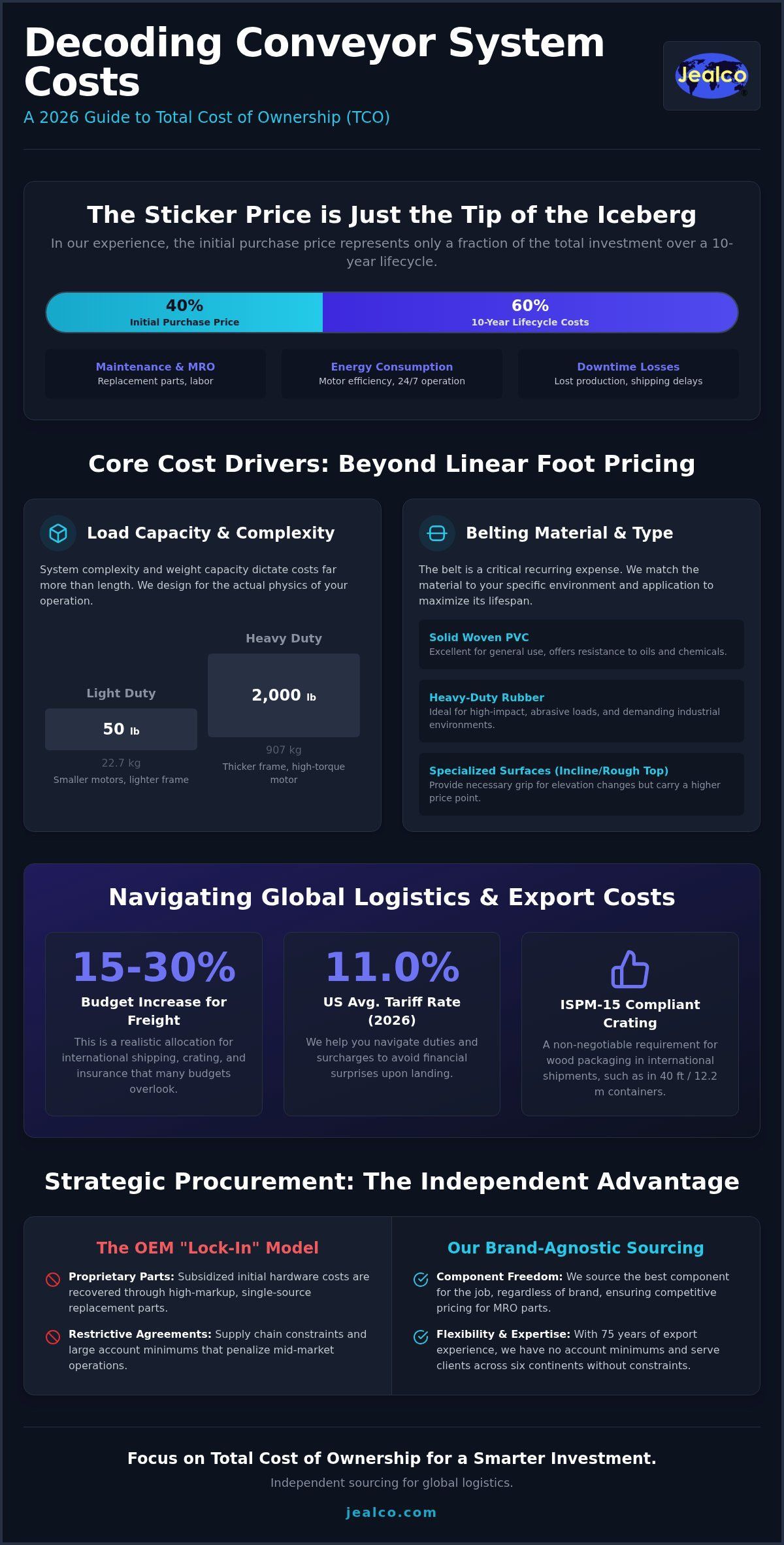
- Shift your focus from initial sticker price to Total Cost of Ownership (TCO), recognizing that the purchase price often represents only 40% of the 10-year lifecycle expense.
- Leverage independent, brand-agnostic sourcing to avoid OEM price markups on replacement parts and eliminate restrictive account minimums for mid-market operations.
Beyond the Linear Foot: Why Generic Conveyor Estimates Often Fail
Many procurement teams rely on a "cost per linear foot" model to estimate their budget. While this approach provides a quick benchmark, it fails to account for the actual physics of material handling. In our experience, a flat estimate ignores the exponential variables of load weight and system complexity. We define the true project investment as the sum of hardware, control logic, and landing logistics.
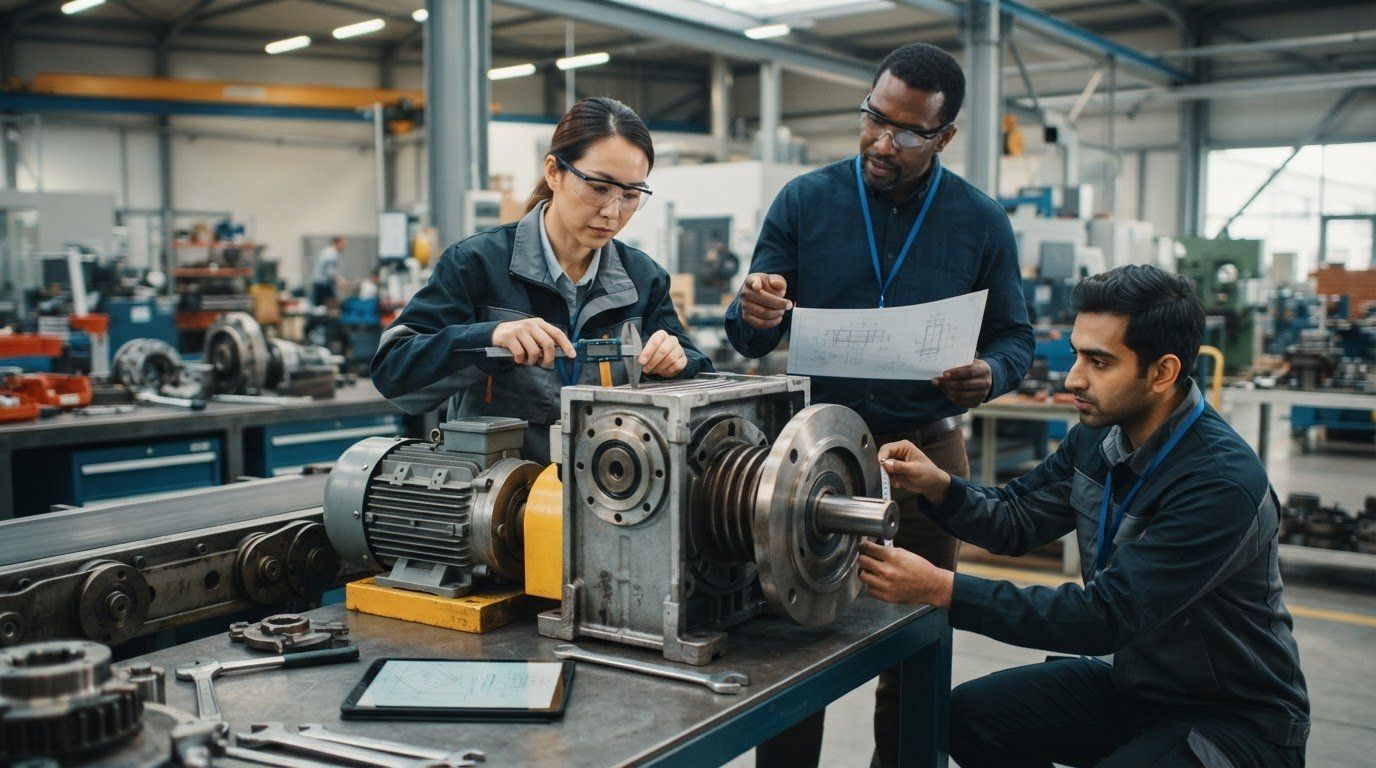
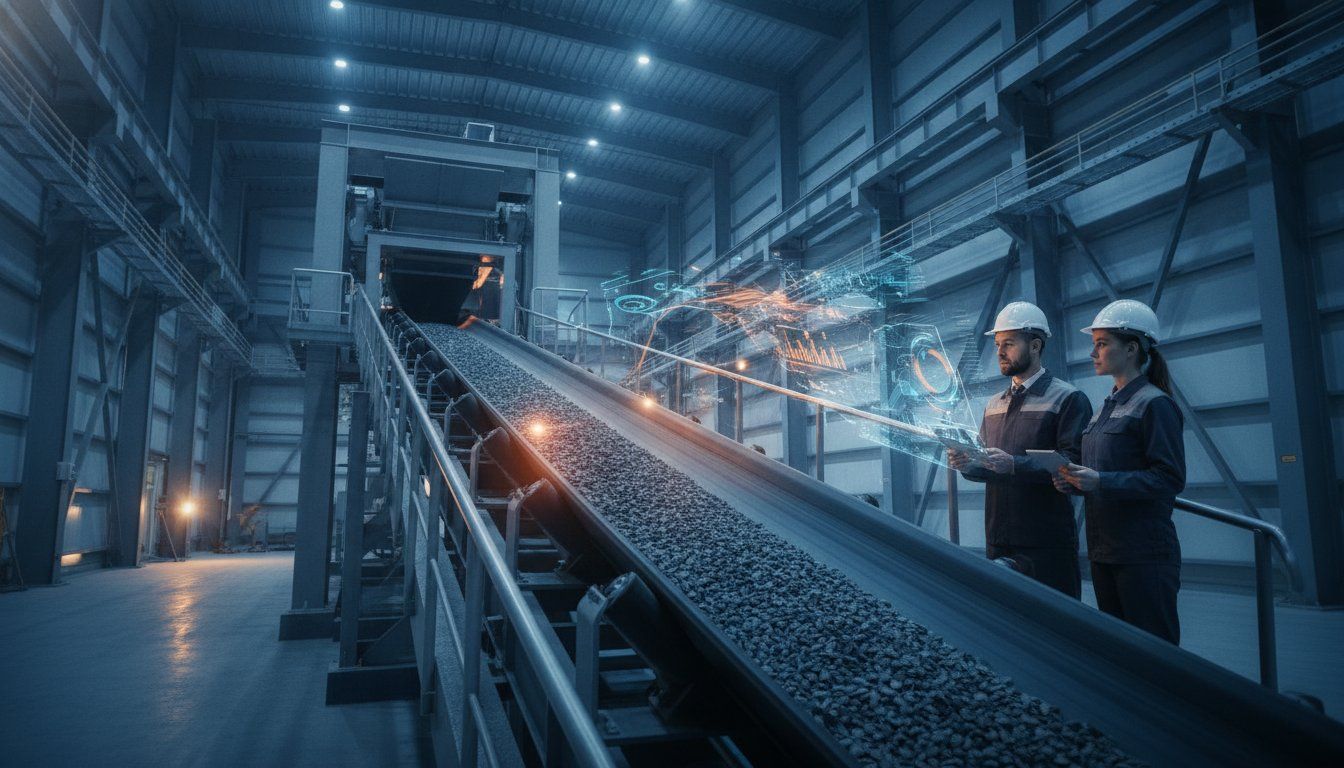
Your specific load capacity is one of the most critical warehouse conveyor equipment cost factors . For example, a system designed to move a 50 lb / 22.7 kg box uses lighter rollers and smaller motors than a system handling a 2,000 lb / 907 kg pallet. This Conveyor System Overview highlights how different industrial applications dictate frame thickness and motor torque requirements. If your project includes inclines or washdown environments, these technical requirements can easily double your hardware costs compared to a standard horizontal run.
Identifying the Primary Cost Drivers in Material Handling
System complexity dictates the price more than total length. A simple straight run of belt conveyors is significantly more affordable than a multi-line sortation system with complex merges. Frame materials also play a major role. While painted steel is the standard for most dry warehouses, stainless steel is mandatory for food-grade or corrosive environments. Aluminum offers a lightweight alternative for portable sections. Finally, the level of automation matters. Manual flexible gravity conveyors require zero power, while fully powered systems with intelligent sensors demand a higher initial hardware and programming investment.
The Hidden Cost of 'Cheap' Entry-Level Systems
We've seen many operations regret choosing consumer-grade hardware for industrial duty cycles. These systems aren't built for 24/7 operation. They lead to frequent failures and high downtime. In 2026, a single hour of unplanned warehouse downtime can cost thousands of dollars in lost production and shipping delays. Some manufacturers intentionally subsidize their initial hardware costs to lock you into proprietary replacement parts. We avoid this by providing brand-agnostic advice. This ensures you aren't overcharged for MRO components later in the system's life.
Component-Level Budgeting: Belting, Motors, and Power Transmission
Estimating your project requires looking past the frame and into the internal components that dictate daily performance. These individual parts are the primary warehouse conveyor equipment cost factors that determine your maintenance schedule and energy bill. Evaluating the total cost of ownership for material handling helps you see why spending more on high-efficiency components upfront reduces your operational expenses over time. We focus on selecting components that withstand 24/7 duty cycles to prevent the premature failure of bearings and pulleys.
Conveyor Belting: Material and Specification Impact
The belt is a recurring expense, not a one-time purchase. We often compare solid woven PVC to heavy-duty rubber based on your specific environment. PVC offers excellent resistance to oils and chemicals, while heavy-duty conveyor belting made of rubber is better for high-impact or abrasive loads. Specialized surfaces like rough top or incline conveyor belting provide the necessary grip for elevation changes but carry a higher price point than smooth surfaces. We provide quotes for belt widths ranging from 12 in / 30.5 cm for small parcels up to 48 in / 122 cm for bulk material handling.
Powering the System: Motors and Gearing Products
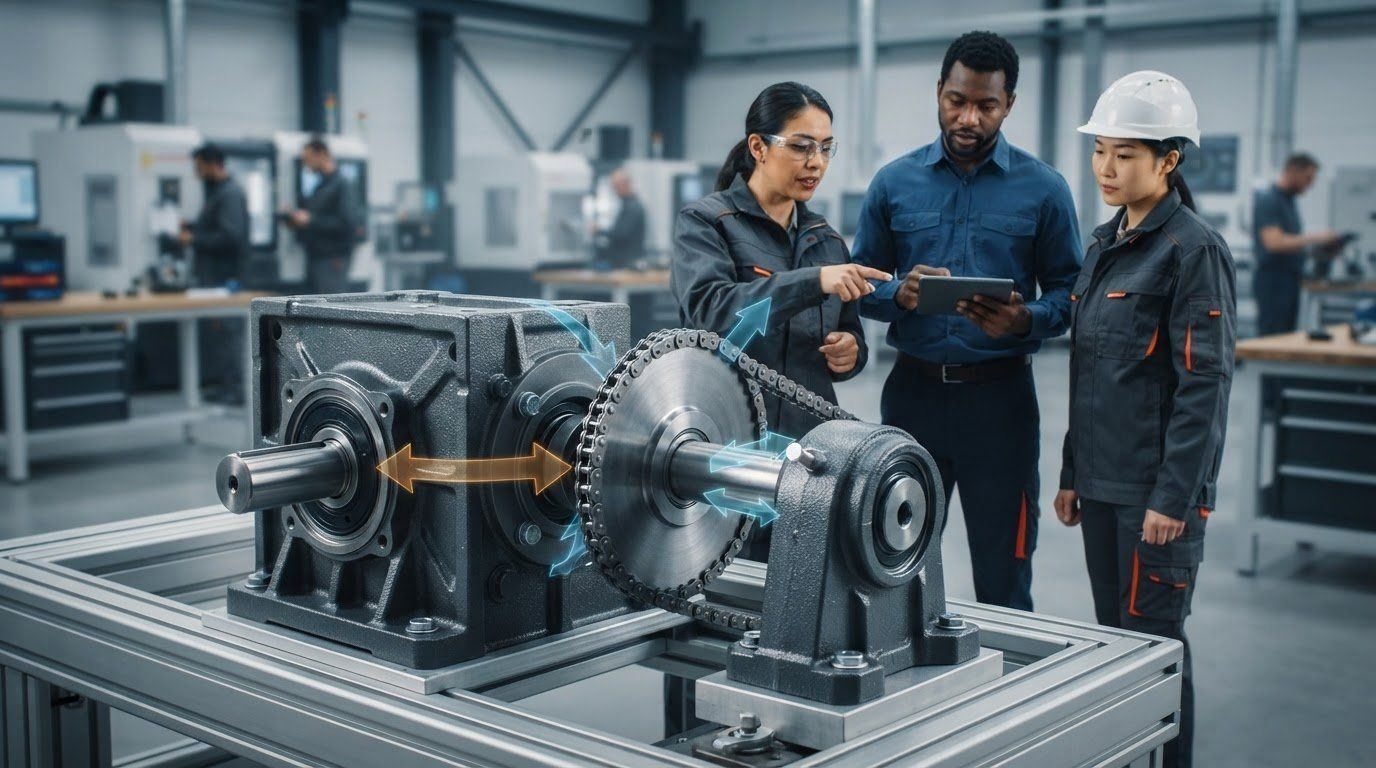
Gearmotors act as the heart of your conveyor, and your choice between AC and DC systems impacts both control and cost. AC electric motors are the standard for constant-speed applications due to their durability and lower initial price. DC motors offer superior speed control and torque at low speeds but require more complex controllers. We recommend high-efficiency speed reducers to minimize heat loss and lower your long-term energy consumption. In our experience, specifying a belt that is too thin for high-impact loading zones leads to carcass failure within the first six months of operation.
Environmental ratings also shift the budget. Standard motors are sufficient for dry warehouses, but you'll need washdown-duty or explosion-proof ratings for food processing or volatile environments. Sourcing gearing products that offer universal compatibility ensures your team can find replacement parts easily without being locked into a single manufacturer's high-markup inventory. If you're unsure which motor class fits your facility's power grid, you can consult our engineering team for a technical review of your specifications.
Navigating Global Logistics and International Export Costs
Most conveyor estimates end at the factory door, but your actual investment includes the journey to your facility. In our experience shipping to six continents, logistics can account for 15% to 30% of the total project. This makes transportation one of the most volatile warehouse conveyor equipment cost factors . We help you navigate the nuances of Incoterms like EXW, FOB, or CIF, which dictate exactly where your financial responsibility and risk begin during the transit process.
Export Crating and Freight Considerations
International transit requires more than a standard pallet. We utilize ISPM-15 compliant heat-treated wood for all export crating to ensure your shipment isn't rejected by customs authorities. This protection is vital for sensitive components like electric motors and gearboxes, which we shield from salt air and high humidity to prevent corrosion. Our engineering team calculates container utilization for 20ft / 6.1 m and 40ft / 12.2 m units to maximize space and minimize the number of shipments required.
While ocean freight is the most economical choice for complete systems, we often budget for air freight for critical replacement parts. This strategy minimizes downtime if a component fails during commissioning. We also manage Last Mile delivery challenges in regions where industrial infrastructure is limited, ensuring that heavy equipment reaches your site safely without needing local handling equipment you might not have available.
Duties, Taxes, and Regulatory Compliance
Customs duties and local taxes can significantly alter your final landed cost. We work with experienced customs brokers to ensure correct Harmonized System (HS) code classifications for every conveyor part. This prevents costly warehouse storage fees at the port, which can accumulate quickly if paperwork is incorrect. You must also factor in Value Added Tax (VAT) or Goods and Services Tax (GST) based on the destination country, as these are often excluded from initial vendor quotes.
Total Cost of Ownership: Maintenance and MRO Sourcing
Focusing solely on the initial purchase price is a strategic error. In our experience, the sticker price of a system represents only 40% of the 10-year lifecycle cost. The remaining 60% stems from energy, labor, and ongoing maintenance. These long-term warehouse conveyor equipment cost factors are often overlooked during the procurement phase. We help our clients account for these expenses by selecting components that prioritize durability over the lowest entry price.
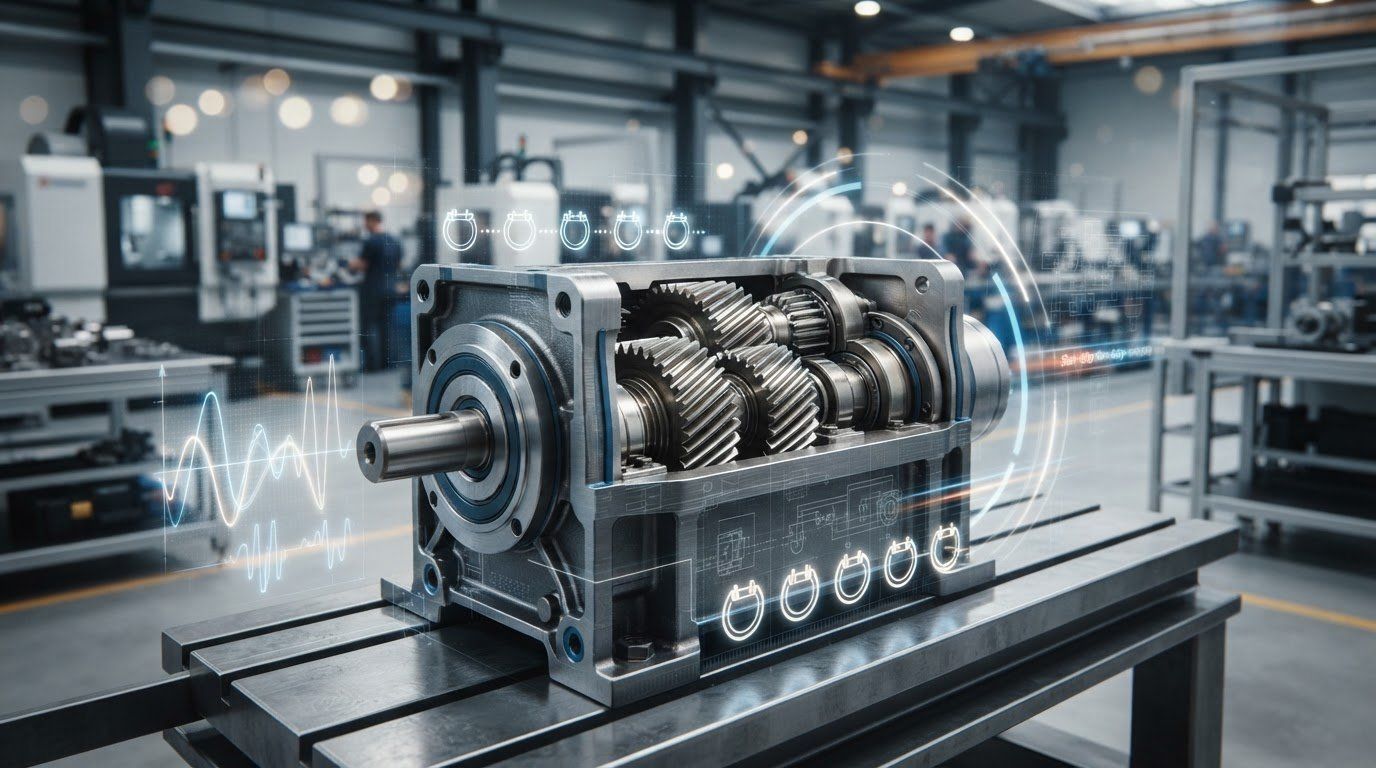
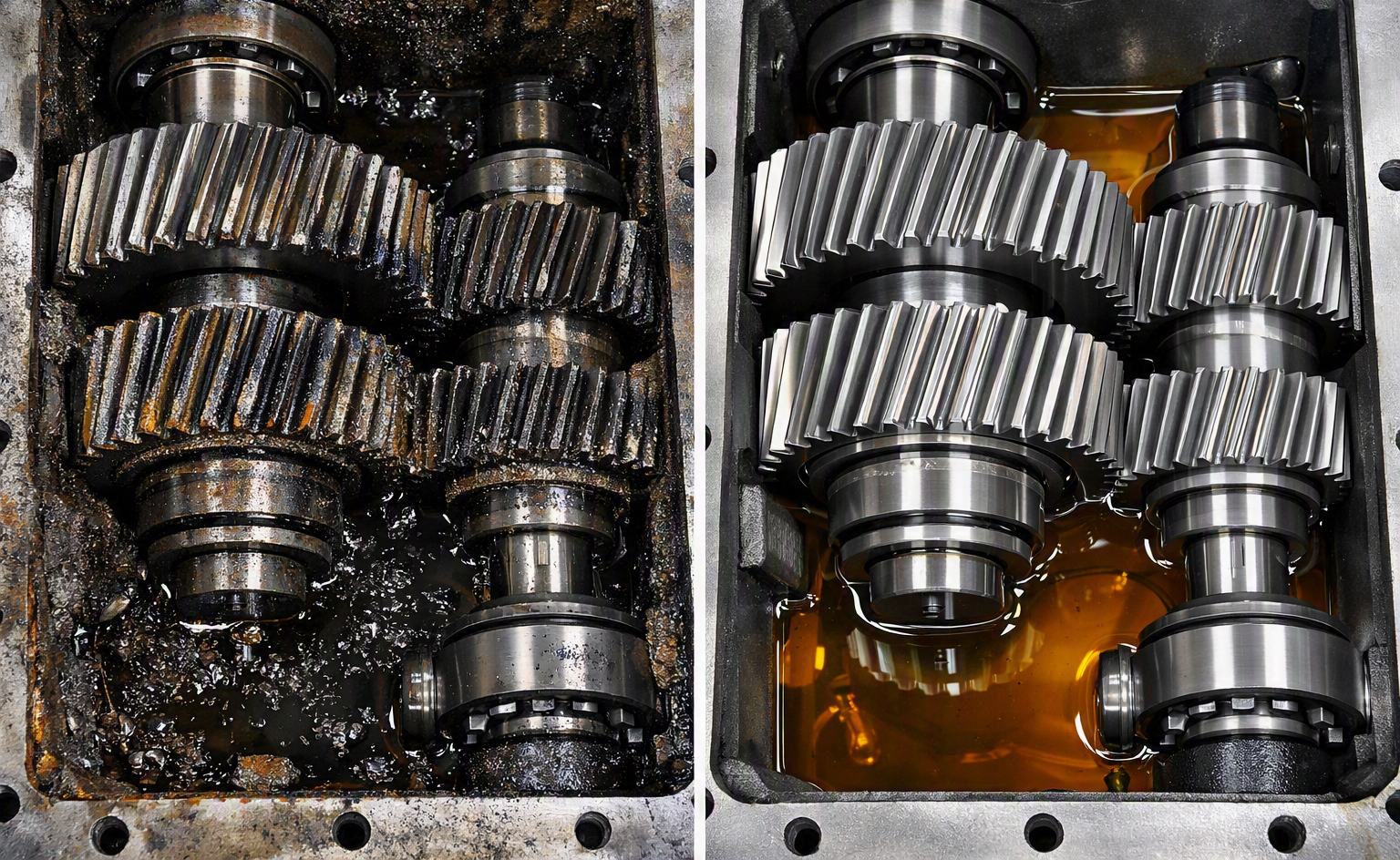
Maintenance budgets must include belting accessories such as mechanical lacing, belt cleaners, and tracking sensors. These parts are essential for protecting your primary investment. A high-quality belt cleaner prevents material carryback, which reduces wear on rollers and pulleys. Industry benchmarks indicate that predictive maintenance sensors can reduce emergency repair costs by up to 30%. These sensors alert your team to heat or vibration anomalies before a catastrophic failure occurs.
Predictive vs. Reactive Maintenance Costs
Keeping critical spares on-site is a standard requirement for high-volume facilities. We recommend stocking spare motors, bearings, and sections of belt to avoid shipping delays. Standardized components reduce the training time for your maintenance staff because they don't have to learn proprietary systems. You should also estimate the lifespan of high-wear parts like elevator buckets. A 12 in / 30.5 cm wide bucket made of reinforced nylon will typically outlast standard plastic in abrasive applications.
Sourcing Without OEM Lock-In
Many manufacturers use a "Razor and Blade" model. They sell the hardware at a discount but use custom-sized shafts or non-standard bolt patterns. This forces you to buy high-markup replacement parts directly from them. We remain independent to help you avoid this trap. We identify high-quality, brand-agnostic alternatives for discontinued or overpriced OEM components. These warehouse conveyor equipment cost factors highlight why brand independence is a financial necessity.
You can use our online catalog to compare technical specifications and find transparent pricing for universal parts. If you're currently facing high markups on proprietary replacement parts, contact Jealco for an MRO cost audit.
Strategic Procurement: The Independent Distributor Advantage
Choosing a procurement partner is just as critical as selecting the hardware itself. We remain independent because it allows us to prioritize the best technical solution for your facility rather than meeting a manufacturer's sales quota. This independence directly influences warehouse conveyor equipment cost factors by ensuring you aren't forced into expensive, over-engineered systems that exceed your actual requirements. Our 75-year history in the industrial sector provides the perspective needed to navigate supply chain constraints without being tied to a single brand's production delays.
We've eliminated account minimums to better serve mid-market operations and small-scale upgrades. This flexibility allows you to source a single motor or a small section of belt conveyors without the administrative hurdles found at larger big-box distributors. By avoiding brand-specific agreements, we focus on the functionality and robustness of the solution. We ensure that every component, from the frame to the speed reducer, meets your specific operational demands.
Consultative Sourcing for Mid-Market Efficiency
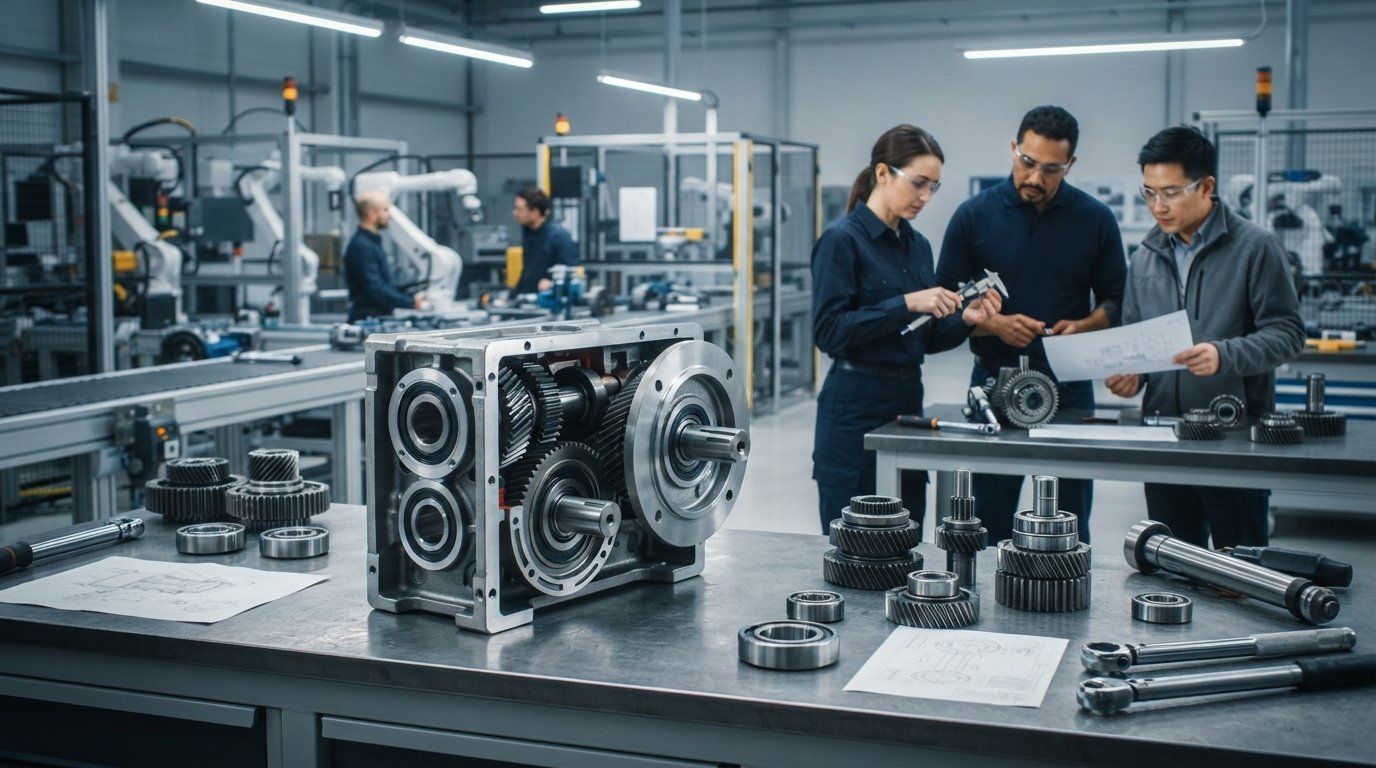
Our engineers identify cost-saving opportunities during the design phase by matching the system to your actual throughput. It's a common mistake to budget for a worst-case theoretical maximum that your facility will never reach. We help you reduce the system footprint to maximize your existing warehouse square footage, which lowers your total facility overhead. We also assist procurement teams in building accurate RFQs (Request for Quotes) to ensure that all vendors are bidding on the same technical specifications.
Your Next Steps in Conveyor Cost Estimation
To build a realistic budget, you must first gather your specific technical data. This includes load weights, such as a 100 lb / 45.4 kg parcel, and the physical dimensions of your largest items. You should also define environmental factors like extreme temperatures or high humidity. We recommend a technical discovery call before you finalize any capital expenditure budget. This ensures that your estimate accounts for the landed cost and long-term MRO expenses discussed in this guide.
The ultimate goal is a reliable system with high uptime and a low landed cost. You can browse our online catalog to begin identifying the components required for your project. For a comprehensive technical review of your material handling needs, contact our engineering team today.
Secure Your Material Handling Investment for 2026
Calculating a realistic budget requires looking past the initial hardware price. We've shown that true warehouse conveyor equipment cost factors include everything from duty surcharges to long-term MRO markups. By focusing on component-level specifications and high-efficiency gearmotors, you ensure your system remains operational for years. Our 75 years of industrial expertise helps you avoid the common pitfalls of proprietary OEM lock-in and unexpected customs delays.
We provide brand-agnostic technical support specifically tailored for mid-market operations. Whether you need a single 12 in / 30.5 cm wide belt or a complex sortation system, we offer the same consultative care. We maintain no account minimums for global orders across six continents. This flexibility allows you to upgrade your facility without the administrative constraints of big-box distributors. Our team is ready to help you build a more resilient and cost-effective operation.
Contact our technical team today for a custom conveyor component quote. We're eager to support your facility's growth and operational success.
Frequently Asked Questions
What is the average cost per foot for a warehouse conveyor system?
Generic cost-per-foot estimates are often misleading because they ignore specific load requirements and system complexity. A system designed for 50 lb / 22.7 kg parcels requires different rollers and motors than a pallet-handling system. Your final budget depends on the frame material, motor efficiency class, and whether the application requires incline or washdown specifications.
How much should I budget for international shipping and export crating?
You should allocate between 15% and 30% of the equipment value for landing logistics. This covers ISPM-15 compliant heat-treated crating, container loading for 20ft / 6.1 m or 40ft / 12.2 m units, and ocean or air freight. In our experience, neglecting these logistics expenses is the most common cause of project budget overruns.
Do I need to buy replacement parts directly from the conveyor manufacturer?
You aren't required to use OEM-branded parts for maintenance and repairs. Independent distributors like Jealco provide high-quality, brand-agnostic alternatives for bearings, motors, and belting. This approach helps you avoid the high markups associated with proprietary parts and ensures you aren't locked into a single supplier's inventory constraints.
What is the difference between AC and DC motors for conveyor systems?
AC industrial motors are the standard for constant-speed warehouse applications due to their durability and lower cost. DC motors provide superior control for variable speed and high torque at low RPMs, which is essential for precise sortation. We help you choose the right motor class based on your facility's power grid and specific automation needs.
How do duties and taxes affect the final cost of an imported conveyor?
Import duties and local taxes like VAT or GST can add 10% to 25% to your total landed cost. These warehouse conveyor equipment cost factors vary significantly based on the destination country and the specific HS code classification of the parts. We recommend working with a customs broker to ensure accurate documentation and avoid unexpected port storage fees.
Can I upgrade an existing conveyor system instead of buying a new one?
Upgrading individual components like speed reducers, gearmotors, or high-friction belting is often a more cost-effective strategy than a full replacement. We specialize in sourcing compatible parts that improve the efficiency of your current system. This allows you to increase throughput or reduce energy consumption without the capital expense of new structural frames.
What are the most common hidden costs in a conveyor installation project?
The most frequent hidden costs include international surcharges, control system programming, and the initial stock of critical MRO spare parts. Many buyers also underestimate the power requirements and electrical infrastructure needed for high-horsepower motors. Accounting for these variables during the design phase prevents "sticker shock" when the final invoices arrive.
How long does it typically take to receive a custom conveyor system internationally?
Lead times for custom systems generally range from 8 to 16 weeks depending on component availability and manufacturing complexity. This timeline includes the production of specialized items like gearmotors and the transit time for ocean freight. We leverage our global logistics expertise to navigate port congestion and ensure your equipment arrives on schedule.