Choosing Industrial Motors for Hazardous Locations

Cost pressure is real, but cutting corners on equipment for hazardous locations is never a viable strategy. We understand the position you are in when balancing high compliance costs against the fear of a catastrophic site failure. Identifying the correct motor or gearmotor for an explosive atmosphere requires technical precision that many general distributors simply cannot provide. We believe that safety shouldn't be compromised by long lead times or manufacturer quotas.
We recognize that the overlap between North American Class/Division ratings and the International Zone systems creates unnecessary confusion during the procurement process. This article will clarify these standards and show you how our independent sourcing model helps you secure compliant motors, belting, and power transmission components effectively. We'll also examine the 2026 National Electrical Code (NEC) updates and explain how our export experience since 1950 helps us deliver critical parts to six continents. You'll learn how to maintain safety requirements, such as ensuring conveyor guard rails meet the 42 inch / 1067 mm height standard, while optimizing your global MRO supply chain.
Key Takeaways
- Understand the critical differences between North American Class/Division standards and International Zone systems to maintain site safety.
- Identify the specific engineering features required when sourcing industrial motors for hazardous locations to prevent external ignition.
- Mitigate the dangers of static electricity in grain and chemical processing through the selection of certified heavy-duty conveyor belting.
- Use our export experience since 1950 to source dual-certified UL and ATEX components for remote or international industrial sites.
- Ensure long-term compliance by utilizing specialized maintenance protocols and non-sparking tools for all power transmission repairs.
Understanding Hazardous Location Classifications and Standards
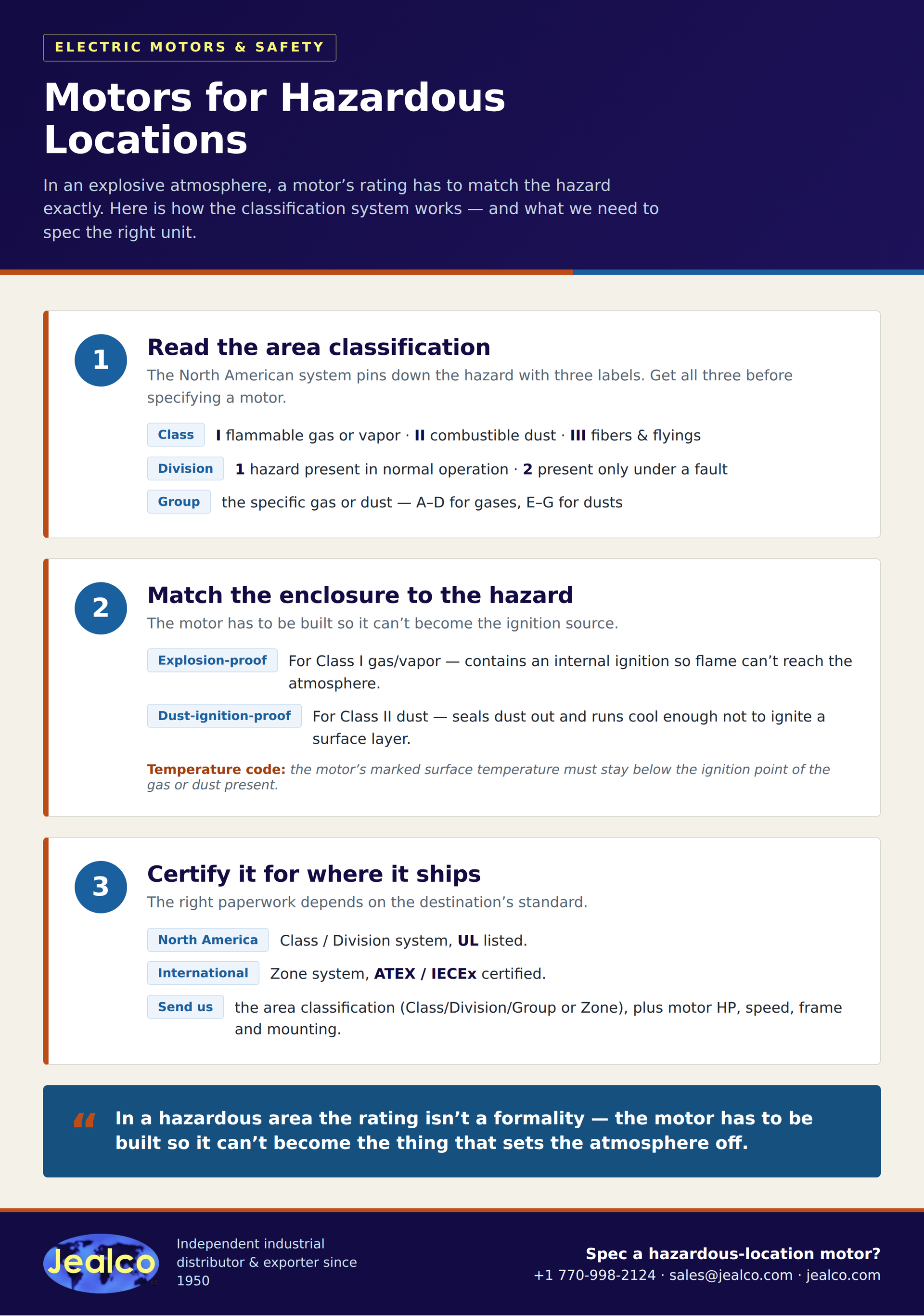
We define hazardous locations as specific industrial environments where concentrations of flammable gases, vapors, liquids, or combustible dusts create a persistent risk of fire or explosion. To manage these risks, engineers rely on Hazardous Location Classifications and Standards to specify the correct equipment. The traditional North American system categorizes these threats into three distinct Classes. Class I covers flammable gases and vapors; Class II involves combustible dusts; and Class III addresses ignitable fibers or flyings.
The system further refines these risks into two Divisions. Division 1 indicates that hazardous concentrations exist under normal operating conditions or during frequent maintenance. Division 2 applies to locations where the hazard is normally confined within closed systems and only escapes during accidental rupture or breakdown. Selecting the right components for hazardous locations requires a clear understanding of these distinctions to avoid over-engineering or catastrophic site failure.
The Significance of Group Designations
Within each Class, we use Group designations to specify the exact nature of the explosive material. Groups A, B, C, and D apply to Class I, while Groups E, F, and G apply to Class II. These groups are not interchangeable. For example, a motor rated only for Group D (propane) lacks the flame-path tolerances required for a Group B (hydrogen) environment. The Auto-Ignition Temperature (AIT) represents the lowest temperature at which a substance will ignite without an external spark, and it serves as a hard limit for the surface temperature of your equipment.
The Shift Toward International Zone Classifications
Many companies operating internationally are moving toward the IEC Zone system to simplify global MRO procurement. This system uses Zone 0, 1, or 2 for gases and Zone 20, 21, or 22 for dusts. While Zone 0 and 1 roughly correlate to Division 1, the three-tier approach offers more granular control over equipment protection levels. We source components for hazardous locations that meet either the traditional Division system or the modern Zone system. This flexibility ensures your international sites remain compliant with local regulations while maintaining safety standards, such as the 42 inch / 1067 mm guard rail height required by OSHA.
Selecting Industrial Motors and Gearing for Explosive Atmospheres
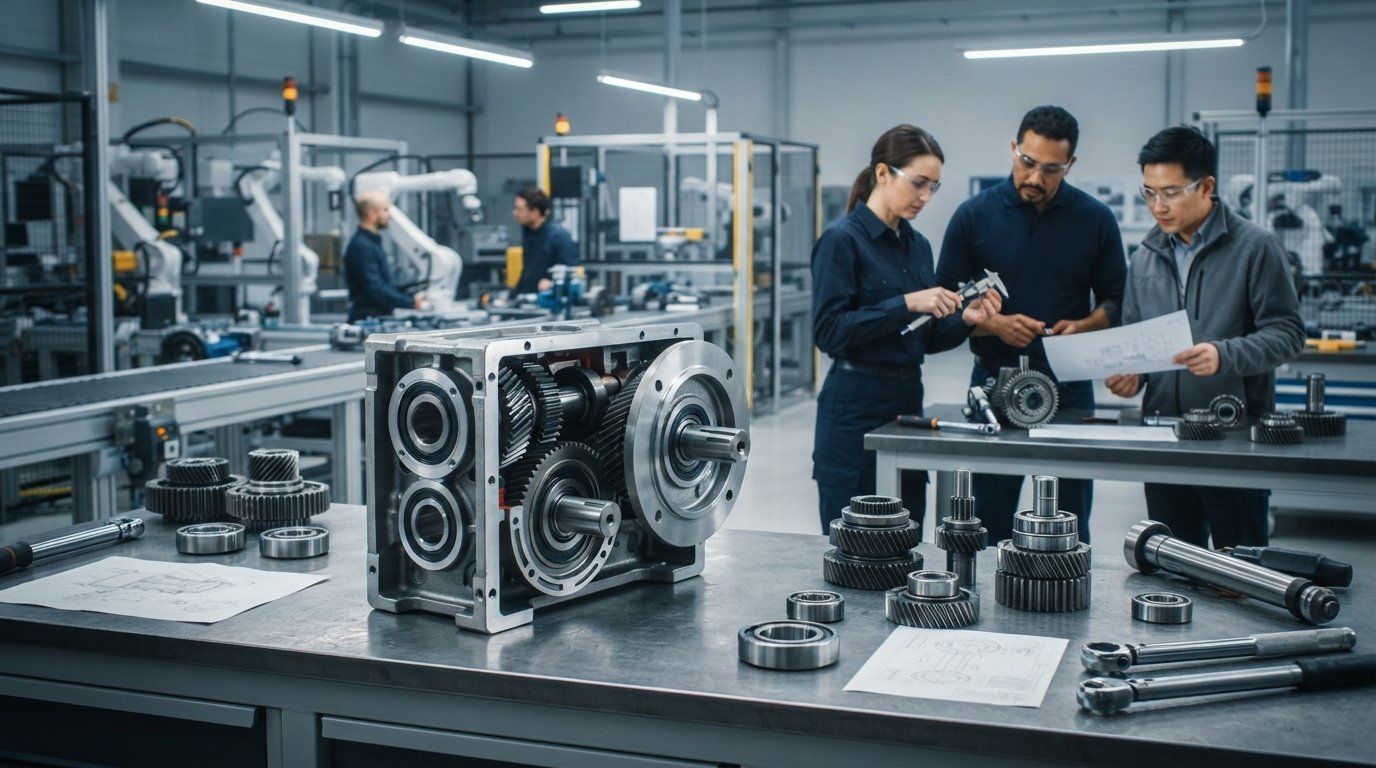
We identify electric motors as the primary ignition risk in any conveyor or pump system. These components generate internal sparks and heat during normal operation. We source both AC and DC industrial motors for hazardous locations to meet specific torque and speed requirements. Selecting the wrong motor type can lead to a breach of safety protocols and operational downtime.
Explosion-proof motors aren't designed to be indestructible. Instead, they feature heavy-duty enclosures that contain an internal explosion without allowing the flame to ignite the external atmosphere. This containment complies with OSHA safety specifications for Class I environments. We ensure every motor we supply features the correct T-code, or Temperature Class, to prevent surface-level ignition of surrounding gases.
Explosion-Proof vs. Dust-Ignition-Proof Motors
Explosion-proof and dust-ignition-proof ratings are often confused. Class I explosion-proof motors focus on flame containment for gases and vapors. Class II dust-ignition-proof motors rely on excluding combustible dust from the enclosure entirely. These motors must maintain low surface temperatures to prevent dust from smoldering. For instance, a motor in a grain elevator must stay below a specific threshold, such as 329°F / 165°C, to ensure site safety.
Speed Reducers and Gearmotors in Thermal Sensitive Areas
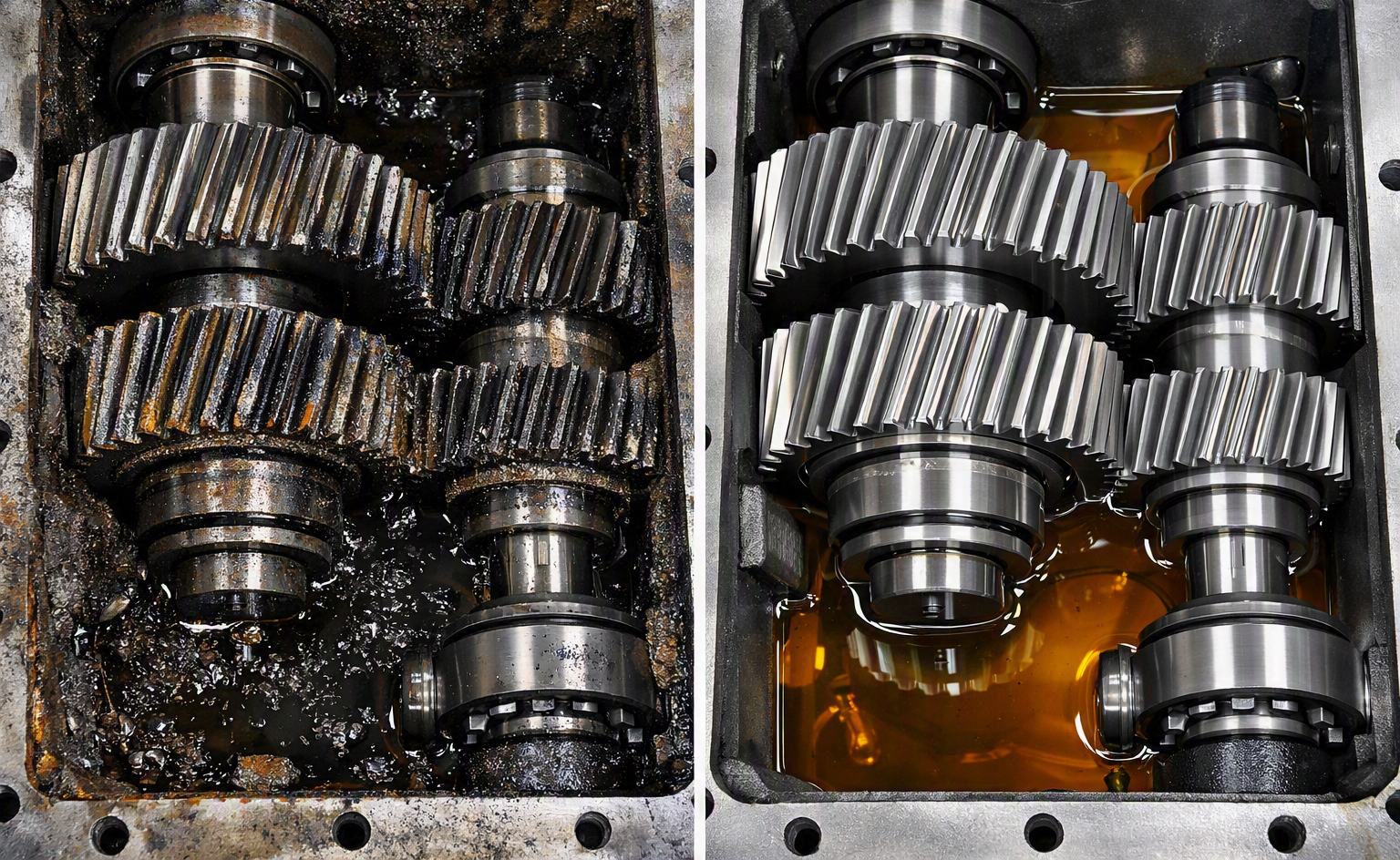
Mechanical friction in gearing products can generate enough heat to violate HazLoc safety ratings. Standard gearboxes may fail if seals or lubricants aren't designed for high-temperature or volatile environments. We use specialized synthetic lubricants and high-temperature seals in gearboxes for hazardous locations . These components prevent thermal runaway and maintain the integrity of the power transmission system.
We recommend integrated gearmotors for Division 2 applications because they provide factory-matched safety ratings. This eliminates the risk of a mismatched motor and reducer combination that could lead to overheating. Our independence from manufacturer-specific quotas allows us to select the best-performing gearmotor for your specific application. If you need help verifying your equipment ratings, contact our technical team for a consultation.
Conveyor Belting and Material Handling Safety Specifications
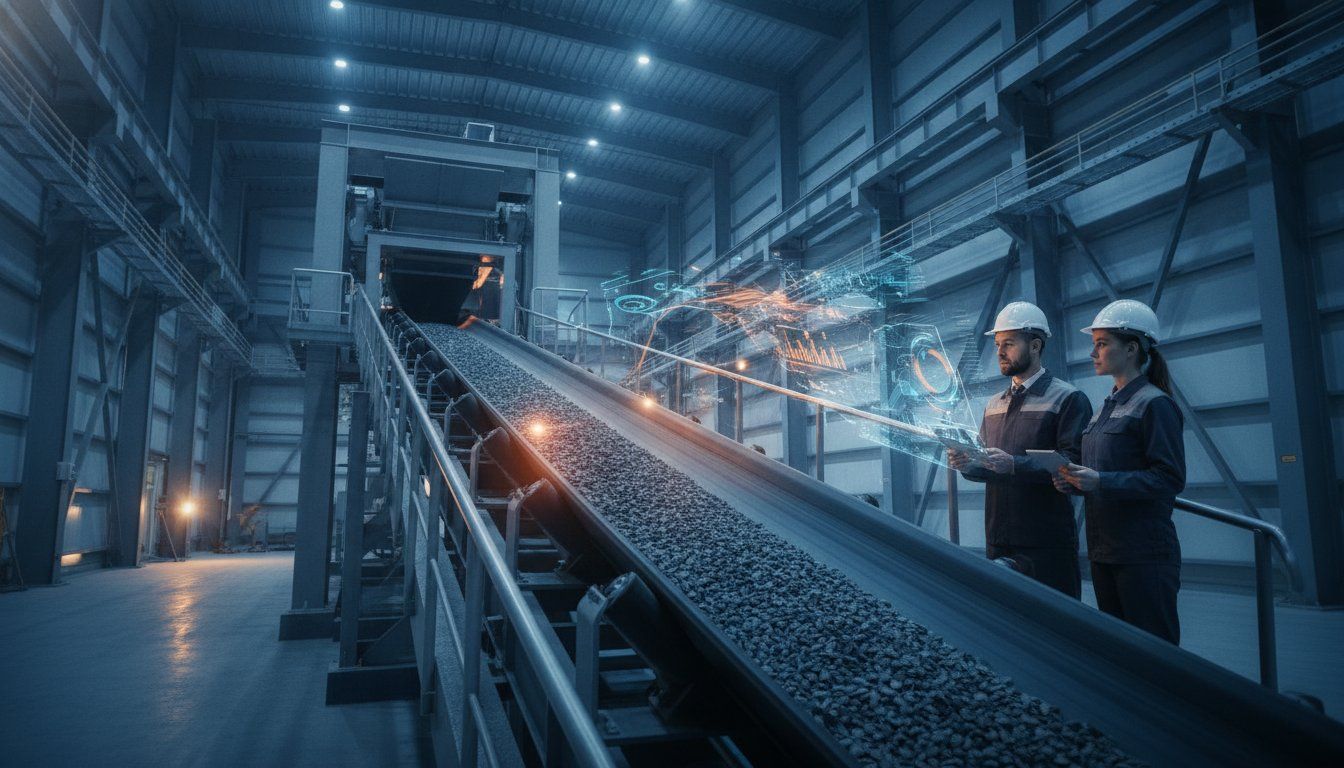
Static electricity represents a silent but significant ignition risk in grain elevators and chemical processing facilities. While many operators focus on electrical spark containment, mechanical friction and static buildup on moving parts can just as easily trigger an explosion. We provide heavy-duty conveyor belting designed specifically to bleed off these charges before they reach critical levels. Our independence from manufacturer-specific quotas allows us to source the optimal belt for your unique hazard rather than simply selling what's in stock.
Compliance with MSHA and OSHA requirements for fire-resistant belting is mandatory in many high-risk environments. As of July 27, 2026, the Mine Safety and Health Administration (MSHA) has removed outdated flame-resistance approval requirements for conveyor belts in underground coal mines to streamline safety protocols. We help you navigate these shifting regulations to ensure your site remains both safe and legally compliant. Every mechanical component we source for hazardous locations prioritizes the mitigation of thermal and static energy.
Static Conductive and Flame Retardant Belting
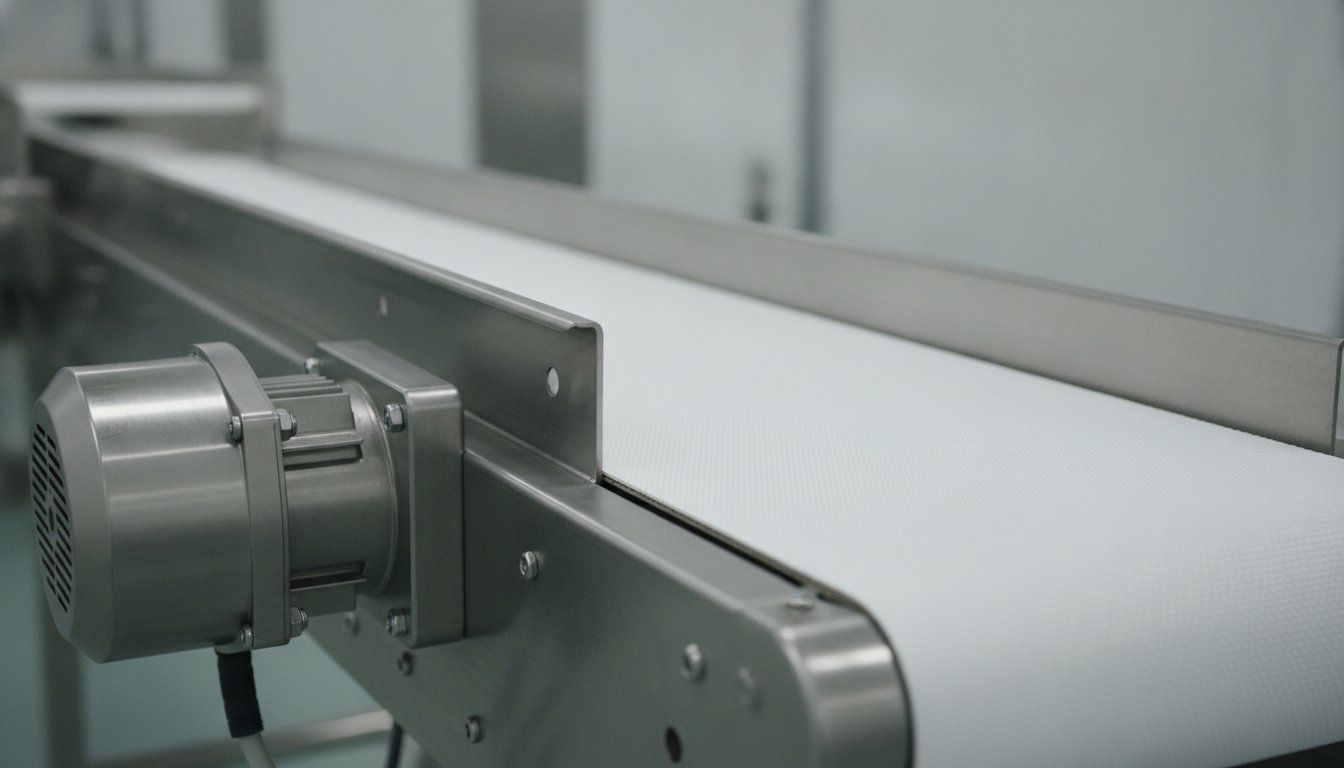
We recommend Fire Resistant Anti-Static (FRAS) designations for most equipment for hazardous locations . This dual-purpose rating ensures the belt won't support combustion and won't accumulate a dangerous static charge. For enclosed or underground applications, solid woven PVC conveyor belting is often the superior choice due to its inherent fire resistance and durability. To safely bleed off static charges, these belts must maintain a resistance level typically below 300 MΩ.
Elevator Buckets and Components for Grain and Chemical Handling
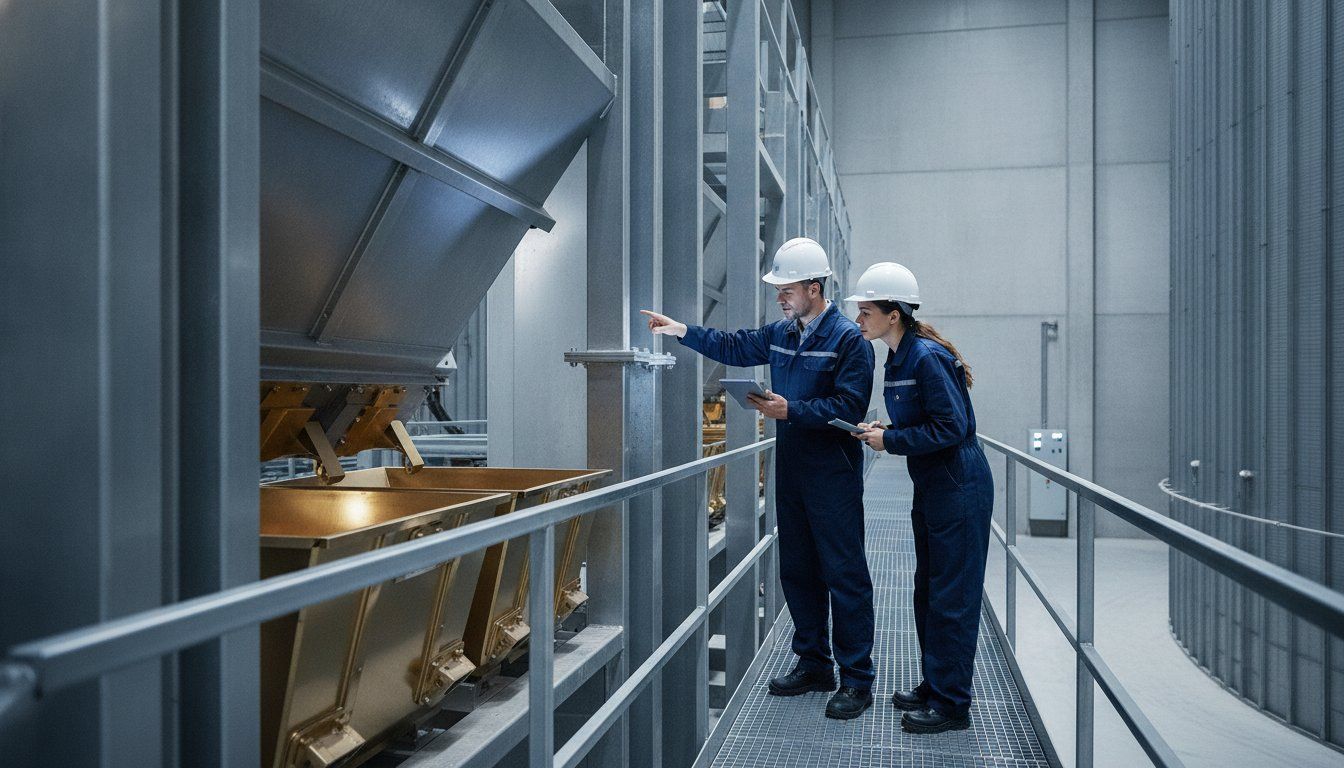
Material handling in vertical systems requires specialized elevator buckets made from non-sparking materials. We compare nylon, urethane, and polyethylene buckets based on your specific spark resistance and durability needs. While polyethylene is cost-effective, nylon offers superior impact strength for heavy-duty applications. This technical distinction prevents the creation of mechanical sparks if a bucket strikes the elevator casing.
Preventing friction heat is just as vital as selecting the right bucket material. Pulley lagging and belt alignment sensors monitor for slippage or tracking issues that could lead to thermal buildup. Guard rail height (42 in / 1067 mm under OSHA 1910.29) is just one part of a comprehensive safety strategy. Our consultative approach ensures every mechanical component, from the belt to the bucket, works to mitigate explosion risks.
Navigating Global Sourcing and Logistics for HazLoc Equipment
Procuring equipment for hazardous locations often involves navigating a landscape of conflicting regional certifications. A common challenge arises when a project in Europe requires ATEX-certified motors while the standard inventory is UL-listed for North America. Our export experience since 1950 lets us simplify this process by identifying and sourcing dual-certified components. We focus on mid-market industrial firms that need high-level technical consulting. Effective MRO sourcing ensures that even the most remote hazardous location sites maintain operational uptime.
Compliance Across Borders: ATEX, IECEx, and UL
ATEX directives are mandatory for equipment placed on the market in the European Union. In contrast, the IECEx system provides a voluntary international certification recognized in over 33 countries. North American sites typically require UL or CSA markings to meet local electrical codes. Sourcing from the "gray market" poses significant risks because equipment may lack the specific documentation required for site-specific safety laws. We verify all manufacturer certifications before export to ensure total site acceptance upon delivery.
We understand that a certification on a datasheet isn't enough; the physical nameplate must match the local requirements. For example, we've shipped 500 lb / 226.8 kg explosion-proof motors to remote mining sites where a single documentation error would have halted the entire project. Our verification process includes:
- Verification of T-code ratings against site-specific ambient temperatures.
- Confirmation of IP (Ingress Protection) ratings for wet or dusty environments.
- Cross-referencing manufacturer certificates with current IECEx or UL databases.
- Ensuring all export documentation matches the specific harmonized tariff codes for industrial motors.
The Advantage of Independent Distribution
We operate differently than "Big Box" distributors who are often bound by strict manufacturer quotas or brand-specific agreements. Our independence allows us to bypass supply chain bottlenecks by sourcing from multiple certified manufacturers globally. We ship to six continents and provide the same level of technical support regardless of your order size.
This flexibility is critical when you need a "hard-to-find" explosion-proof motor on a tight deadline. Large distributors often prioritize their biggest accounts, leaving mid-market firms waiting for months. We treat every order with the same technical rigor, whether you're replacing a single bearing or a complete drive system. Our goal is to act as your strategic partner, offering solutions that prioritize technical compliance over manufacturer loyalty. If you're facing a sourcing challenge for a global site, contact our export specialists to discuss your requirements.
Maintenance Protocols and Safety Tooling for Hazardous Areas
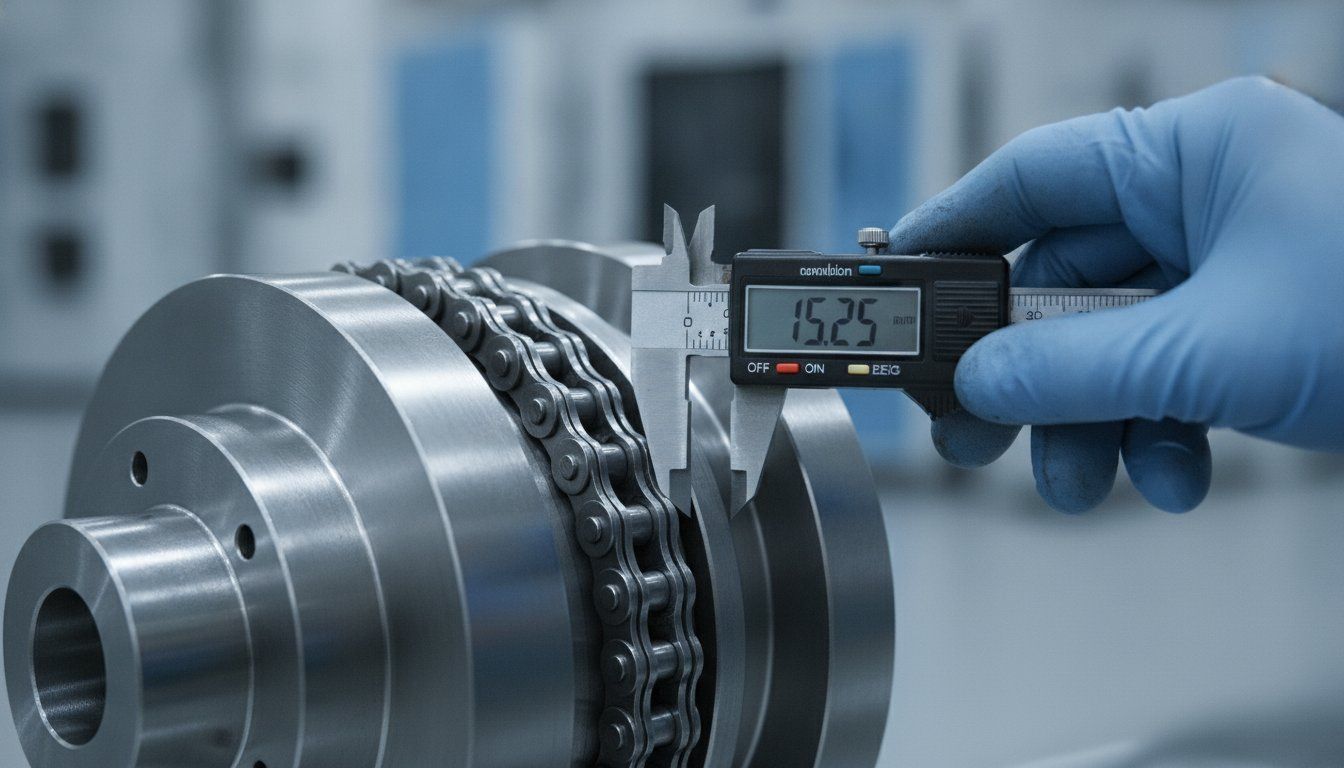
We stress that equipment safety ratings for hazardous locations become void the moment a technician installs a non-compliant replacement part. Maintaining the integrity of an explosion-proof motor or a static-conductive conveyor belt requires more than just functional equivalence. We provide consultative support to ensure that every replacement bearing, seal, or shaft coupling matches the original equipment's T-code and environmental rating. Our goal is to prevent the "MRO gap" where a site loses its compliance status during a routine repair cycle because of a rushed procurement decision.
Non-Sparking Tools and MRO Sourcing
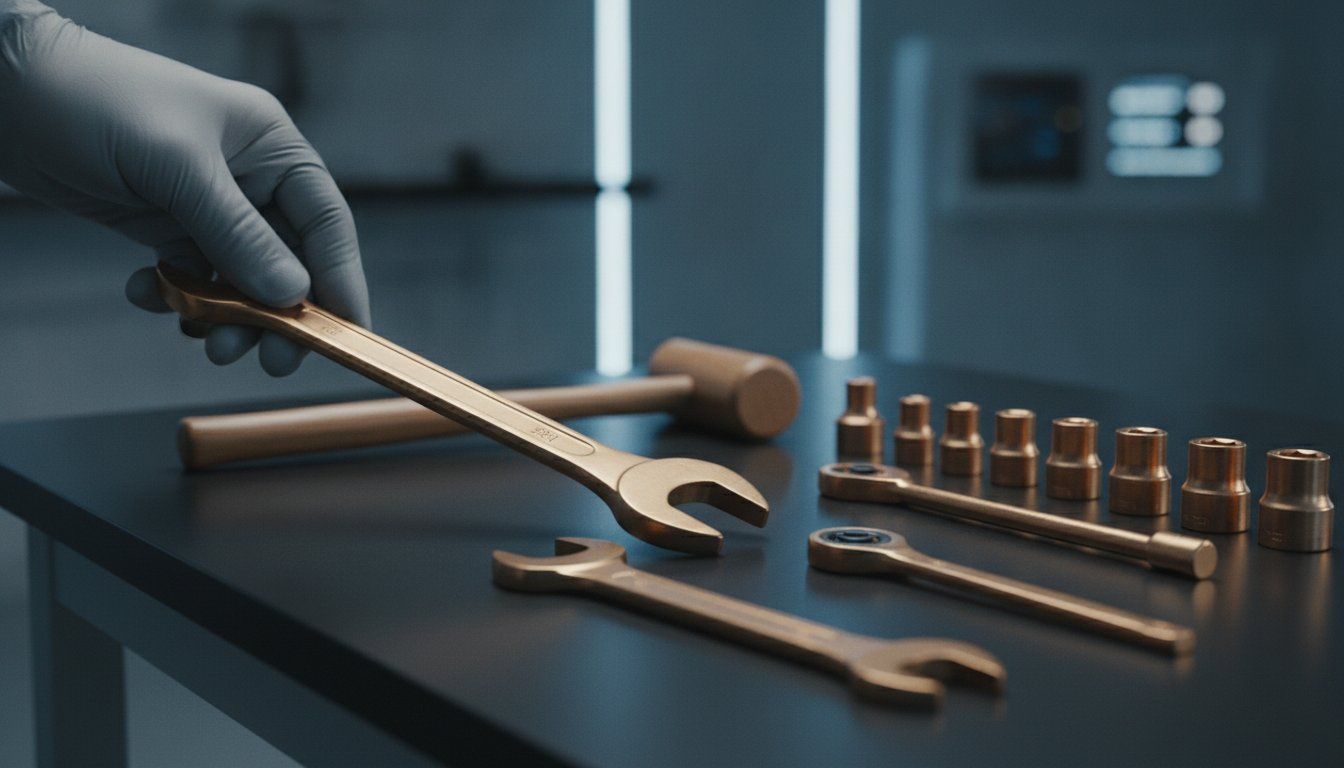
In Class I, Division 1 areas, traditional steel tools are a hard "no-go" because a single dropped wrench can generate a spark with enough energy to ignite volatile gases. We recommend Ampco safety tools as the industry standard for these sensitive maintenance activities. These tools utilize specialized alloys like Aluminum Bronze or Beryllium Copper to eliminate the risk of mechanical sparks. For example, a 12 inch / 305 mm pipe wrench made from these alloys provides the necessary torque without the ignition risk associated with carbon steel.
WARNING: Non-sparking alloys are significantly softer than carbon steel. We advise rigorous inspection cycles to check for mushrooming or deformation on striking tools and wrenches. A deformed tool can slip or fail during use, potentially leading to injuries or damage to expensive HazLoc hardware. We help you establish a tool replacement schedule that aligns with your site's safety audits and operational intensity.
Long-term Reliability and Technical Support
We believe in an "education first" philosophy, providing detailed technical specifications and material safety data before a purchase order is ever signed. This approach is vital when sourcing specialized components like a motor for a remote site outside North America. Having a single partner for both power transmission hardware and safety tooling simplifies your supply chain and ensures technical consistency. We don't just ship parts; we offer the expertise gained since 1950 in industrial distribution to ensure your site stays operational and safe.
Our independence from manufacturer-specific quotas means we prioritize your site's specific technical needs over a brand's sales target. Using non-certified replacement parts in a Class II motor can lead to premature seal failure and dust ingress that violates the original safety certification. We work to meet your expectations by verifying every component's rating against your specific Class and Division requirements. For a consultative review of your hazardous location equipment needs or to source specialized MRO parts, contact Jealco International today.
Securing Your Industrial Operations in Explosive Environments
We've examined how interpreting Class and Division standards and selecting the right mechanical components for hazardous locations protects both your personnel and your assets. From sourcing explosion-proof motors to implementing non-sparking Ampco safety tools, every technical decision impacts your site's long-term compliance. You don't have to manage these complexities alone when sourcing parts for remote or international facilities.
Our export experience since 1950 lets us manage complex global logistics across six continents. We act as an independent partner, prioritizing technical rigor over manufacturer quotas to keep your remote sites operational and safe. This independence ensures you receive the best solution for your specific thermal and static challenges, rather than just what a single brand has in stock.
Frequently Asked Questions
What is the difference between Class I and Class II hazardous locations?
Class I locations involve flammable gases, vapors, or liquids, while Class II locations involve combustible dusts. These categories determine the specific engineering requirements for hazardous locations . In Class I areas, we focus on flame paths and internal explosion containment to prevent gas ignition. In Class II areas, our priority is excluding dust from the enclosure and maintaining low surface temperatures to prevent smoldering or secondary dust explosions.
Can I use a Division 2 rated motor in a Division 1 area?
You cannot use a Division 2 motor in a Division 1 area because the safety standards for Division 1 are significantly more stringent. Division 1 areas expect hazardous concentrations to be present under normal operating conditions or frequent maintenance. A Division 2 motor lacks the necessary flame-containment or dust-exclusion features required to prevent ignition in these volatile environments. We always verify that your equipment rating meets or exceeds the specific site classification.
What does an ATEX certification mean for North American operations?
ATEX is a European certification that isn't a legal substitute for UL or CSA listings in the United States or Canada. While ATEX equipment is technically robust, it won't satisfy local electrical inspectors or OSHA safety specifications in North America. We can source dual-certified components to help global firms maintain consistency across six continents while ensuring legal compliance at their domestic facilities. This approach simplifies your global MRO procurement and site acceptance.
Why is static conductivity important for conveyor belting?
Static conductivity prevents the buildup of electrical charges that can discharge as an ignition spark. In grain elevators or chemical plants, the friction between the belt and the pulleys generates static energy. We supply static-conductive belting that maintains a resistance level below 300 MΩ to safely bleed this energy to the ground. This is a critical safety feature for hazardous locations where fine dust or vapors are present in dangerous concentrations.
Are explosion-proof motors waterproof or suitable for washdown?
Not necessarily, as "explosion-proof" refers to internal flame containment rather than moisture resistance. Many explosion-proof motors have an IP54 or IP55 rating, which handles splashing but not high-pressure washdowns. If your application requires frequent cleaning, we source motors with specific Ingress Protection (IP) ratings or specialized stainless steel housings. We ensure these modifications don't compromise the original hazardous location safety certification or the motor's thermal performance.
How do I know if my gearmotor needs a specific temperature T-code?
Your gearmotor's T-code must be lower than the Auto-Ignition Temperature (AIT) of the specific materials in your environment. If you're working with a gas that ignites at 392°F / 200°C, your equipment's surface temperature must stay well below that limit to remain safe. We review your site safety data sheets and provide technical specs to ensure the gearmotors and speed reducers we supply won't act as a thermal ignition source.
Which hand tools are safe to use in a Class I, Division 1 environment?
You must use non-sparking hand tools made from specialized non-ferrous alloys like Aluminum Bronze or Beryllium Copper. Standard steel tools can create sparks upon impact or if dropped, which is a major risk in gas-heavy environments. We supply Ampco safety tools as the industry standard for maintenance in these areas. For example, a 12 inch / 305 mm non-sparking wrench provides the necessary torque without the risk of triggering a catastrophic explosion.
Need parts or a quote?
Jealco has supplied industrial equipment and parts since 1950, in the U.S. and for export worldwide. Send us your part number, size or application and we'll quote it.
Prefer to talk? Call +1 770-998-2124. Hablamos español.
Recent Posts