Plastic vs Steel Modular Conveyor Belting: The Ultimate Comparison Guide
That heavy stainless steel belt you installed for durability might be adding to your monthly energy bills. We know the frustration of a sudden belt breakage during a peak production shift at 2:00 a.m. It ruins your schedule and risks your FDA compliance. You deserve a system that runs for years without constant repairs. This plastic vs steel modular conveyor belting comparison gives you the specific data to make an informed choice for your facility.
We've analyzed how different materials handle extreme temperatures and heavy loads in real-world industrial settings. We'll show you why certain "strong" materials actually fail faster in high-moisture environments. This guide covers everything from hygiene protocols to long-term wear patterns. Our goal is to help you reduce maintenance downtime through better material selection. You'll gain a clear roadmap for your next equipment upgrade so you don't waste resources on the wrong solution.
Key Takeaways
- We show you why steel handles much heavier loads than plastic.
- Learn how temperature changes impact the size of your conveyor belts.
- See which material dominates the food, automotive, or mining sectors.
- Use our plastic vs steel modular conveyor belting comparison to save money.
- We explain how a technical audit finds your perfect belt match.
What is Modular Conveyor Belting?
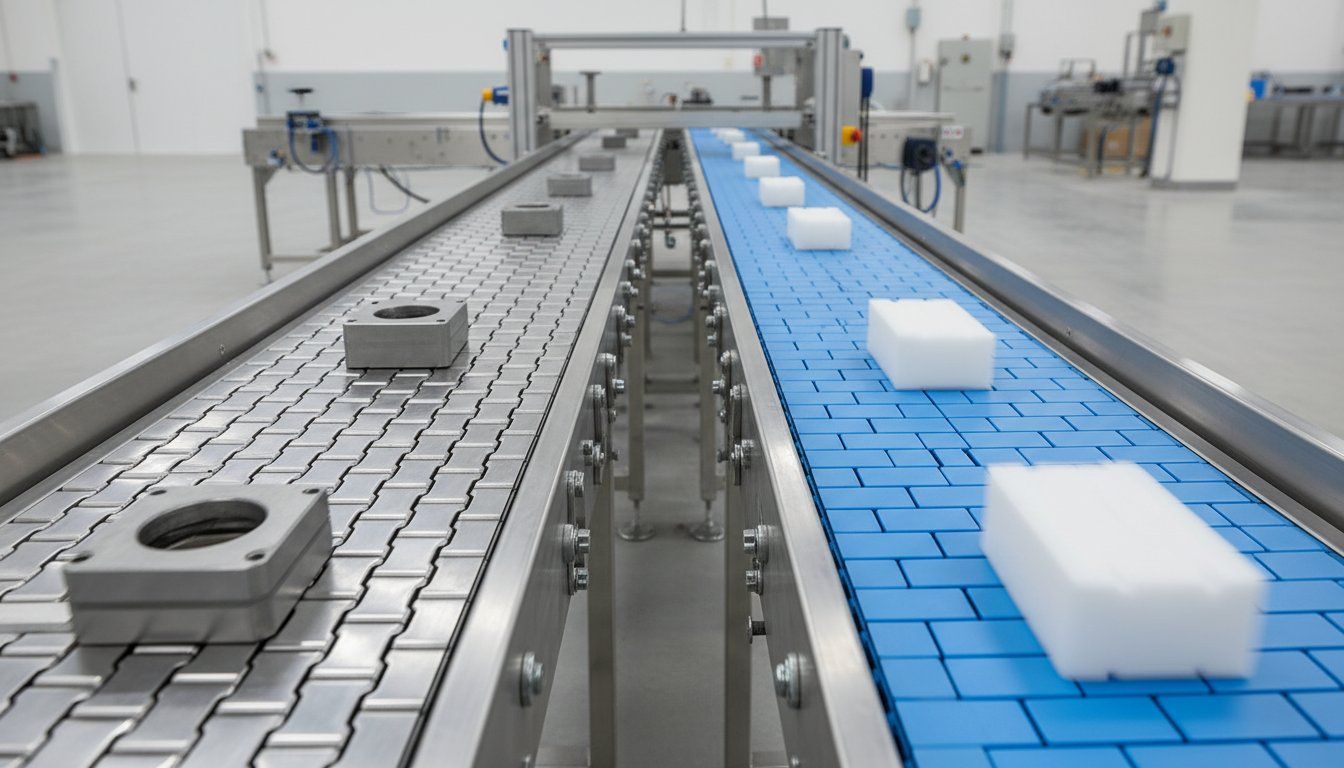
We define modular conveyor belting as a system of individual interlocking pieces. We assemble these modules in a staggered brick-lay pattern. This specific arrangement provides immense lateral strength. It prevents the belt from stretching or twisting during operation. This design is the standard for modern food processing lines.
Unlike a traditional conveyor belt made of continuous fabric or rubber, modular systems are robust. Fabric belts often slip or track poorly. They require constant tension adjustments to function. Modular belts use sprockets to stay aligned. This makes them a superior choice for heavy-duty industrial tasks. This stability is vital for precision cooling and proofing processes.
Maintenance is simple with this design. You don't need to replace the entire belt if a section breaks. We simply swap out the damaged link. This process takes less than 10 minutes in most industrial settings. It saves a lot of lost production time compared with vulcanizing a fabric belt. It's a practical solution for facilities running 24/7 cycles.
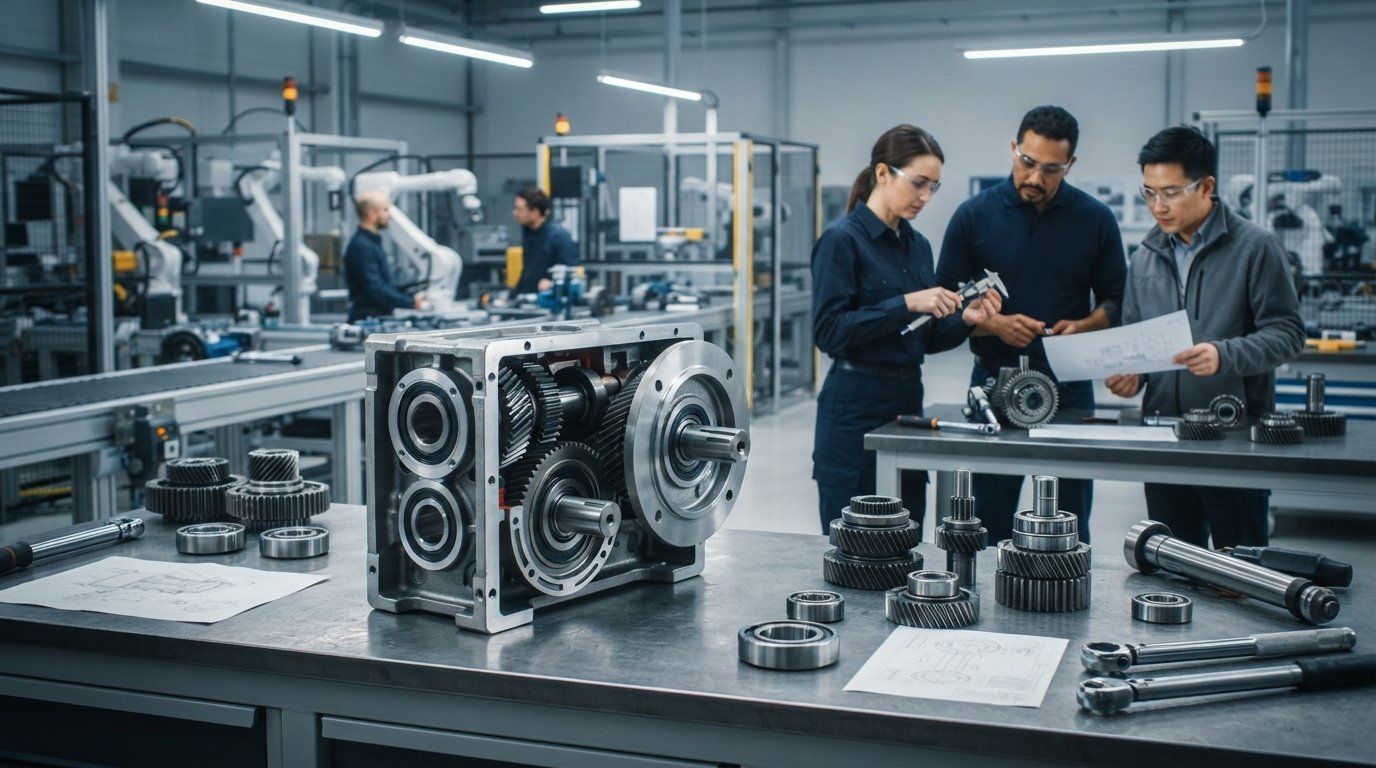
The Anatomy of a Modular Link
The hinge pin is the backbone of every link. It runs through the width of the module to create a flexible joint. These pins are usually made of thick plastic or stainless steel. They allow the belt to hinge around small radius sprockets. This flexibility is essential for tight plant layouts.
We offer various surface types to fit your specific process. Flat top belts provide a smooth surface for stable product handling. Flush grid surfaces have open area to improve drainage or airflow; check the open-area percentage for each module. Raised rib styles allow for seamless transfers using finger plates. To ensure these transitions are as smooth as possible, you can explore Plastic Conveyor Components that include specialized transfer modules. These variations are key factors in any plastic vs steel modular conveyor belting comparison .
- Flat Top: Best for containers and small parts.
- Flush Grid: Ideal for washing or cooling applications.
- Raised Rib: Designed for smooth product transfers.
Pitch size determines how tightly a belt can turn. We measure pitch from the center of one hinge to the next. Common sizes range from 0.5 inches (12.7mm) for small items to 2.5 inches (63.5mm) for bulk loads. Smaller pitches reduce the "chordal effect" or vibration during high-speed runs.
Why Modular Systems Are Taking Over
Modular systems are replacing friction-driven belts rapidly across the food industry. Traditional belts lose energy through heat and slippage. Modular belts use sprockets for direct power transfer. This eliminates the need for high-tension rollers. It reduces the load on your bearings and motors significantly.
Many facilities are moving away from high-tension fabric systems. These older systems are difficult to clean and prone to fraying. Modular links are non-porous and resist bacterial growth. This shift is a major part of the plastic vs steel modular conveyor belting comparison when evaluating long-term hygiene and durability. We prioritize these technical advantages to ensure your facility meets strict safety standards.
Positive drive is a mechanical engagement where sprocket teeth lock into belt modules to provide slip-free power transmission.
Plastic vs. Steel Modular Belts: Mechanical Comparison
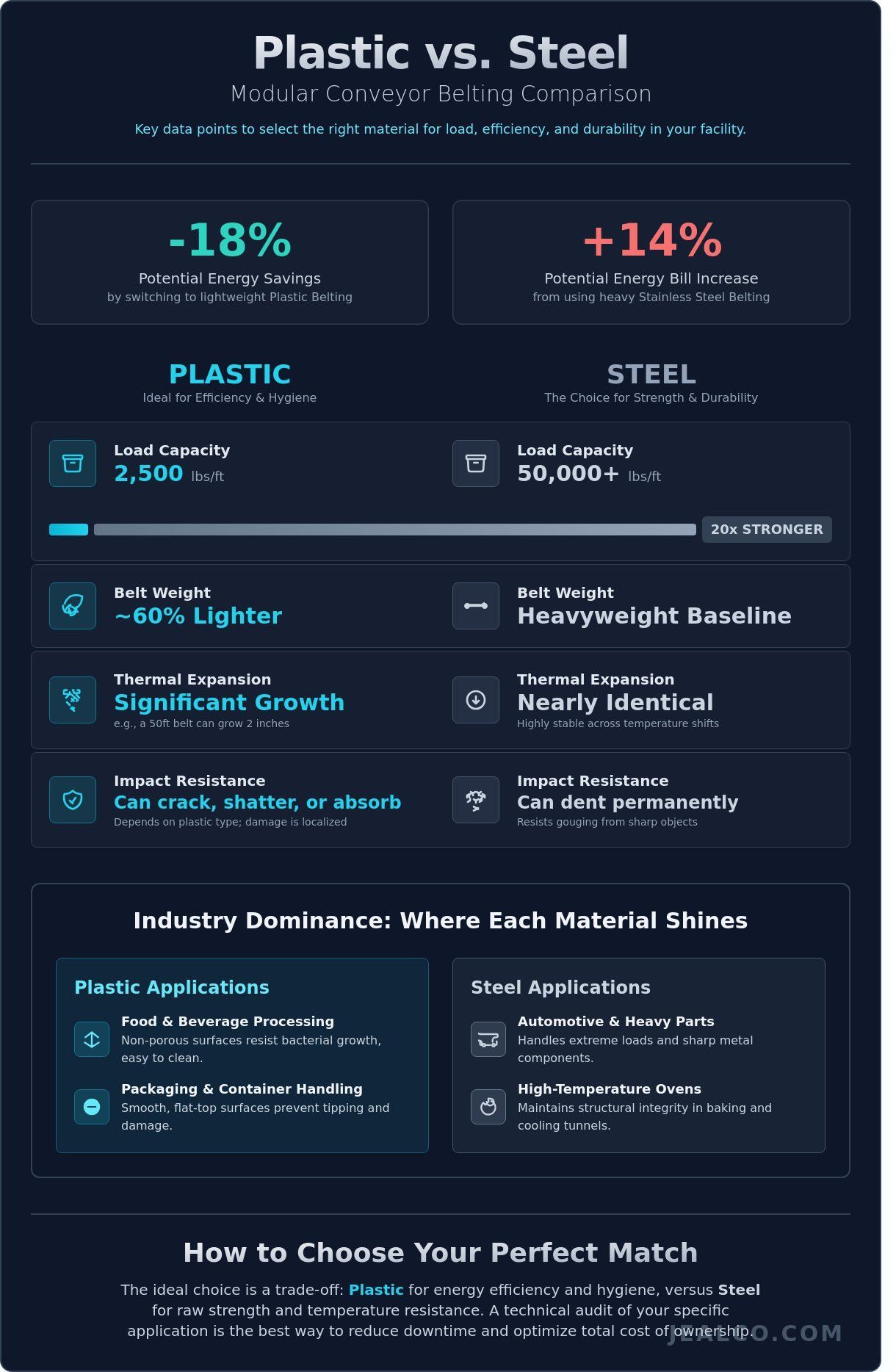
We need to look at the raw physics. Performing a plastic vs steel modular conveyor belting comparison requires looking at load capacity first. Steel belts are the heavyweights of the industry. They handle tensile loads exceeding 50,000 lbs/ft (74,400 kg/m). Plastic modules usually peak at 2,500 lbs/ft (3,720 kg/m). This 20-fold difference matters when you're moving heavy industrial parts or massive batches of dough.
Weight is where plastic shines. It's much lighter than stainless steel. This light profile reduces the torque your motors must produce. Switching to plastic can lower energy costs in high-volume facilities. It makes the whole system easier to move during maintenance. You'll spend less on heavy-duty drive components too.
Thermal expansion is a critical factor we analyze during the design phase. Plastic expands and contracts significantly more than metal. In a 50-foot (15-meter) run, a plastic belt might grow by 2 inches (5 cm) with a 40-degree temperature shift. Steel stays nearly identical. If your process involves rapid temperature changes, you must account for this "growth" in the conveyor frame. Failure to do so leads to buckling or tracking issues.
Impact resistance varies by material density. Dropping a 20 lb (9 kg) metal part can dent a steel belt permanently. That same part might cause a plastic module to crack or shatter. However, some high-impact plastics absorb energy better. They bounce back without permanent deformation. Steel is often the better choice for sharp, heavy components that would gouge or cut into softer plastic surfaces.
Environmental Resistance Factors
Chemical exposure often dictates your material choice. Acetal and Polypropylene resist many industrial acids and bases. However, they fail in high-heat ovens. Polypropylene melts around 160°C (320°F). Stainless steel 304 or 316 handles temperatures up to 537°C (1,000°F) without losing structural integrity. For harsh sanitation cycles involving chlorine, 316 stainless is the only way to prevent corrosion and pitting over time.
Friction and Wear Life
Friction affects how much power your line consumes. Plastic modules are often self-lubricating. They have a coefficient of friction around 0.15 when running on UHMW wear strips. Steel is higher, often reaching 0.30. This friction creates heat and wear. We track "elongation" or belt stretch closely. A steel belt stretches very little over its life. Plastic stretches more, because of material creep under constant load.
Proper tensioning is not just about performance. It's a safety requirement. We ensure all our installations meet OSHA conveyor safety standards to protect your team from pinch points. If you're unsure which material fits your specific load, our expert technical team can run the calculations for your specific application.
Industry Battlegrounds: Where Each Material Dominates
We've spent years analyzing how materials perform under pressure. Every facility has a "home turf" for its equipment. Choosing the wrong side in the plastic vs steel modular conveyor belting comparison leads to downtime.
The right choice depends on your specific environment. Plastic excels in delicate or wet conditions. Steel survives where heat and impact destroy everything else. We look at the data to guide these decisions.
The Food and Beverage Standard
Food safety is our primary focus. We prioritize plastic modular belts for hygiene. These belts meet strict FDA and USDA standards. You can't ignore these regulations in a 10,000 sq ft (929 sq m) bakery.
Cleaning is much faster with plastic. Clean-in-place (CIP) systems use high-pressure water. Plastic doesn't rust or corrode. It handles acidic cleaners without degrading over time.
- Detectability: Modern plastic is often metal-detectable.
- Sanitation: Open grid designs let water reach every surface.
- Weight: Plastic is much lighter than most steel options.
Metal fragments are a major risk. A single steel shard can ruin a 500 lb (226 kg) batch. Plastic offers a safer alternative for consumer products. We recommend it for all light packaging lines.
Heavy Manufacturing and Automotive
Steel reigns supreme in heavy industry. This is common in automotive plants. Sharp metal stampings would shred a plastic belt. Steel resists these cuts and abrasions easily.
Heat dissipation is another critical factor. Parts-washing lines often reach 350°F (176°C). Plastic melts or warps at these levels. Steel maintains its shape and structural integrity during cooling.
We rely on heavy-duty conveyor belting for these tasks. It handles the impact of a 15 lb (6.8 kg) engine block with ease. You need this level of durability for 24-hour shifts.
These systems often require specialized belt conveyors. They provide the torque needed for heavy loads. Steel ensures the belt won't stretch under a 2,000 lb (907 kg) pallet.
The Warehouse Grey Area
Parcel handling is a unique middle ground. Sortation centers often use both materials. Plastic is much quieter for workers. It reduces noise by 15 decibels in busy hubs.
Steel handles abrasive packages better. Think about rough wooden crates or heavy mining samples. If your facility processes 4,000 items per hour, durability is key. We help you balance noise levels with long-term wear.
Sortation lines fail because of poor material choice. Heavy parcels can crack thin plastic modules. Conversely, steel can be overkill for small envelopes. We analyze your average package weight before recommending a build.
It's about finding the sweet spot for your ROI. Plastic saves on energy costs. Steel saves on replacement frequency. We weigh these factors to ensure your facility stays profitable.
The Total Cost of Ownership (TCO) Framework
We believe that looking only at the initial price tag is a mistake. To make a smart choice, we must evaluate the total cost of ownership. This includes the purchase price, installation labor, and energy use over time. Our plastic vs steel modular conveyor belting comparison reveals that the cheapest option today often becomes the most expensive one tomorrow.
Steel belts are a major investment. They typically cost several times more than plastic modules. This high entry price often pushes buyers toward plastic. However, we must also consider the cost of the supporting structure. Steel belts require heavy frames and larger drive components to handle the weight. Plastic systems allow for lighter, more affordable frames.
Installation labor is another hidden cost. A 10-meter (33-foot) stainless steel belt is incredibly heavy. You will need more man-hours and specialized lifting equipment to get it running. Plastic modules are usually faster to install. One technician can often carry several meters of plastic belt alone. This reduces your setup costs significantly.
Energy Efficiency Calculations
Energy is a constant drain on your profits. Lighter belts require less torque to move. This reduces the "dead load" on your system. When we use plastic, your electric motors operate much more efficiently. They don't have to fight the weight of the belt itself. This leads to a longer motor lifespan and lower monthly bills.
You can calculate the required motor power with these simple formulas:
- Metric (kW): Power = (Total Mass [kg] × 9.81 × Friction Coefficient × Velocity [m/s]) / 1000
- Imperial (HP): Power = (Total Weight [lbs] × Friction Coefficient × Velocity [ft/min]) / 33,000
In most cases, switching from steel to plastic reduces the required power. Over a year of 24/7 operation, these savings add up to thousands of dollars.
Long-term Durability and Replacement Cycles
Durability depends entirely on your environment. In a dry warehouse, an acetal plastic belt can last many years. It handles high-speed sorting without much wear. However, in a high-heat bakery or a high-salt food plant, plastic might degrade faster. Stainless steel is the king of harsh environments. A quality steel belt can last even longer in harsh environments with proper care.
Compare the higher initial price of steel against the cost and labor of replacing plastic belts over the same period.
Maintenance and downtime costs also differ. If a plastic belt breaks, you swap a few modules. This takes minutes. If a steel belt suffers a major failure, you might need a full roll or a professional welder. We recommend stocking spare modules for plastic belts to keep your downtime under 30 minutes.
Are you ready to optimize your production line with the right components? Contact our technical team at Jealco for a professional assessment of your facility.
How We Help You Choose the Perfect Modular Match
Choosing the right belt shouldn't be a guessing game. We act as your technical partner. We don't just distribute parts. Our team understands your daily operational hurdles. We focus on long-term reliability for your facility. We simplify your plastic vs steel modular conveyor belting comparison with data.
Every new customer starts with our "Application-First" audit. We analyze your line speed and temperature needs. We look at your load requirements too. This makes your plastic vs steel modular conveyor belting comparison easier. We evaluate factors like chemical exposure and sanitation cycles. We even check weight limits up to 2,000 lbs (907 kg).
Our inventory is deep and ready for you. We stock a full range of conveyor belting for both types. You can find pins, flights, and side guards easily. We offer stainless steel pins for high-strength steel belts. We also provide acetal components for plastic systems.
The Jealco Advantage: Customization
A belt is only as good as its drive. We help you match sprockets to your belt. Our experts also align your motor with our gearing products. This creates a seamless mechanical bond. We ensure the pitch matches perfectly every time. We prevent slipping on 10-foot (3.04-meter) inclines.
Logistics shouldn't slow your production down. We ship worldwide from our key hubs. We process orders quickly. We currently ship to over 40 countries. We track every shipment until it arrives. We keep your downtime to an absolute minimum.
We believe in "right-sizing" every conveyor system. Over-engineering leads to wasted capital. Under-engineering causes more frequent belt failures. We find the middle ground for your budget. Our goal is reliable operation.
Ready to Upgrade Your Line?
Your production goals are within reach. Contact our technical sales team for a quote. We provide detailed specs for every 100-foot (30.48-meter) section. We'll help you solve your toughest bottleneck. Tell us about your specific pain point below. We respond to inquiries within one business day. Our quotes include full technical drawings.
Is your current belt slipping? Does it stretch under 150°F (65°C) heat? Do your cleaning chemicals like caustic soda cause damage? Share your experience in the comments. Every response is read by our team. We want to hear your real-world challenges. Your feedback helps us innovate new solutions.
We supply the high-quality parts. You build the future of your brand. Let's start your upgrade process this week. Your efficiency is our top priority. We look forward to working together. Our team is ready to assist you now. We are your partner in industrial growth.
Select the Right Foundation for Your Conveyor System
Your choice between materials determines your facility's efficiency. Plastic resists corrosion in wet environments. Steel thrives under high-heat conditions above 400°F (204°C). This plastic vs steel modular conveyor belting comparison proves material choice matters.
We don't want you to overspend on maintenance costs. Selecting the wrong belt leads to more downtime. We've served the industrial sector since 1950. We ship from hubs in Tennessee, Ohio, and Georgia.
We focus on parts that withstand 24/7 production cycles. Our technical experts provide material audits to ensure a perfect fit. You'll receive a solution built for maximum durability. We bring industry experience since 1950 to every order.
We understand the specific needs of food processing and thermal sectors. Ready to upgrade your system? Browse our full inventory of modular belting and accessories at the Jealco Store.
We're here to help you build a more robust production line today. Let's find the durable solution your business deserves.
Frequently Asked Questions
Is plastic modular belting strong enough for automotive parts?
Yes, plastic modular belts handle heavy automotive components easily. High-strength acetal resins are a common choice for engine blocks or transmissions. These materials support loads exceeding 50,000 lbs per foot (22,680 kg per 30.5 cm). They resist impact and oils common in car assembly plants. You'll find them in many modern vehicle production lines. They don't mar the finish of the parts like metal can.
Can steel modular belts be used in washdown food environments?
You can use steel belts in washdown areas if they're stainless steel. We suggest Type 316 stainless for high-salt or acidic food processing. It resists corrosion from 180°F (82°C) cleaning chemicals better than most plastics. Steel handles the 1,500 psi (103 bar) pressure of industrial sprayers without warping. This makes it a robust choice for heavy-duty sanitation in meat plants.
How much does it cost to replace a modular belt vs. a fabric belt?
Modular belts cost more per foot than fabric belts. Fabric belts are cheaper up front. However, you'll save on labor with modular systems. Repairs often take minutes instead of hours. Modular designs reduce downtime because damaged sections can be swapped quickly.
What is the maximum temperature a plastic modular belt can handle?
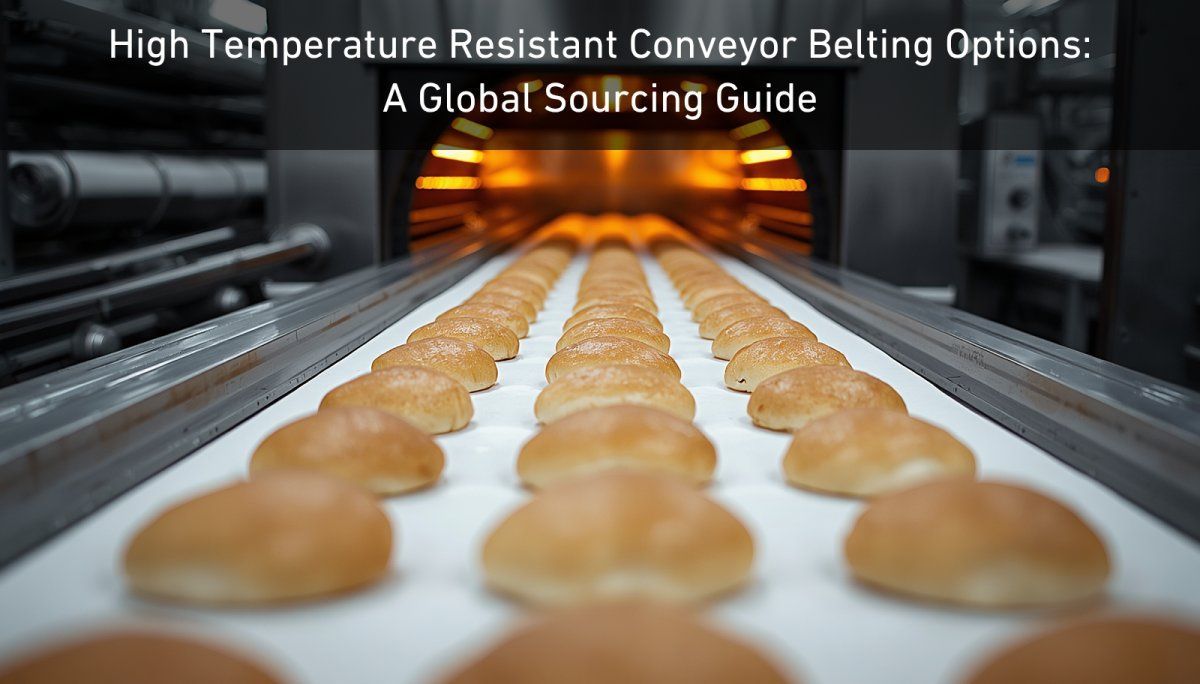
Standard plastic modular belts generally top out at 220°F (104°C). For higher heats, we use specialized resins like PEEK that reach 460°F (238°C). If your oven exceeds these limits, you must switch to steel. Steel maintains its shape at 1,200°F (649°C) without melting or off-gassing. Always check your specific resin's data sheet before installation to avoid catastrophic failure.
Do modular belts require special sprockets?
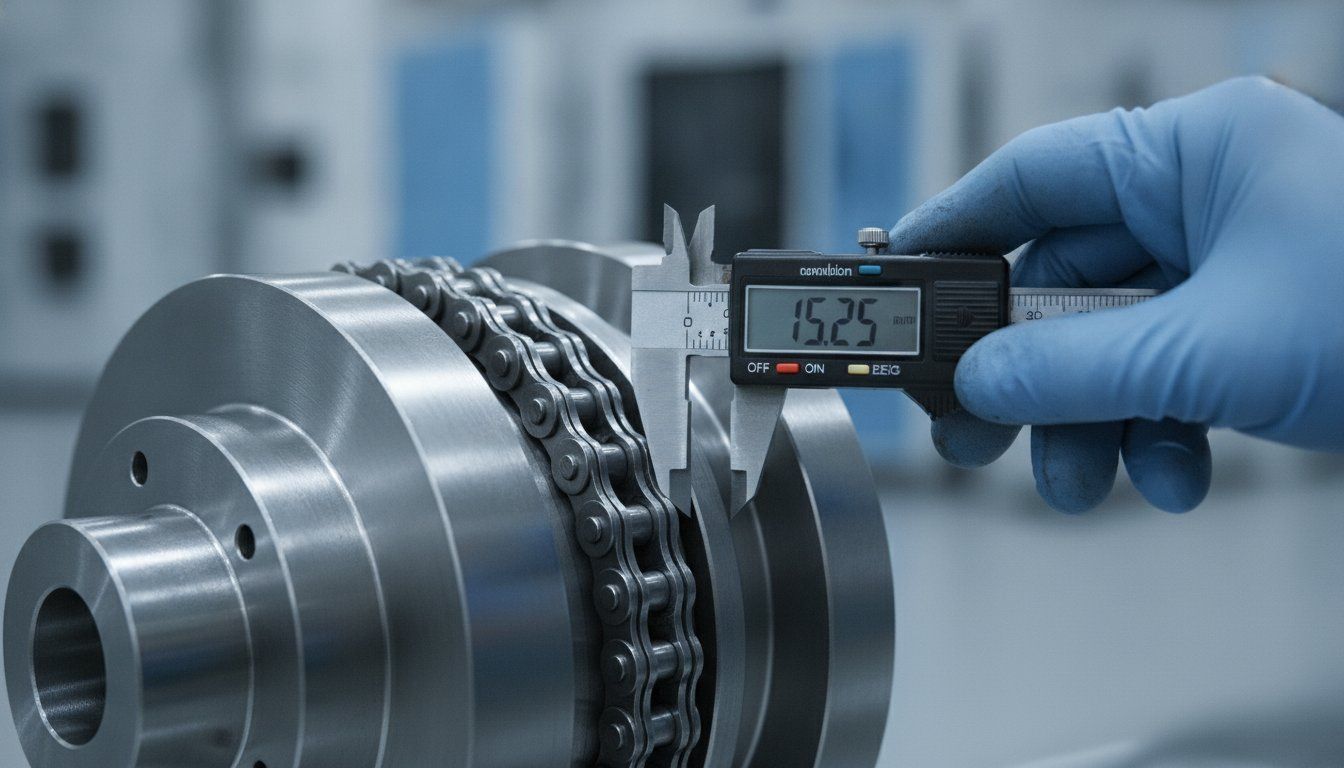
Yes, every modular belt requires a specific matching sprocket. You can't use a standard roller chain sprocket for these systems. We use square shafts to ensure the sprockets stay aligned across the belt's width. This prevents the belt from wandering or tracking poorly during operation. Most systems use 4 to 8 sprockets per drive shaft depending on the total load.
What happens if a single link breaks in a modular conveyor system?
You only replace the damaged link or module. We don't need to scrap the whole belt like you would with fabric. Just pull the hinge rod out, swap the 2-inch (5 cm) section, and reinsert the pin. This process usually takes under 10 minutes. It's a key factor in any plastic vs steel modular conveyor belting comparison for maintenance teams who value speed.
How do I calculate the belt tension for a modular system?
We calculate tension by measuring the catenary sag on the return side. Set return-side sag to the belt manufacturer's recommendation. For a 20-foot (6.1 meter) conveyor, that's about 2.4 to 4.8 inches (6 to 12 cm). Modular belts run on low tension to reduce wear on bearings. Too much tension will snap your drive sprockets or stretch the plastic links.
Is stainless steel always better than carbon steel for conveyors?
No, carbon steel is often better for dry, non-food applications. It costs less than stainless steel and offers higher tensile strength. We use it for heavy warehouse pallets or dry brick manufacturing. Stainless is only necessary if you face moisture or strict hygiene rules. If your environment is dry, carbon steel provides a more cost-effective solution for your facility's budget.
Need parts or a quote?
Jealco has supplied industrial equipment and parts since 1950, in the U.S. and for export worldwide. Send us your part number, size or application and we'll quote it.
Prefer to talk? Call +1 770-998-2124. Hablamos español.
Recent Posts