Heavy Duty Conveyor Belting: The Ultimate Guide to Industrial Durability

March 19, 2026

Learn how to choose the toughest conveyor belts. You can eliminate downtime. You can also boost your facility's efficiency.

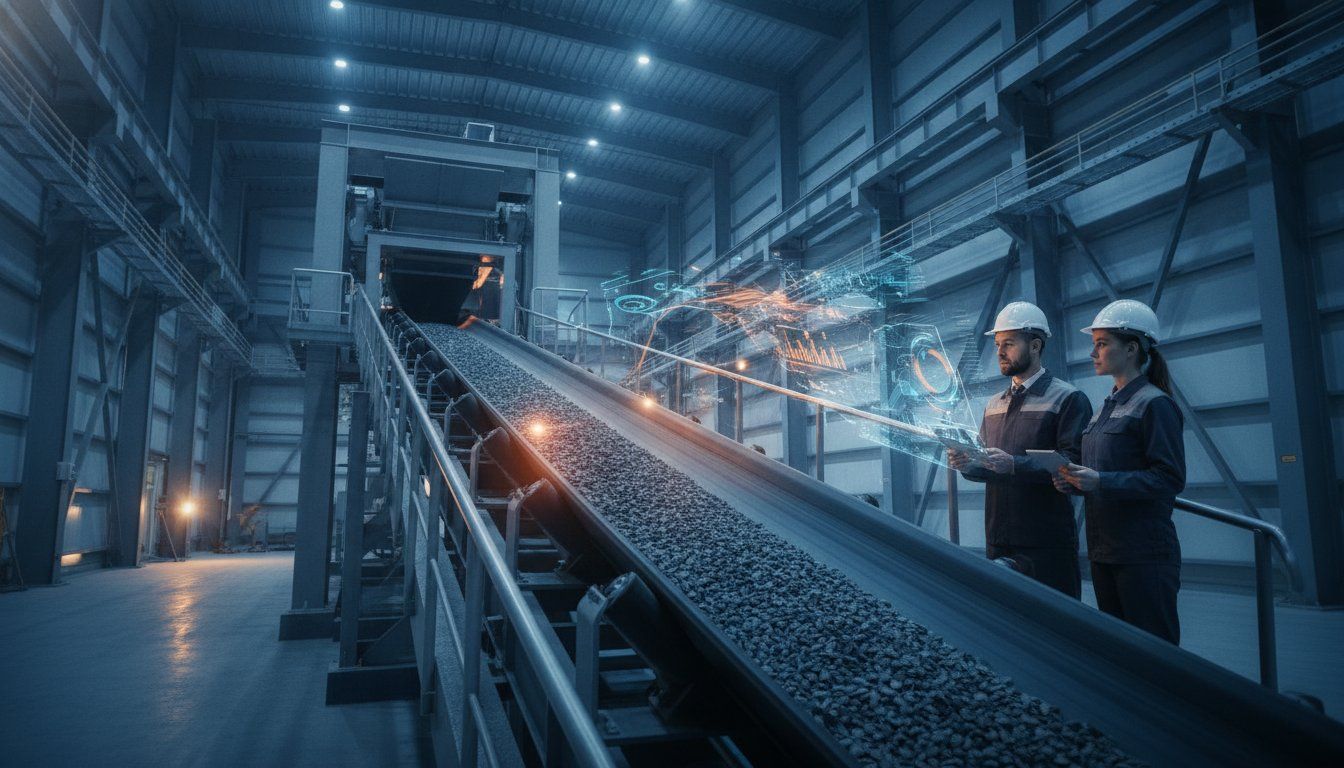
Choosing the right belt is a strategic investment. It protects your entire operation from costly failures. We'll show you how to select the right heavy duty conveyor belting for your needs.

Why Heavy Duty Conveyor Belting Matters for Your Bottom Line

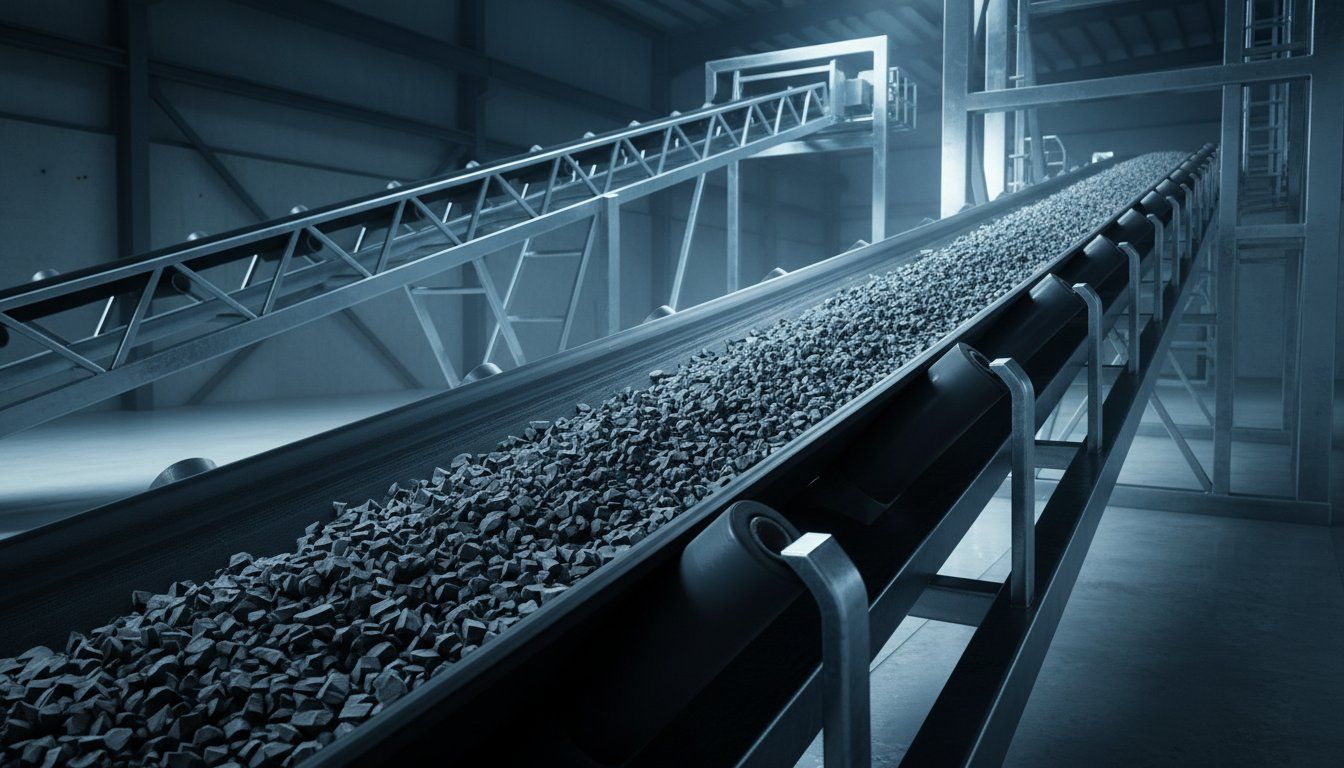
Heavy duty belts handle the toughest industrial loads. Standard belts fail under high impact or heat. We define heavy duty by its tensile strength and cover thickness. A premium belt costs less than unexpected downtime.

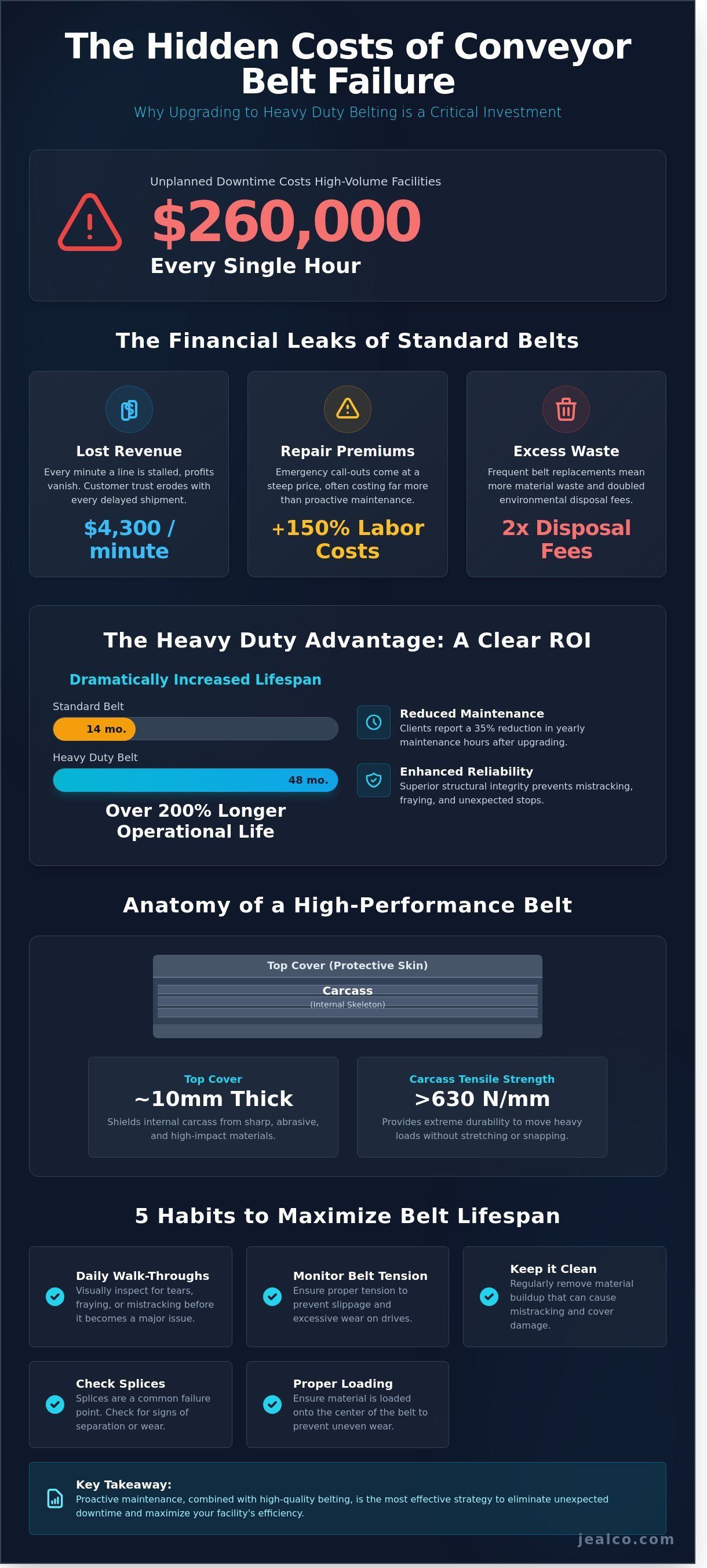
The Real Cost of Belt Failure

A torn belt brings your production to a halt. Lost production hours mean lost revenue. Emergency repair crews also charge premium rates. Frequent replacements increase your long-term waste and labor costs. A single failure can wipe out your profits for the day. In addition to the belt itself, the failure of associated heavy equipment or hydraulic systems can be the root cause. Having a mobile repair specialist like Ms. Hydraulics LLC on hand can be critical for getting your entire system back online quickly.

How Heavy Duty Belts Save Money

The right belt is an investment in reliability. They resist rips, tears, and impacts much better. Better belt tracking reduces wear on your rollers and structure. You will spend far less on maintenance labor every year. This adds up to a lower total cost of ownership.

Decoding the Anatomy of High-Performance Belts

A conveyor belt is more than just black rubber. We look at two main parts: the carcass and the covers. The carcass provides the necessary tensile strength. The covers protect the belt from external damage and wear.

Understanding the Carcass and Plies

The internal fabric layers are called plies. Most belts use EP (polyester/nylon) fabric. More plies usually mean a higher load capacity. We help you match the ply count to your specific load and pulley size. This ensures optimal performance without overspending.

The Role of Top and Bottom Covers

Rubber compounds vary by the material you handle.

  • Abrasion-resistant covers stop sharp rocks from gouging the belt.
  • Heat-resistant covers prevent the belt from getting hard and cracking.
  • Oil-resistant covers are essential for recycling or food-grade applications.

Choosing the right cover is critical for belt longevity.

Tensile Strength and Belt Rating

Belt ratings tell you the maximum working tension. This is measured in PIW (Pounds per Inch of Width). It is the most important spec to consider. Always choose a rating higher than your system's peak load. This gives you a crucial safety margin.

Choosing Between Fabric and Steel Cord Reinforcement

Fabric and steel cord belts serve different needs. Fabric belts are flexible and easy to install. Steel cord belts offer the highest strength available. We help you decide based on your conveyor's length and tension requirements.

When to Choose Fabric (EP) Belts

Fabric belts are the workhorse of many industries.

  • They are best for short to medium-distance conveyors.
  • They are much easier and faster to repair in the field.
  • They work great for applications with smaller pulley diameters.

The Power of Steel Cord Belting

For the most demanding jobs, you need steel.

  • Steel cord is essential for long-distance mining operations.
  • It has extremely low stretch compared to fabric belts.
  • It requires specialized vulcanization equipment for proper installation.

5 Tips to Extend Your Conveyor Belt Life Today

Proper maintenance starts with a daily walk-through. A few simple checks can prevent catastrophic failures and save you thousands.

  1. Check Your Alignment. Look at the belt tracking regularly. Mistracking causes severe edge wear.
  2. Keep It Clean. Keep pulleys and rollers clean and spinning freely. Material buildup can cause major damage.
  3. Use Impact Beds. Install impact beds or bars at your loading points. Sharp drops kill even the best belts.
  4. Train Your Team. Teach your staff to spot small tears early. A small fix today prevents a huge replacement tomorrow.
  5. Maintain Proper Tension. Too much or too little tension causes slippage and wear. Check it as part of your routine.

Mastering Belt Alignment and Tracking

Mistracking is a top cause of belt destruction. It causes edge wear and can damage the belt carcass. You should adjust your idlers to keep the belt centered. Also, ensure the entire conveyor frame is level and square.

Reducing Impact Damage at Load Zones

Loading zones are where most damage occurs. Heavy, sharp materials can puncture any belt. You should install impact bars to absorb the energy. If possible, redesign chutes to slow down the material flow.

How Jealco Helps You Source the Toughest Belts Worldwide

We have over 70 years of industrial experience. Our team specializes in global export and logistics. We carry top brands and all the specialized mechanical parts you need. We treat every client like a strategic partner, not just a number.

Global Distribution and Export Expertise

Getting heavy components overseas is complex. We make it simple. We ship heavy conveyor belting to any major port. Our experienced team handles all the complex export paperwork. You get your parts on time, every time.

A Complete Catalog of Material Handling

We are a single source for your entire conveyor system. We sell the motors, gearboxes, idlers, and rollers too. You can find more information about our Innovative Belt Conveyor Solutions. Sourcing everything from one trusted partner saves you time and headaches.

Request a Quote for Your Next Project

Let's build a more reliable system together. Tell us your load, material, and distance requirements. We provide detailed technical specs and fair, transparent pricing.


Frequently Asked Questions

What is heavy duty conveyor belting exactly? It is belting designed with a high tensile strength carcass and thick, durable rubber covers. It resists punctures, high impact, and abrasion from materials like rock, aggregate, or recycled metal.

How do I know if I need a fabric or steel cord belt? Fabric (EP) belts are ideal for most plant conveyors up to a few hundred feet. Steel cord belts are necessary for long-distance, high-tension applications like overland mining conveyors that can be miles long.

What are the most common causes of belt failure? The most common causes are mistracking (poor alignment), impact damage at loading points, seized idler rollers, and improper splicing.

How long should a heavy duty belt last? This varies greatly by application. With proper selection, installation, and maintenance, a heavy duty belt can last for many years, often 5-10 years or more, even in harsh conditions.

Can Jealco ship conveyor belts internationally? Yes. We are experts in global logistics and export. We handle all the documentation to ship heavy industrial components, including conveyor belting, to any major port worldwide.

What information do I need to provide for a quote? To give you an accurate quote, we need to know your belt width, conveyor length, the material being handled, the load (tons per hour), and any special requirements like heat or oil resistance.

Are there specialized belts for oil or heat resistance? Absolutely. We supply a wide range of belts with specialized rubber compounds, including high-temperature (heat-resistant) and oil-resistant (OR) or moderately oil-resistant (MOR) options.

What is the difference between EP and NN fabric belts? EP (Polyester/Nylon) is the modern standard. It has low stretch and excellent moisture resistance. NN (Nylon/Nylon) is an older technology that has higher stretch and can be affected by moisture. We primarily recommend and supply EP fabric belts.

Share this article

Recent Posts

By Jealco International, Inc. July 13, 2026
A visual estimate of chain slack is not a maintenance protocol; it is a recipe for catastrophic drive failure. You know the frustration of a snapped chain halting production during a critical shift because tensioning standards vary between technicians. We understand that inconsistent maintenance lea…
By Jealco International, Inc. July 6, 2026
What if your oven's peak temperature rating is actually the primary cause of your unscheduled downtime? Most facility managers believe they're buying sufficient thermal protection when they match a belt's peak rating to their process, but they're often inadvertently scheduling their next system fail…
By Jealco International, Inc. June 29, 2026
Did you know that over 60% of industrial conveyor failures stem directly from pulley-related issues? In our experience, these costly disruptions are often the result of improper material selection or worn traction surfaces. When your system suffers from persistent belt slippage in wet conditions, yo…
By Jealco International, Inc. June 22, 2026
Did you know that 80% of warehouses still operate without automation despite U.S. warehouse wages climbing by up to 9% in 2024? We recognize the strain that high labor turnover and rising recruitment costs place on your operational budget. You're likely also contending with unpredictable downtime fr…
By Jealco International, Inc. June 15, 2026
Why are your bearings reaching the end of their service life months before the manufacturer's L10 rating, even when your team follows every grease schedule to the letter? We know the frustration of unplanned downtime that drains thousands of dollars per hour from your production lines. In our experi…
By Jealco International, Inc. June 8, 2026
Why does a drive system that looks perfect on paper fail after only three months of heavy duty cycles? We've seen many operations managers struggle with frequent motor burnouts because their initial specifications didn't account for real-world torque spikes or the heat generated by a 100 lb / 45.3 k…
By Jealco International, Inc. June 1, 2026
Why are you still designing your facility around a single manufacturer's proprietary track when brand-independent sourcing is the key to a truly resilient supply chain? We know the frustration of managing limited floor space while facing delays from brand-locked manufacturers who can't meet your pro…
By Jealco International, Inc. May 25, 2026
In a hazardous location, a single spark is all it takes to trigger a catastrophic event. While engineers rightly focus on specifying explosion-proof motors and drive components, a frequently overlooked ignition source is the simple hand tool used for routine maintenance and adjustments. A standard s…
By Jealco International, Inc. May 18, 2026
Selecting a belt based on brand recognition rather than rigorous engineering specifications is the most common reason for premature failure in high-impact environments. You've likely dealt with the operational headache of a belt with 8 mm / 0.31 inch covers wearing thin because the compound wasn't p…
By Jealco International, Inc. May 11, 2026
What if the motor isn't your most expensive component? It's actually the sixty minutes your line spent sitting idle this morning. Downtime often costs thousands of dollars every hour. We know the stress of finding custom-sized belts or interpreting complex regulations. You likely believe that a mec…
Show More