Cut Your Power Bills: How to Reduce Energy Consumption of Industrial Motors
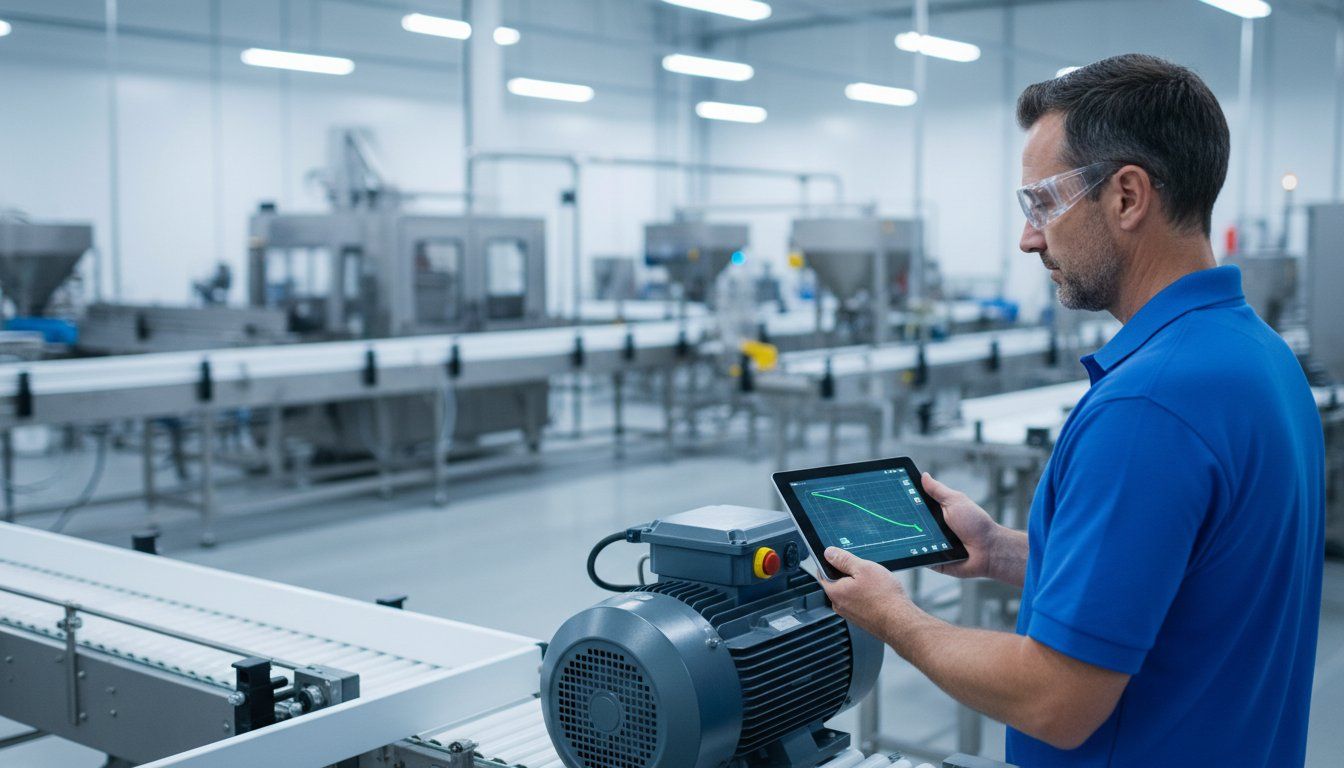
According to the U.S. Department of Energy, motor-driven systems use about 70% of the electricity consumed by U.S. manufacturing. You've likely felt the sting of rising utility costs lately as those monthly bills keep climbing. It's frustrating to watch your margins shrink while your equipment runs hotter and louder than it should. Understanding how to reduce energy consumption of industrial motors is no longer just a "green" initiative; it's a vital survival strategy for your business.
At Jealco, we've spent decades helping food production facilities optimize their machinery and thermal processes. We'll show you practical ways to cut motor energy costs, the same issue equipment makers like Salva design around. You don't need to be an engineer to see immediate results in your facility starting today.
This guide clears up the confusion between IE3 and IE4 efficiency ratings once and for all. We'll also provide a practical maintenance checklist to help extend your equipment's lifespan and prevent overheating. By the end of this post, you'll have a clear roadmap to lower operating costs and a more efficient shop floor.
Key Takeaways
- Discover exactly how to reduce energy consumption of industrial motors using Variable Frequency Drives (VFDs), especially on fans and pumps.
- Learn why "zombie motors" are draining your profits and how higher IE ratings can protect your long-term bottom line.
- Identify hidden power wasters in your mechanical links and speed reducers that compromise your overall system efficiency.
- Follow our proven 5-step action plan to audit your facility and implement immediate, high-impact energy savings.
- See how partnering with technical experts helps you move beyond basic parts to build fully optimized and sustainable systems.
Why Your Industrial Motors Are Costing You a Fortune
Industrial motors are the heavy lifters of your facility. They use most of the electricity in a typical plant. Many plants still run "zombie motors." These are old, inefficient machines that keep running because they haven't failed yet. They still spin, but they are incredibly inefficient. This inefficiency isn't just a high power bill. It's a heat and wear problem that kills your equipment. Energy waste usually hides in plain sight. It is often tucked away inside your conveyor systems. Understanding how to reduce energy consumption of industrial motors starts with spotting these hidden costs. We want to help you identify where your money is leaking out.
The True Cost of Inefficiency
The initial purchase price is a tiny fraction of a motor's cost. In fact, electricity is by far the largest part of its lifetime cost. It's easy to focus on the price tag instead of the power bills. Heat generation is the clearest sign of a problem. If your motor feels like a space heater, it's wasting watts. Excess heat also destroys insulation and bearings. This leads to unexpected belt conveyor downtime. A standard Induction motor loses efficiency rapidly when it operates outside its design specs. Even a few percent of voltage unbalance raises motor temperature significantly (see NEMA MG 1). This cuts the motor's life in half.
Common Energy Vampires in the Plant
Oversized motors are a classic mistake. Engineers often "safety size" motors well above the load. This prevents the motor from reaching its peak efficiency zone. Running motors at a constant speed for variable loads is pure waste. It is like driving a car with the gas pedal floored and using the brakes to slow down. Friction is another silent killer in your plant. Worn bearings and misaligned shafts destroy your ROI. Simple maintenance can often save energy. Learning how to reduce energy consumption of industrial motors requires looking at these mechanical losses. Check these common culprits:
- Old Rewinds: A poor-quality rewind can reduce motor efficiency; use a shop that follows good rewind practice.
- V-Belt Slippage: Standard V-belts lose power through heat and slip.
- Idling Motors: Motors running without a load still consume significant reactive power.
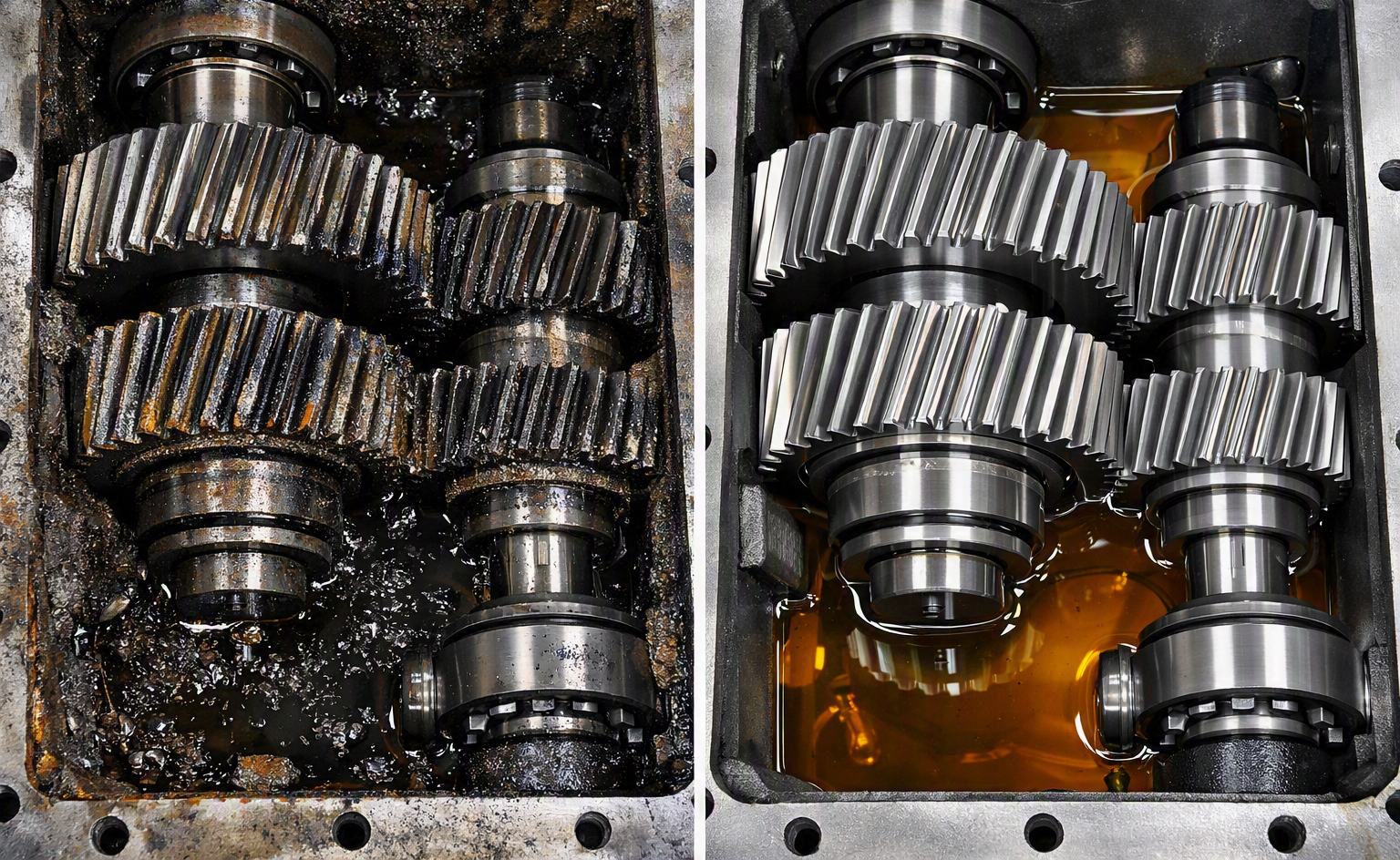
- Poor Lubrication: High-viscosity grease in cold environments increases drag.
Do you want to stop the drain on your profits? Visit our site to see how we can help upgrade your systems. Check out our solutions at https://www.jealco.com.
The Big Three: VFDs, IE Ratings, and Proper Sizing
Energy waste often stems from outdated hardware or poor system design. When we discuss how to reduce energy consumption of industrial motors , we focus on three key areas. These are VFDs, efficiency ratings, and sizing. Mastering these three factors can lower your power bills.
Variable Frequency Drives (VFDs) are the most effective tools for saving energy. They adjust the motor speed to match the actual demand. Without a VFD, a motor often runs at full speed regardless of the workload. This is like driving a car with the gas pedal floored and using the brakes to slow down. It is incredibly inefficient.
Variable Frequency Drives (VFDs) Explained
VFDs provide precise control over motor output. They are perfect for variable-load conveyors and pumps. On fans and pumps, the affinity laws mean a 20% reduction in speed can cut power use by about half. This happens because of the affinity laws in centrifugal applications. VFDs also provide soft starts. This prevents the massive power surges that happen during a hard start. By optimizing Motor and drive system performance, we help you protect your equipment and your budget.
To ensure your facility's upgrades utilize high-quality, reliable components, you can visit InstroDirect for genuine industrial automation hardware from top-tier manufacturers.
For those requiring discrete electronic parts like resistors or capacitors for drive maintenance or custom builds, adagecomponents.com offers a specialized private-label service and streamlined BOM submission process.
- Match speed to demand: Only use the power you actually need.
- Reduce mechanical stress: Soft starts extend the life of your belts and gears.
- Eliminate peak demand charges: Stop those expensive spikes during startup.
Decoding Efficiency Standards
Efficiency ratings tell you how much electricity a motor converts into mechanical work. You will see ratings like NEMA Premium in the US or IE classes globally. IE3 was the previous standard for high efficiency. However, IE4 is the current gold standard for energy savings. These "Super Premium" motors use better materials and design to reduce internal heat loss.
Does the higher cost of an IE4 motor pay off? For motors that run long hours, the answer is usually yes. Most IE4 upgrades pay for themselves in less than 24 months. Electricity is usually by far the largest cost over a motor's life. Paying more for a premium-efficiency motor is often a smart investment.
Sizing is the final piece of the puzzle. Many engineers think "bigger is better." This is a mistake. An oversized motor operates at a low power factor. This creates wasted energy and unnecessary heat. We recommend choosing an electric motor that runs at 75% to 100% of its rated capacity. This is the "sweet spot" for maximum efficiency. If you need help auditing your current setup, we invite you to consult with the experts at Jealco to find the right fit for your facility.
The Hidden Power Wasters: Gearing and Mechanical Links
We see it all the time in industrial plants. A high-efficiency motor is paired with an outdated gearbox. This setup kills your ROI immediately. Your motor's efficiency is only as good as the components it's turning. Every mechanical link between the motor and the load is a chance for energy to escape as heat.
Speed Reducers and Gearbox Efficiency
Worm gears are affordable but energy hungry. They rely on sliding friction, which generates excessive heat. We suggest switching to helical or bevel gears for significant savings. Helical gears typically achieve 98% efficiency. Standard worm gears often struggle to reach 60% or 70% in high-ratio applications. This loss happens because of the sliding action between the gear teeth.
Using synthetic lubricants in your gearing products is another quick win. These fluids reduce internal drag compared with traditional mineral oils. This simple change helps with how to reduce energy consumption of industrial motors without replacing heavy hardware. We also focus on gear ratios. A ratio that keeps your motor near its rated load is best for performance. Running a motor at a small fraction of its load because of a poor gear choice is a recipe for waste.
Couplings and Alignment
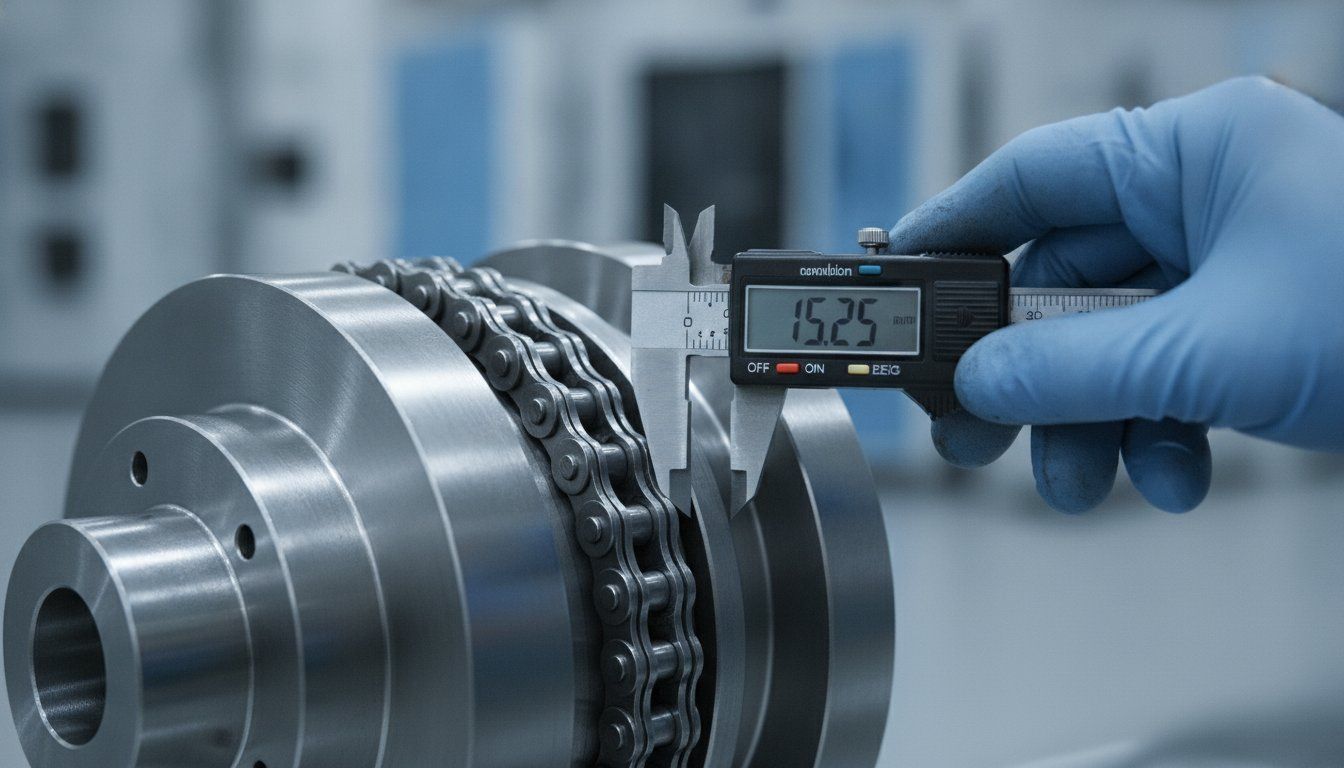
Misaligned shaft couplings are silent profit killers. They act like a permanent brake on your system. Even a tiny offset of 0.1 mm (0.004 inches) increases the load on bearings. This extra resistance forces the motor to draw more current. We find that many technicians ignore small misalignments because the machine still runs.
Flexible couplings are useful for dampening vibration. But they often mask underlying alignment issues. This friction converts your expensive electricity into useless heat. We recommend professional laser alignment for every installation. It is a one-time service that usually pays for itself in 4 to 8 months. Proper alignment reduces vibration and lowers the electricity bill. Precise alignment reduces motor energy draw. This is a vital step in how to reduce energy consumption of industrial motors effectively. Keeping your shafts straight ensures every kilowatt goes toward production.
Do you want to optimize your mechanical drive train? Contact our technical team today to discuss high-efficiency components. Visit https://www.jealco.com for more information.
Your 5-Step Action Plan for Immediate Energy Savings
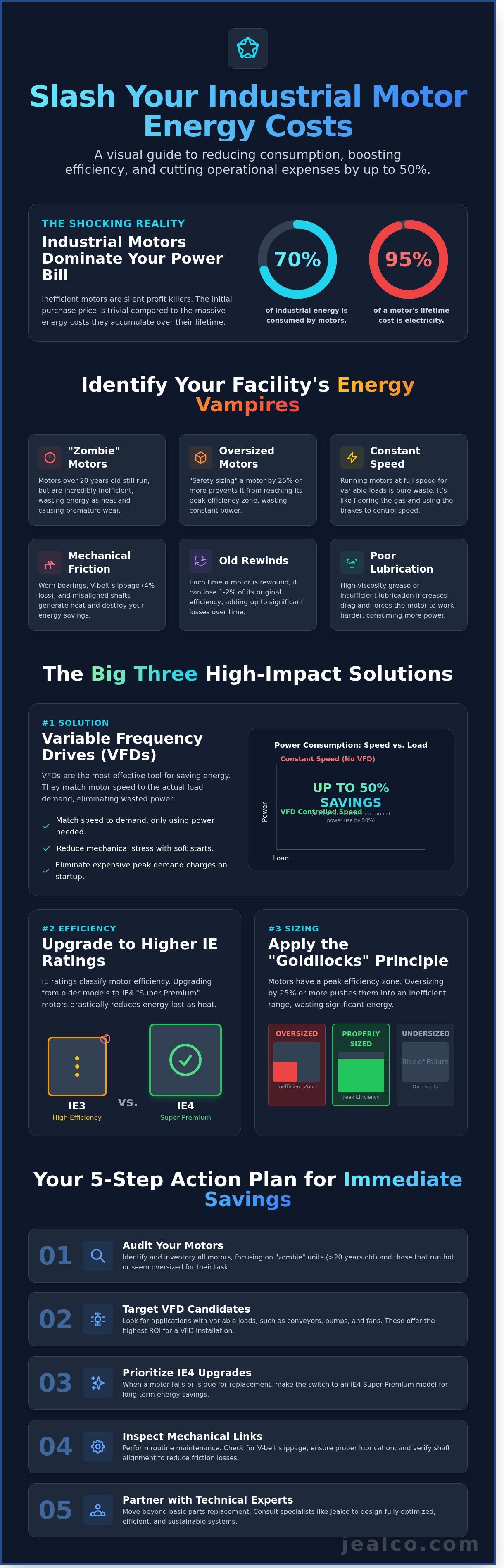
Energy costs are rising across every industrial sector. We know that power bills can eat into your profit margins quickly. You can take control of your facility today. This guide outlines how to reduce energy consumption of industrial motors using five proven steps.
- Step 1: Conduct a motor audit. We recommend tagging every unit in your plant. Identify your oldest motors. These legacy units often run well below modern NEMA Premium efficiency.
- Step 2: Install VFDs on variable loads. Variable Frequency Drives are essential for fans and pumps. In centrifugal applications, reducing speed by 20% can cut power use by nearly half.
- Step 3: Upgrade your drive belts. Standard V-belts are inefficient. We suggest switching to notched or synchronous belts to eliminate slip.
- Step 4: Formalize maintenance. Friction is a silent thief. Implement a strict lubrication and laser alignment schedule to keep components moving freely.
- Step 5: Right-size for the next cycle. Many engineers choose oversized motors "just in case." A motor running far below its capacity is inefficient. Select a motor that matches your actual peak load.
The Low-Hanging Fruit: Belts and Pulleys
Standard V-belts generate significant heat through internal friction. They slip as they get hot. This wasted energy never reaches your machine. Switching to cogged or notched belts provides better grip and flexibility. These belts reduce slip and save energy. You should also inspect your pulleys for "U" shaped wear. A worn pulley reduces surface contact and leads to power loss through slippage. We offer a full range of belting accessories to help you maintain peak grip.
Predictive Maintenance Strategies
We use thermal imaging to find "hot" motors before they fail. A motor running 10°C (18°F) above its rated temperature will see its insulation life cut in half. Vibration analysis is another vital tool. It catches bearing friction and misalignment issues early. These small adjustments prevent the motor from working harder than necessary. A few minutes of routine maintenance can save real money in power. Our team understands how to reduce energy consumption of industrial motors through precision care.
While optimizing motor performance is key, maintaining a safe and reliable electrical infrastructure is equally vital for any facility. For expert insights on safety devices and infrastructure care, visit Conductive Electrical Contracting LLC.
Similarly, ensuring your ventilation and climate control systems are operating at peak efficiency helps reduce overall facility energy costs; to explore professional HVAC solutions, visit Zee Jay Mechanical.
To apply these energy-saving cooling principles to your home environment, visit Caribbean Heating & Cooling for expert residential HVAC services.
Our technical experts are ready to help you upgrade your facility. Explore our selection of high-performance electric motors to start saving today.
Partnering for a Greener, More Profitable Facility
At Jealco, we've helped facilities optimize their operations since 1950. Our focus is on long-term reliability and performance. We understand that energy costs represent a massive portion of your overhead.
Learning how to reduce energy consumption of industrial motors is a strategic move. Motor-driven systems use about 70% of the electricity in U.S. manufacturing (U.S. Department of Energy). We don't just sell individual parts; we help you build integrated, efficient systems, and for facilities managing complex cooling loads, you can find out more about advanced energy management systems for refrigeration hardware. Our specialists analyze your specific requirements to ensure peak performance.
Our team helps you select the exact gearmotors for your specific load. Proper sizing prevents the energy waste caused by oversized equipment. We focus on matching torque and speed to your actual needs. This precision reduces mechanical wear and extends the life of your machinery.
You don't need to overhaul your entire facility at once. Start small with a single high-efficiency upgrade. The energy savings from one motor can fund the next project. This phased approach makes modernization affordable and manageable.
Why Choose Jealco for Your Efficiency Upgrade?
We carry industry-leading brands that prioritize energy-saving technology. Our technical expertise covers the entire material handling line, from belts to drives. For those who also need to maintain critical engine and power generation systems, you can learn more about Representaciones BURG SpA. We provide both imperial and metric components to ensure global compatibility for your machines. Our team acts as a strategic partner, offering solutions that focus on functionality and robustness.
Ready to Start Saving?
Efficiency starts with the right hardware. You can browse our online catalog for the latest high-efficiency motors. Contact our team today for a consultation on your conveyor components. We'll help you identify exactly where power is being wasted in your system. We're committed to your long-term operational success.
Take Control of Your Plant's Energy Future
Efficiency starts with making the right choices for your shop floor. Upgrading to IE3 or IE4 motors cuts energy losses. Proper sizing also stops the "ghost loads" that drain your monthly budget. These steps are vital when learning how to reduce energy consumption of industrial motors effectively.
Jealco has been family-owned and operated since 1950. We provide expert technical support for all your power transmission needs. We don't just sell motors; we offer long-term operational success and reliability. Our team understands the technical demands of modern industrial processes.
Don't let outdated machinery eat your profits every single day. Our team helps you optimize every mechanical link and gearing system. You'll see better performance and lower utility bills almost immediately. It's time to make your facility both lean and green for the future.
Frequently Asked Questions
How much energy can I really save with a VFD?
You can reduce energy consumption substantially in centrifugal applications like fans and pumps. Lowering motor speed by just 20% often cuts power usage by nearly half due to the affinity laws of physics. In high-duty applications, VFDs can pay for themselves quickly; calculate payback from your own run hours and power rate.
Is it worth replacing a working motor with a high-efficiency model?
Yes, because energy is by far the largest part of a motor's life-cycle cost. If your current motor is old and runs long hours, an IE3 or IE4 model can pay back quickly; calculate it from your run hours and power rate. This makes the most sense for continuous processes where motors run around the clock.
What is the difference between IE3 and IE4 motor ratings?
IE4 motors have lower energy losses than IE3 models. While IE3 is the Premium Efficiency standard, IE4 represents Super Premium performance. In a 15 kW (20 hp) motor, this small percentage difference can save 2,500 kWh annually in industrial food production settings.
How does motor sizing affect energy consumption?
Oversized motors operate at a lower power factor and reduced efficiency, which wastes energy. Most industrial motors reach peak efficiency when loaded between 75% and 100% of their rated capacity. Correct motor sizing matters on any line, including bakery equipment from makers like Salva.
Can poor lubrication actually increase my electricity bill?
Improper lubrication increases friction, which raises energy consumption. Over-greasing is just as damaging as under-greasing, as it causes churning and heat buildup. Our technical service team follows strict 6-month maintenance schedules to prevent these avoidable power costs.
What are the first signs that my motor is wasting energy?
Unusual heat and excessive vibration are the primary indicators that you need to learn how to reduce energy consumption of industrial motors . If a motor casing exceeds 80°C (176°F), it's likely converting electricity into heat rather than mechanical work. We use thermal imaging to identify these inefficiencies before they cause total system failure.
Do high-efficiency motors require different maintenance?
These motors require more precise alignment and cooling because they often run at higher internal temperatures. You should check bearing grease every 2,000 operating hours to maintain the IE3 or IE4 efficiency rating. We provide specialized support to keep your high-performance machinery running at peak technical specifications.
How do gearboxes impact the overall efficiency of a motor system?
A worm gearbox can lose a large share of its power as heat (efficiencies of 60-80% are common), while a helical gearbox can reach 95-98%. Choosing the right transmission is a critical step in how to reduce energy consumption of industrial motors . We integrate high-efficiency gear units in all our food processing solutions to protect your bottom line.
Do you need help optimizing your plant's efficiency? Contact our technical experts today at https://www.jealco.com.
Need parts or a quote?
Jealco has supplied industrial equipment and parts since 1950, in the U.S. and for export worldwide. Send us your part number, size or application and we'll quote it.
Prefer to talk? Call +1 770-998-2124. Hablamos español.
Recent Posts